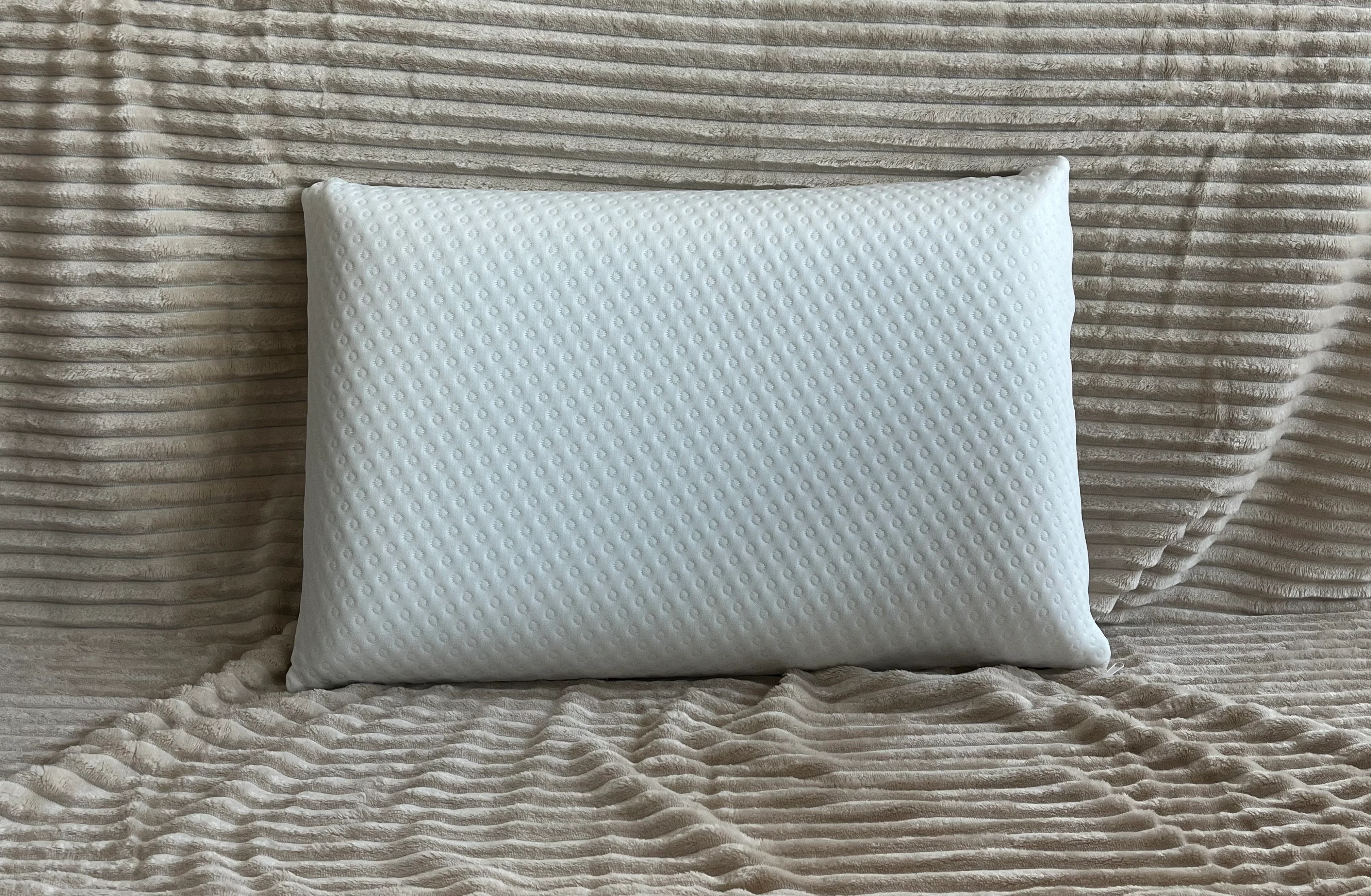
The memory foam pillow has become a must-have for those seeking better cervical support and a truly restorative night’s sleep. In 2026, the market is filled with brands promoting this type of pillow, with promises ranging from simple comfort to the resolution of chronic pain. However, not all memory foam pillows are created equal. To help consumers make an informed choice, we tested three iconic brands. Here is our comparative analysis, based on objective criteria.
To deepen your approach, check out our dedicated page on pillow reviews which lists all our detailed analyses.
Brand Overview
Emma
Founded in Germany in 2015, Emma has established itself as one of the leading online bedding brands in Europe. Its promise is based on accessibility and universal comfort: products designed for the greatest number, at a reasonable price, without sacrificing innovation. Now present in more than a dozen countries, including France, Emma enjoys a solid reputation among consumers and a Trustpilot rating regularly above 4.5/5.
Tempur
A Danish brand whose viscoelastic foam technology is derived from NASA research, Tempur firmly positions itself in the premium segment. Its pillows are known for their ability to relieve pressure points and provide clinically validated adaptive support. The brand primarily targets individuals suffering from chronic neck pain or those wishing to invest in very high-quality bedding.
Wopilo
A French start-up founded with a strong ethical commitment, Wopilo has developed an original hybrid pillow concept: a memory foam core surrounded by soft microfiber filling, certified Oeko-Tex. This positioning halfway between ergonomics and softness appeals to sleepers who hesitate between a firm pillow and a classic one, while valuing a short supply chain and responsible manufacturing.
Ranges and Specialties Offered
Emma offers an adjustable pillow made up of three independent layers that the user can remove to adapt the height to their morphology and sleeping position. Tempur stands out for the richness of its range: Original, Symphony, Comfort, Ombracio — each model catering to a specific sleeper profile. Wopilo, on the other hand, has two main models (Wopilo and Wopilo Plus), with the difference mainly concerning the thickness of the filling and the density of the memory core.
Discover the Emma memory foam pillow on AmazonTechnologies and Comfort
Emma’s viscoelastic foam is formulated to be both adaptive and breathable, giving it good thermal retention — an important point for sleepers who tend to get hot at night. Tempur’s technology is characterized by a slow and very gradual return: the foam precisely conforms to the shape of the neck and does not bounce back, ensuring maximum stability throughout the night. This shape memory property is at the heart of Tempur’s added value, as it eliminates the micro-postural adjustments at night that fragment sleep. Finally, Wopilo’s hybrid design combines the advantages of both approaches: the memory core offers structural support while the microfibers provide that enveloping softness that many sleepers appreciate.
Services (Delivery, Trial, Warranty, Customer Service)
Purchase conditions vary significantly from one brand to another and deserve careful comparison before making a decision. Emma offers free delivery along with a 100-night trial period with easy returns and a 2-year warranty: a risk-free formula that allows you to evaluate the pillow in the real conditions of your own bed, which few textile products allow. Tempur relies on a robust physical distribution network but does not offer a home trial — you will need to visit a store to test the product before purchase — and guarantees its pillows for 3 years. Wopilo offers free delivery, a 30-night trial, and a 3-year warranty, with customer service recognized for its responsiveness.
View on AmazonValue for Money
Emma positions itself in the entry/mid-range, with a memory foam pillow available from around €69, making it the most accessible option of the three. Tempur fully embraces its premium positioning: prices range from about €90 for small sizes to over €300 for the most elaborate models, depending on the format and range chosen — a range that reflects the diversity of sleeper profiles the brand addresses. Wopilo falls into a mid-range, with the basic pillow offered at around €79 each, and the Wopilo Plus around €99 — with a discount for purchasing two units.
Customer Reviews & Reputation
Emma enjoys a rating above 4.5/5 on Trustpilot, fueled by a very large volume of reviews, which reflects broad and consistent customer satisfaction. One of the most frequently cited points in positive feedback is the ease of adjusting the layers, which allows for quickly finding the ideal height without effort. Tempur has a solid historical reputation, particularly among those suffering from neck pain who have found lasting relief in its products. Wopilo, being younger in the market, has managed to build an engaged community thanks to positive feedback on hybrid comfort, material quality, and the brand’s eco-responsible values.
Summary Comparison Table
| Criterion | Emma | Tempur | Wopilo |
|---|---|---|---|
| Price | From ~€69 | From ~€90 to over €300 | From ~€79 |
| Technology | 3-layer foam | Patented Tempur material | Hybrid (foam + fibers) |
| Trial | 100 nights | None (except in-store) | 30 nights |
| Warranty | 2 years | 3 years | 3 years |
| Customization | Yes | No | Yes |
| Positioning | Accessible, comfort | Premium, medical support | Hybrid, ethical |
Expert Advice: Who is Each Brand For?
Emma is perfectly suited for medium-budget sleepers looking for good cervical support without complexity of use, with the security of a long home trial. The modular layer system is particularly welcome for couples with differing morphologies, as each can adjust their own pillow without compromise. Tempur is the benchmark for individuals suffering from chronic neck pain and ready to invest in a clinically proven product. Wopilo stands out as the ideal choice for those who hesitate between softness and ergonomics, sensitive to the French origin of the materials and the brand’s eco-responsible commitments.
View on AmazonFAQ
Is a memory foam pillow good for neck pain?
Yes, a memory foam pillow can significantly help reduce neck pain, provided you choose the right model according to your sleeping position and morphology. The viscoelastic foam conforms to the natural curvature of the neck, distributing pressure evenly and avoiding muscle tension accumulated overnight; unlike a fiber pillow that collapses under the weight of the head, the foam maintains a constant alignment between the head, neck, and shoulders, even during nighttime turns. Tempur is historically the clinically tested reference for this type of use, but Emma and Wopilo are solid alternatives for mild to moderate pain. If you suffer from significant or persistent pain, a medical opinion — from a physiotherapist or osteopath — is advisable to validate the choice of height and firmness suitable for your neck.
How long does a memory foam pillow last?
The lifespan of a memory foam pillow is generally between 2 and 5 years, depending on the density of the foam, frequency of use, and quality of maintenance. High-density foams — like those used by Tempur — tend to resist sagging better over time, which partly justifies their higher price positioning: the initial investment is amortized over a longer lifespan. A telltale sign of wear: the pillow does not regain its original shape after a few minutes or shows a permanent depression in the center. Using a washable pillow protector significantly extends lifespan by limiting moisture and sweat accumulation in the foam, which remains the number one enemy of this type of material.
Does a memory foam pillow retain heat?
Dense viscoelastic foam can indeed retain more heat than a classic fiber pillow, as its cellular structure limits air circulation. This phenomenon is more pronounced in individuals who sleep hot or in poorly ventilated rooms, and can result in nighttime awakenings or a feeling of thermal discomfort in the second half of the night. Manufacturers have developed solutions to address this: for example, Emma incorporates open-cell foam and a breathable cover that significantly improve heat dissipation. If you are particularly sensitive to nighttime temperature, prefer a model with a natural material cover (cotton, bamboo) and a so-called "ventilated" foam, and air out your pillow for a few minutes each morning to renew the internal air.
What sleeping position is best suited for a memory foam pillow?
Side and back sleepers benefit the most from memory foam pillows, as the viscoelastic foam precisely adapts to the cervical curvature and maintains head-neck-shoulder alignment throughout the night; for side sleepers, a greater height is necessary to fill the space between the shoulder and the head, while back sleepers should choose a medium-height model to avoid forcing the neck forward. Stomach sleepers should instead prefer a very thin model to avoid hyperextension of the neck, which strains the cervical vertebrae. If you frequently change positions during the night, an adjustable pillow like the Emma (with modular layers) or the Wopilo (with adjustable filling) will be more versatile and adapt better to your different postures.
How to wash and maintain a memory foam pillow?
Memory foam should never be machine washed or submerged in water, as this irreparably damages the cellular structure and alters its supportive properties. Only remove and wash the removable cover in the machine at 40°C. For the pillow itself, air it out regularly in the open air (without direct sunlight), use a washable pillow protector beneath the pillowcase, and remove stains with a damp cloth and a little mild soap. Regular maintenance extends its lifespan by several years and preserves the hygiene of the bedding.
Can a memory foam pillow be used for a child?
Memory foam pillows are generally not recommended for children under 3 years old due to the risk of suffocation related to the density of the foam and lack of bounce. Beyond this age, some junior models exist, but the height and firmness must be carefully adapted to the child's morphology — foam that is too firm or too high can create cervical tension in a young user, at an age when the spine is still growing and particularly sensitive to poor nighttime postures. It is advisable to consult a pediatrician or pediatric osteopath before making this choice, especially if the child has plagiocephaly or postural tensions.
Should a memory foam pillow be firm or soft?
The choice between firmness and softness primarily depends on your sleeping position and body type. Side sleepers, particularly those with broad shoulders, will benefit from a firm and high pillow that properly fills the space between the shoulder and neck, thus avoiding lateral head sagging. Back sleepers generally prefer an intermediate firmness, sufficient to maintain the cervical curve without pushing the head too far forward. A pillow that is too soft will not adequately maintain spinal alignment when sleeping on the side, while a pillow that is too firm when sleeping on the back causes forced cervical flexion, leading to morning tension. The advantage of adjustable models like Emma's is precisely to allow for firmness modulation by removing or adding layers, without having to purchase a new product.