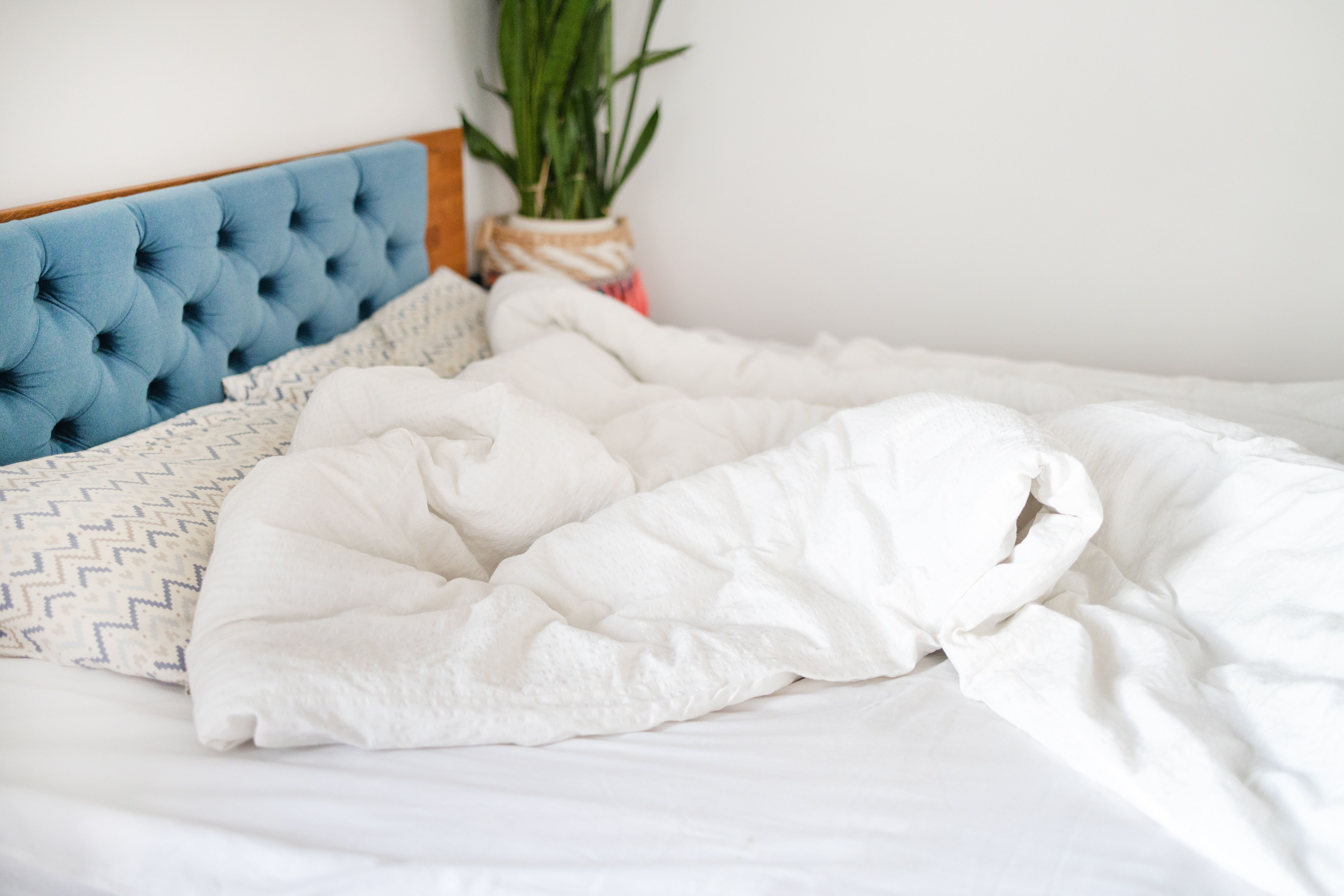
Natural down comforters fascinate as much as they intrigue. Synonymous with high-end comfort, they are often seen as the pinnacle of winter cocooning. However, given their high price and the increasingly effective synthetic alternatives, a question frequently arises: is a down comforter really a justified investment or a superfluous luxury? In this file, we offer you a detailed comparison to help you make the right choice according to your needs.
Quick Comparative Summary
| Criteria | Natural Down Duvet | High-End Synthetic Duvet |
|---|---|---|
| Thermal Comfort | Excellent, natural and breathable | Good to very good depending on filling |
| Maintenance | Delicate, dry cleaning recommended | Machine washable |
| Durability | Excellent if well maintained | Average to good |
| Budget | High (starting from ~€150–180) | More affordable (€50–200) |
| Ecology | Biodegradable, pay attention to origin | Less durable, derived from petroleum |
| Allergies | Possible without treatment | Hypoallergenic |
Presentation of Compared Options
The Natural Down Duvet
Made of down and feathers from geese or ducks, it offers very effective natural insulation. The down, taken from under the birds’ bellies, is lightweight and very fluffy. Entry-level models incorporate a feather/down blend (often 90% feathers, 10% down), while premium versions reach 90% pure down, or even more. The highest-end models use new, non-recycled down, certified DownPass, RDS, or Oeko-Tex — these labels guarantee both the absence of live plucking and the safety of the chemical treatments used.
Synthetic Alternatives
They use polyester fibers (classic, siliconized, hollow, microfiber) to mimic the fluffiness of down. Cheaper and easier to maintain, they are rapidly improving in comfort and thermoregulation. Some Oeko-Tex certified ranges made from recycled polyester reduce their environmental impact, even though they remain non-biodegradable.
Detailed Point-by-Point Comparison
Comfort and Sleeping Sensation
Natural down provides a characteristic enveloping sensation, often described as a “cloud” effect: extremely light, it conforms to the body’s contours and does not create rigidity. The synthetic duvet offers variable comfort depending on the quality of the fibers; high-end microfibers come close, but do not quite replicate this airy lightness.
Morphological Adaptation
Thanks to the natural mobility of down inside the cover fabric (the ticking), the natural down duvet continuously adapts to the movements of the sleeper. The synthetic duvet can, depending on the quality of its stitching, create cold spots if the filling migrates and is not held in well-defined compartments.
Thermal Regulation
Natural down absorbs moisture while retaining heat—a valuable hygroscopic property for those who sweat at night. Synthetic fibers are generally less breathable, although hollow fiber models significantly improve air circulation compared to traditional solid fibers.
Maintenance and Durability
A well-maintained down duvet lasts between 10 and 15 years; a synthetic duvet lasts between 5 and 8 years. The difference lies in the maintenance method: down does not withstand frequent high-temperature washes well, while synthetic can be machine washed without special precautions. Over time, the longevity gap can offset part of the price difference at purchase.
Environmental Impact
Natural down is biodegradable and its production relies on a by-product of poultry farming, provided that RDS or DownPass certifications are respected. Synthetic materials are derived from petroleum, release plastic microfibers during washing, and are not biodegradable—even though alternatives made from recycled polyester exist and partially reduce this impact.
Budget
Natural down duvets start from around €150–180 for duck down/feather blends and can exceed €500 for 100% premium goose down. Synthetic duvets remain accessible between €50 and €200.
Compare natural down duvets (goose and duck) on Amazon – wide selection and customer reviewsHow to choose according to your profile?
Specific needs
People who sweat a lot at night particularly benefit from the hygroscopic properties of natural down, which wicks away moisture while retaining warmth. In case of allergies, a hypoallergenic certified synthetic duvet remains the safest solution, although washed, sterilized down certified Oeko-Tex is suitable for many slightly sensitive individuals. For those primarily seeking lightness, down remains the unmatched reference.
To go further in choosing your bedding, find all our comparisons and duvet reviews on the site.
Environment
The weight is the first indicator to check: for a cold climate, opt for a winter down duvet with a weight of 300 to 450 g/m²; for a temperate climate or a room heated above 20 °C, a mid-season down (200–280 g/m²) or a lightweight synthetic duvet will be more than sufficient.
Personal priorities
If you are on a tight budget, a high-end synthetic duvet offers the best value for money. For an eco-friendly approach, a RDS or DownPass certified down remains the most coherent choice — recycled fibers are a more virtuous synthetic alternative. Finally, if longevity is a priority, well-maintained natural down amortizes its cost over 10 to 15 years.
View on AmazonExpert Tips
Testing Tips
In-store, fold the duvet in half and release it: it should quickly and completely regain its shape — a sign of lively and quality down. At home, observe the sensations of warmth or cold spots after two to three nights to assess the suitability of the warmth for the chosen weight.
Mistakes to Avoid
Choosing a duvet that is too warm for a well-tempered room is the most common mistake; the sleeper ends up kicking off the duvet and sleeps poorly. Not checking quality labels (RDS, DownPass, Oeko-Tex) risks buying a product from unscrupulous farms or treated with undesirable substances. Finally, washing a down duvet without a suitable program (delicate, maximum 40 °C) damages the fibers and permanently reduces the loft.
Questions to Ask Before Buying
Do you get hot at night or suffer from the cold? Are you prone to respiratory allergies? Do you have a large-capacity washing machine or easy access to a specialized dry cleaner? Are you willing to invest more for a durable product, or do you prefer an economical solution that is easy to maintain? These four questions already clearly guide your choice.
FAQ
What is the lifespan of a natural down comforter?
A quality natural down comforter lasts between 10 and 15 years, provided it is properly maintained. This exceptional longevity is due to the intrinsic resilience of down fibers, which can deform and regain their volume thousands of times without breaking. To preserve this lifespan, avoid washing too frequently (once or twice a year is sufficient), store the comforter in a breathable cover (never in an airtight plastic bag), and air it out regularly. Professional cleaning every two to three years further extends its useful life.Can you machine wash a down comforter?
Yes, as long as your washing machine is large enough — a 240×260 cm comforter requires a drum of at least 8 to 9 kg — and you use a delicate cycle at a maximum of 40 °C with a mild detergent without fabric softener. Fabric softener coats the down fibers with a greasy film that reduces their loft. After washing, drying is the critical step: tumble dry on low heat with two or three tennis balls to evenly redistribute the filling. If you do not have a dryer, lay it flat in a ventilated area for 24 to 48 hours, regularly kneading to avoid clumping. For very large or very thick comforters, a specialized dry cleaner remains the safest solution.Is natural down allergenic?
It can be in some cases, especially if the comforter contains residues of animal proteins poorly removed during industrial processing. People allergic to dust mites are also sometimes sensitive to a poorly maintained comforter, as down can retain more moisture than synthetic fibers and create a micro-environment favorable to dust mites. To minimize this risk, choose a washed, sterilized, and Oeko-Tex certified model, use a zippered duvet cover, and wash the cover every two to three weeks. If you suffer from confirmed allergies, a hypoallergenic synthetic comforter remains the safest choice.Is a down comforter suitable for summer?
Yes, provided you choose a lightweight version with a weight of 150 to 200 g/m². At this level, natural down retains its breathable advantage — it wicks away body moisture while avoiding the suffocating feeling of thin synthetic comforters — without overheating the sleeper. So-called "all-season" models offer two thin comforters that can be snapped or buttoned together, allowing you to adjust warmth according to the season. For very hot nights (room temperature above 24 °C), even a lightweight summer comforter may be unnecessary: a simple cotton bedspread will suffice.How often should you wash a natural down comforter?
A natural down comforter should ideally be washed once or twice a year. Washing too frequently damages the fibers and reduces the loft of the down. Between washes, air it out regularly by exposing it to fresh air (but not in prolonged direct sunlight, which weakens the fabric). If your comforter is large (240×260 cm or more) or very thick, opt for a laundromat with large capacity machines or a specialized dry cleaner. Always use a delicate cycle at a maximum of 40 °C, and add tennis balls in the dryer to evenly redistribute the down after drying.What is the difference between goose down and duck down?
Goose down is generally considered superior to duck down for two main reasons: its clusters are larger (which creates better insulating power for the same weight) and it is naturally odorless, whereas duck down can retain a slight odor after washing if the treatment is insufficient. In practice, quality certified duck down, well-treated, offers excellent performance at a significantly lower price. Goose down is mainly found in premium ranges, where the down-to-feather ratio is very high (90% or more) and where maximum lightness and loft are sought.A natural down comforter is not a trap, but it is not for everyone. It remains a reference in terms of comfort and thermal regulation, but requires a budget and rigorous maintenance.
Synthetic comforters, although often less durable, provide an accessible and practical alternative, especially for allergy sufferers or those on a tight budget.
The right choice depends on your actual needs, your environment, and your sensitivity to thermal comfort.