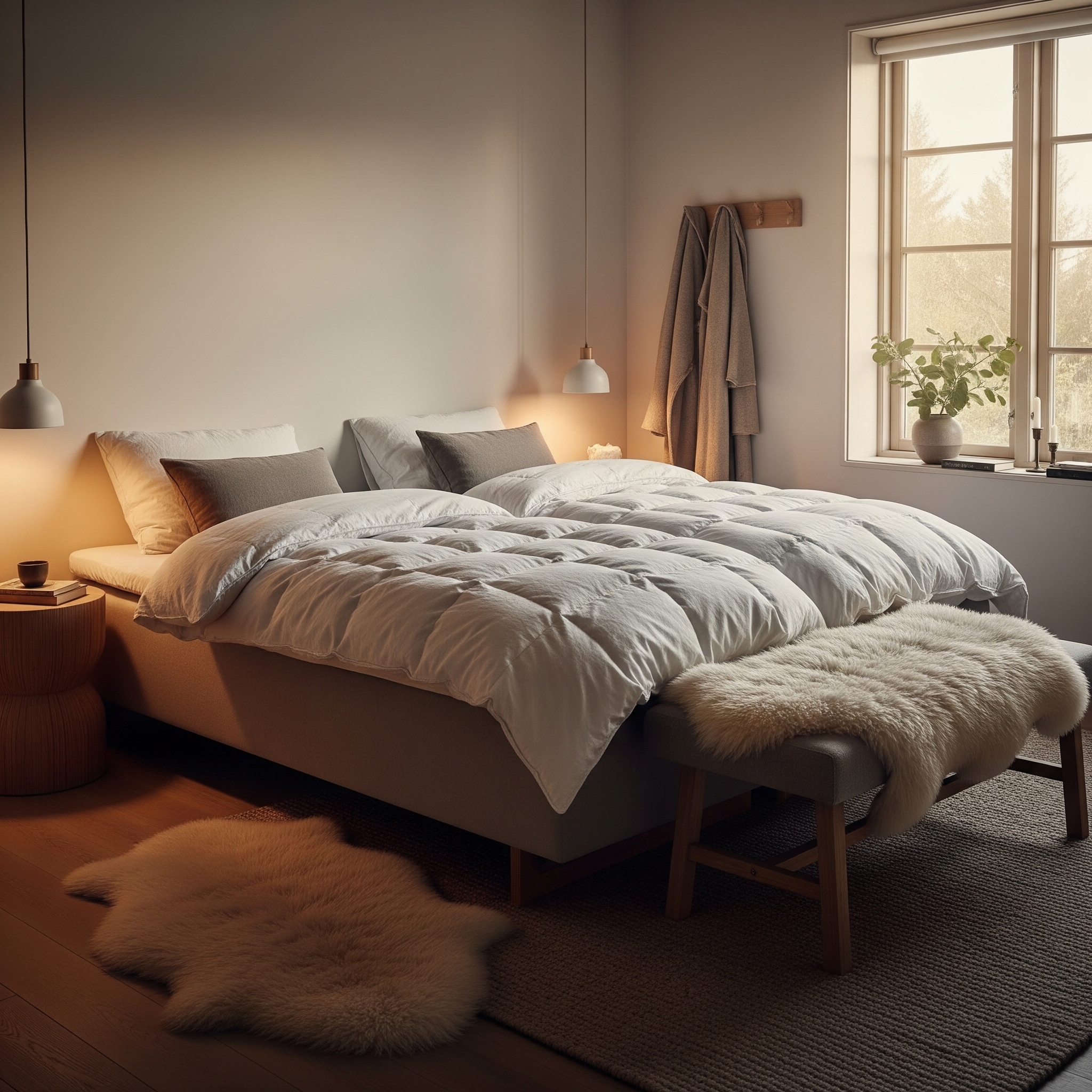
Sleep is an essential pillar of our health. In Scandinavia, a country known for its high well-being, the culture of sleep is part of a lifestyle that combines minimalism, comfort, and gentle warmth, embodied by the concept of hygge.
Nordic Sleep: Origin and Philosophy
Hygge evokes an atmosphere of intimate comfort, serenity, and well-being, visible even in the bedroom. Born in Denmark and popularized throughout the Scandinavian peninsula, this lifestyle is based on the idea that the physical environment directly influences mood and the quality of rest. Applied to bedding, it translates into three fundamental pillars: the personalization of each sleeper, gentle and enveloping warmth, and a functional simplicity that banishes the superfluous in favor of the essential.
Characteristics of Nordic Sleep
The Individual Duvet: Each to Their Comfort
One of the most striking features of the Nordic bedroom is the use of two individual duvets on a double bed. Each sleeper has their own duvet, chosen according to their preferred weight and filling — natural goose down for those who feel cold, lightweight microfiber for warmer sleepers. This approach eliminates nighttime conflicts related to blanket tugging and allows for better individual thermal regulation, particularly valuable when two people have very different needs. Visually, two well-chosen and well-placed duvets fit perfectly into a minimalist aesthetic.
Find an individual duvet for a double bed on AmazonThe Mattresses: Firmness and Adaptability
Scandinavian mattresses are generally firmer than their counterparts in southern Europe, reflecting a culture that values orthopedic support and product longevity. Pocket spring or hybrid models (springs + memory foam or latex) are particularly favored for their ability to isolate movement and adapt to each sleeper’s morphology. To avoid sacrificing softness upon waking, Scandinavians frequently use a removable mattress topper, which allows for adjusting firmness according to the seasons or preferences without changing the mattress. To delve deeper into these selection criteria and adopt bedding that aligns with your needs, you will find additional resources in our sleep advice section.
View on AmazonThe Bed Base: Wooden Frame or Boxspring
The bed base holds an important place in Nordic aesthetics. The minimalist wooden frame — often made of pine or solid oak — embodies Scandinavian minimalism: clean lines, noble materials, and durable finishes. For those seeking a more hotel-like comfort, the boxspring (upholstered bed base with double springs) offers a generous bed height and additional suspension. It generally represents a more significant investment, but its durability and premium aesthetic make it a popular choice among fans of the hygge style.
Advantages of Scandinavian Sleep
Adopting Nordic bedding offers several concrete benefits. In terms of comfort, each sleeper enjoys a solution perfectly tailored to their thermal needs and body shape, resulting in less fragmented nights. Aesthetically, the bedroom gains serenity: clean lines, natural textiles, and a neutral color palette create a space conducive to mental disconnection before bedtime. Finally, thermal regulation, adapted to the seasons thanks to interchangeable duvets, is a significant advantage in our temperate latitudes.
Limitations
The transition to this style of bedding is not without constraints. The use of two duvets on a double bed creates a visual break for those accustomed to the traditional large bedspread — a period of adjustment is often necessary. The overall cost can also be high, especially if one opts for a quality box spring paired with two premium duvet-pillow sets. Finally, Nordic bedding, designed for cooler countries, may prove too warm for regions with very hot summers, unless one invests in specific lightweight summer duvets.
Comparison with French Bedding
| Aspect | French Bedding | Scandinavian Bedding |
|---|---|---|
| Duvet | Single duvet for couples | Two individual duvets |
| Mattress | Softer (latex, foam) | Firmer, springs or hybrid |
| Bed Base | Mainly slats | Slats or boxspring |
| Comfort | Enveloping | Ergonomic, thermal regulation |
Concrete Examples
In Scandinavian hospitality, the practice of using two individual duvets is almost universal, even in the most modest establishments. Danish or Swedish hotel rooms typically feature two carefully folded duvets side by side, each suited to the season. In homes, bedrooms showcase natural textiles — washed linen, organic cotton, merino wool — arranged in a palette of off-whites, pearl grays, and warm beiges, fostering a soft and relaxing atmosphere even before falling asleep.
Practical Tips for Adopting Nordic Comfort at Home
Switching to Nordic bedding does not require replacing everything at once. Start by adopting two single duvets for your double bed, choosing different weights if you and your partner have distinct thermal sensitivities. Prefer a firm or medium-firm mattress that you can soften with a removable topper depending on the season — this flexibility is at the heart of the Scandinavian approach. For textiles, turn to natural fibers (linen, organic cotton, wool) that breathe better and age more gracefully. Be sure to create a soothing atmosphere in the bedroom with soft, warm lighting, calming decor, and above all, maintain a cool temperature — ideally between 16 and 18 °C — to promote falling asleep. If your budget allows, a boxspring will provide that hotel-like comfort characteristic of Scandinavian rooms.
View on Amazon