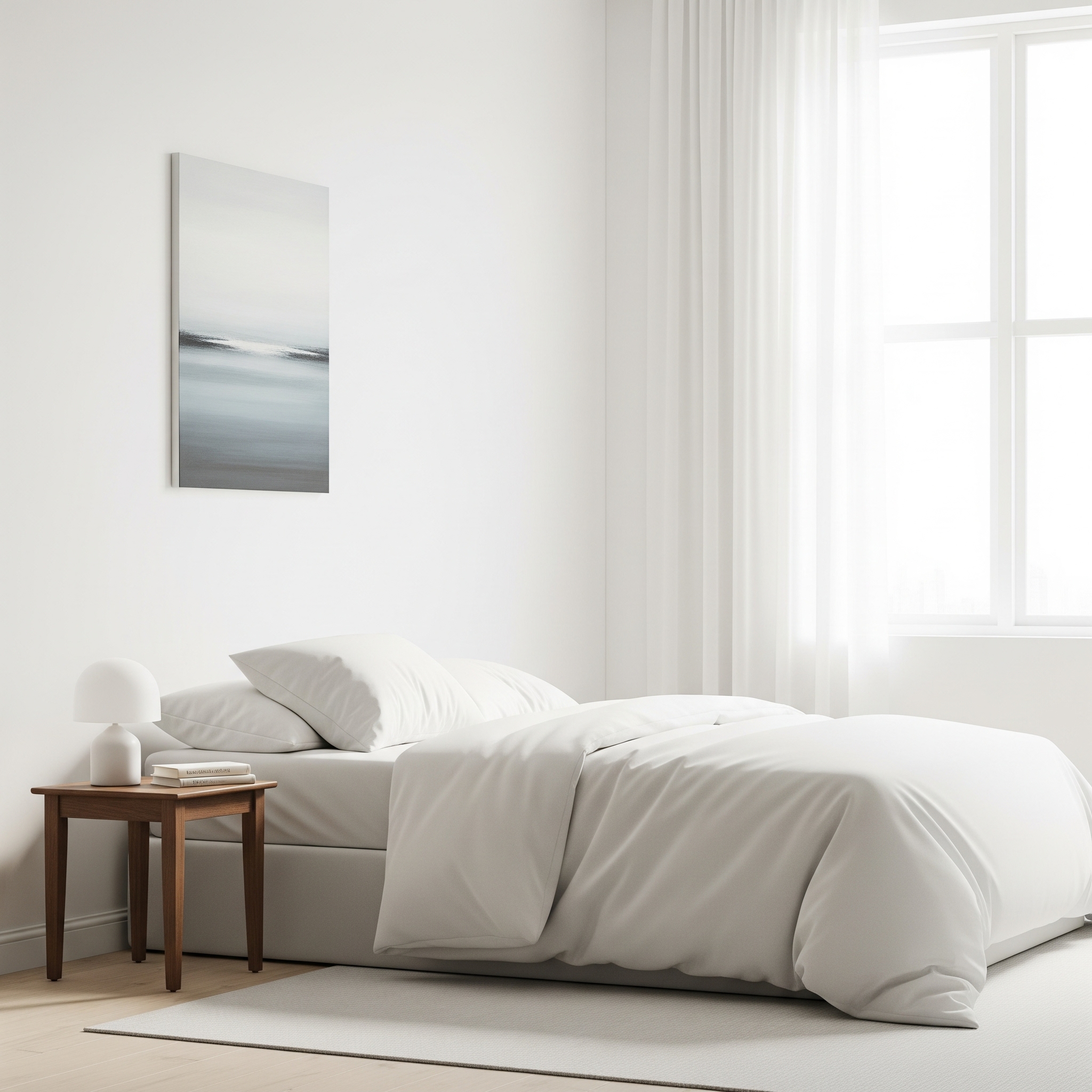
Adopting a minimalist bedroom means rethinking your space to promote simplicity, functionality, and serenity. In an era of overconsumption, this approach brings genuine calm, conducive to better sleep. To delve deeper into the impact of your environment on your rest, check out our tips for better sleep .
What is minimalism applied to the bedroom?
Minimalism values simplicity and purity. Applied to the bedroom, it concretely translates into furniture reduced to the essentials — bed, bedside table, simple wardrobe —, a deliberately limited decoration in terms of objects and colors, and clear surfaces, without visible accumulation or chaotic storage under the bed. The goal is not coldness or austerity, but the creation of a serene and calming atmosphere, in which the mind can truly settle at the end of the day.
How does the environment influence sleep?
According to the National Institute of Sleep and Vigilance (INSV), the bedroom strongly influences the quality of rest. Light, noise, temperature, layout, and visual ambiance all play a key role. The ideal bedroom temperature is between 16 °C and 19 °C: above this threshold, the body’s thermoregulation is disrupted, deep sleep becomes difficult to achieve, and nighttime awakenings increase.
A cluttered space stimulates the mind by reminding it of pending tasks, unfinished projects, and decisions to be made. Conversely, a clear bedroom provides a sense of control and calm that facilitates the transition to sleep.
Benefits of a minimalist bedroom on sleep
1. Reduction of mental stress
Fewer visual distractions free the mind from intrusive thoughts. When the eyes do not encounter any clutter, the brain can more easily switch to rest mode.
2. Facilitation of falling asleep
Fewer objects mean fewer sources of visual or cognitive stimulation, which shortens the time it takes to fall asleep for those sensitive to their environment.
3. Improvement of air quality
Fewer surfaces covered with objects lead to less dust and mite accumulation, and easier maintenance. Indoor air quality improves, which is particularly beneficial for allergy sufferers.
4. Strengthening of sleep hygiene
A bedroom exclusively dedicated to rest, without screens, paperwork, or sports equipment, reinforces the mental association between this space and sleep, thereby consolidating routines conducive to regular falling asleep.
Is minimalism for everyone?
Minimalism is accessible to all but must be adapted to individual sensitivities. Some people find in personal objects — photos, travel souvenirs, bedside books — an emotional anchor essential to their serenity. Abruptly depriving them of this environment can generate anxiety rather than the sought-after tranquility. The key is to find a personal balance between functionality, visual harmony, and emotional comfort: minimalism is not a dogma, it is an intention.
Alternatives and complements: hygge, feng shui, slow living
Several design philosophies complement minimalism and can be usefully associated with it.
- Hygge (Denmark): warmth and cozy materials (wool, wood, candles) bring a soft sensory dimension that tempers minimalist austerity.
- Feng shui (China): harmonious furniture arrangement and energy flow in the space align with the minimalist ideal of fluidity and clearance.
- Slow living: the voluntary reduction of sensory stimuli and prioritizing quality over quantity naturally resonate with decluttering.
These philosophies enrich minimalism by adding warmth, intention, or spiritual depth, according to individual needs.
Practical tips to start the transformation
Starting by clearing visible surfaces — bedside table, dresser, windowsill — is often the most visually impactful first step. It’s not about emptying everything at once, but about keeping what is essential for daily use and finding a closed or discreet place for the rest.
- Optimize storage by favoring furniture with doors or drawers rather than open shelves.
- Adopt natural materials: organic cotton, linen, light wood, which also contribute to healthier air and a more restful visual ambiance.
- Limit the color palette to neutral and soothing tones (white, beige, light gray, ecru).
- Pay attention to light management: choose blackout curtains or shutters, and banish bright lights from electronic devices at night.
- Choose a mattress with a sleek profile, preferably made of natural latex or high-density foam, without bulky toppers, covered in natural fabric.
Also, consider regular maintenance: a minimalist bedroom is serene only if it remains so over time. Ten minutes each week is enough to keep the space clear.
View on AmazonMistakes to avoid
- Wanting to throw everything away quickly: hasty decluttering often leads to regrets and a sense of loss rather than the desired calm.
- Confusing minimalism with coldness: a minimalist bedroom can remain warm and personalized through the choice of materials and a few carefully selected objects.
- Neglecting the opinions of household members: if the bedroom is shared, each occupant must feel comfortable in the common space. A concerted transition will always be more sustainable than an imposed transformation.
- Forgetting the bedding itself: many focus on furniture and forget that the mattress, box spring, and bedding are the central functional elements of the room. A poor-quality mattress in a sleek setting will not suffice to improve sleep.
FAQ
Does minimalism prevent the personalization of the bedroom?
No, minimalism is not synonymous with an impersonal or interchangeable bedroom. On the contrary, it is about consciously and discerningly choosing what to highlight, rather than allowing objects to accumulate by default. A framed photo, a bedside book, a green plant, or a carefully chosen handmade object can all find their place in a minimalist space. The implicit rule is simple: every object present must be wanted, not just tolerated. This filter transforms decor into an authentic expression of oneself, rather than a burdensome accumulation.
Can I keep objects I am attached to?
Yes, absolutely. Minimalism does not require you to part with everything that has sentimental value. The key is that these objects do not hinder the primary function of the bedroom — sleeping and resting — and do not generate visual clutter that causes stress. A good practice is to group them in a dedicated and controlled space (a shelf, an open box) rather than scattering them across all surfaces. This way, their presence becomes a conscious and pleasant choice rather than a mentally burdensome accumulation.
Do I need to transform everything at once to adopt a minimalist bedroom?
No, and this is strongly discouraged. A rushed change can create feelings of dispossession, emptiness, or regret, especially if you have years of attachment to your current space. A gradual method is much more effective in the long term: start with one area (the bedside table, then the dresser, then the wardrobe), assess the impact felt after a few weeks, and then proceed at your own pace. This step-by-step approach allows you to adjust the level of purity to what truly suits you, without going too far or ending up in a space that no longer feels like you.
What is the ideal mattress for a minimalist bedroom?
A minimalist mattress is characterized by a sober aesthetic and healthy materials: natural latex or high-density foam, without bulky toppers, in a natural fabric cover (organic cotton, tencel). In terms of design, a contained-profile mattress placed on a solid wood bed frame or a discreet upholstered base fits perfectly into a clean decor. The essential remains comfort and support: a mattress suited to your body type and sleeping position ensures restorative rest, regardless of the chosen decorative philosophy. Entry-level and mid-range options today offer sleek and quality choices starting from a few hundred euros.
How often should I declutter my bedroom?
A major seasonal decluttering, twice a year (ideally in spring and autumn), is sufficient for most households. This is an opportunity to review the contents of the wardrobe, empty the bedside drawer, and reassess what truly deserves its place in the space. Between these two major cycles, a weekly routine of ten minutes — clearing surfaces, putting away stray clothes, removing objects that have slipped in for no reason — helps maintain the serenity of the space without significant effort. The important thing is to establish these small regular habits rather than waiting for a state of advanced disorder to carry out a massive and exhausting sorting.
Does the temperature of the room impact the benefits of minimalism?
Yes, and the two dimensions complement each other effectively. A minimalist bedroom, less cluttered with furniture and heavy textiles, often benefits from better air circulation, which facilitates thermal regulation. According to sleep specialists’ recommendations, the ideal temperature for sleeping is between 16 °C and 19 °C: below this, the body expends energy to warm up; above this, natural thermoregulation is disrupted, and deep sleep becomes fragmented. In a clean space, airing out for a few minutes before bed (even in winter) is a simple and effective gesture to maintain this optimal temperature range.