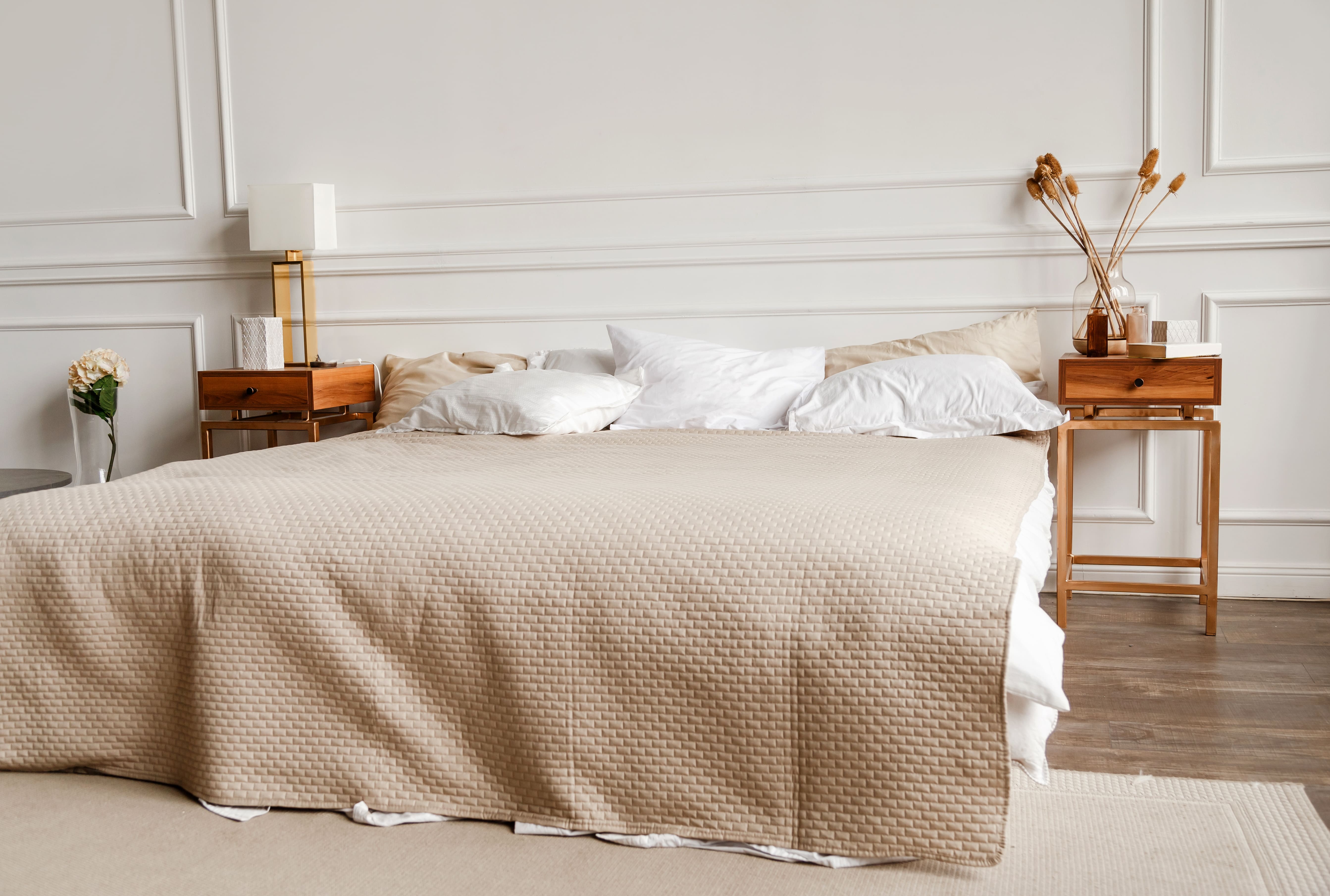
Sleeping in a clean, fluffy, and well-maintained duvet is essential for restorative sleep. A true thermal barrier, the duvet accumulates moisture and dust over the nights. While many sleepers neglect its care, rigorous maintenance can double its lifespan. This guide provides you with all the keys to maintain your duvet on a daily basis and during seasonal changes.
Why is duvet maintenance crucial?
A quality duvet represents an investment. If not properly maintained, it quickly loses its insulating properties and can become a breeding ground for allergens.
- Hygiene and health: The accumulation of sweat and dead skin promotes the development of dust mites, the main culprits of allergic rhinitis and worsening nighttime asthma.
- Comfort maintenance: Clumping filling creates thermal bridges (cold spots) and exposes you to uneven nights, too hot on one side, too cool on the other.
- Economy: A well-maintained synthetic duvet lasts about 5 years, while a down model can last 10 to 12 years with proper care.
Summary of maintenance by filling type
Each material has specific cleaning requirements. Here’s a summary table to avoid mistakes during washing:
| Filling Type | Washing Frequency | Recommended Temperature | Drying |
|---|---|---|---|
| Synthetic | Twice a year | 40 °C to 60 °C | Tumble dryer possible |
| Down and feathers | Once a year | 30 °C to 40 °C (delicate) | Tumble dryer essential |
| Wool or Silk | Rarely | Dry cleaning | Air dry in the shade |
| Cotton / Bamboo | 1 to 2 times a year | 30 °C to 40 °C | Air dry |
Washing: The Expert’s Golden Rules
Check the Drum Capacity
A duvet should never be compressed in the machine’s drum. For a double duvet (240 × 220 cm), a machine of 10 kg minimum is necessary. If your home machine is too small, opt for laundromats or a professional dry cleaner. It is better to make this trip once a year rather than risk irretrievably clumped filling.
Choosing the Detergent
Use a liquid detergent rather than powder, as it rinses out more easily and does not leave residues in the fibers. For natural duvets, choose a special “wool” or “delicate laundry” detergent to preserve the natural oils of the down that ensure its fluffiness. Avoid overly generous doses: an overdose of detergent is as harmful as an underdose, as residues can clog and weigh down the fibers. As a general rule, reduce the recommended dose by half for a duvet, and schedule an additional rinse cycle.
Find a gentle detergent suitable for duvets and delicate laundry on AmazonThe Critical Drying Step
Poor drying is the primary cause of degradation of a duvet. If moisture remains at the core of the filling, mold and stubborn odors can appear — and no subsequent washing can completely eliminate them.
- The Tumble Dryer: This is the ideal solution to restore volume. Use a moderate temperature cycle (maximum 60 °C), and often count on two to three complete cycles before the filling is perfectly dry at the center.
- The Drying Balls Trick: Place two or three wool or rubber drying balls in the drum. By bouncing, they “beat” the filling and prevent feathers or fibers from forming compact balls, thus reducing drying time by 20 to 30%. Tennis balls can work, but prefer clean and uncolored balls to avoid any residue on the white cover of the duvet.
- Air Drying: If you don’t have a tumble dryer, lay the duvet flat (not hanging) on several lines to distribute the weight well. Shake it every 3 hours to aerate the fibers and systematically check that the core of the filling is completely dry before storing it.
Daily Tips to Extend Lifespan
Maintenance is not limited to annual washing. Simple daily actions make the difference between a duvet that lasts 4 years and one that lasts 10:
- Shake the duvet every morning: This helps to reintroduce air into the filling and evenly distribute the fibers, avoiding compressed areas.
- Ventilate the room: Open the windows for 15 minutes a day, even in winter, to expel the body moisture accumulated during the night. A well-ventilated room also contributes to better sleep quality and reduces the proliferation of dust mites.
- Use a protective cover: The cotton or linen cover acts as a first filter against dust and sweat. Ideally, wash it every week or every two weeks. This modest investment is the most cost-effective action you can take to extend the lifespan of your duvet.
How to Store Your Duvet at the End of the Season?
When the nice days arrive, the storage of your winter duvet must be done carefully. Poor storage can ruin the benefits of a whole year of good care in just a few months.
- Pre-wash: Never store a duvet that has not been washed and perfectly dried. Even minimal residual moisture is enough to start the development of mold during the storage months.
- Breathable bag: Use a fabric bag (cotton) rather than a plastic bag. Plastic traps residual moisture and can yellow the cover when exposed to UV light. A simple non-woven cotton storage bag or an oversized pillowcase works perfectly.
- Avoid excessive compression: While vacuum storage bags are convenient for saving space, they are not recommended for natural down duvets as they can break the down clusters, those tiny filaments that give down its loftiness.
- Storage location: Prefer a dry space, away from direct light and distant from heat sources (radiators, overheated attics in summer). A bedroom closet or a ventilated wardrobe is ideal.
View on AmazonChoosing the right duvet — beyond maintenance, the choice of filling and weight according to the temperature of your room determines 80% of thermal comfort. An inappropriate weight will inevitably lead you to sweat too much or wake up cold, regardless of the quality of maintenance.
What to Remember
Maintaining your duvet is a guarantee of lasting comfort and health. By respecting washing temperatures and ensuring complete drying, you preserve the thermal properties of your bedding. Remember that a duvet that no longer regains its fluffiness after washing or shows signs of mold should be replaced to ensure optimal sleep hygiene. To go further in the maintenance of your bedding, check out our complete guide on bedding maintenance .