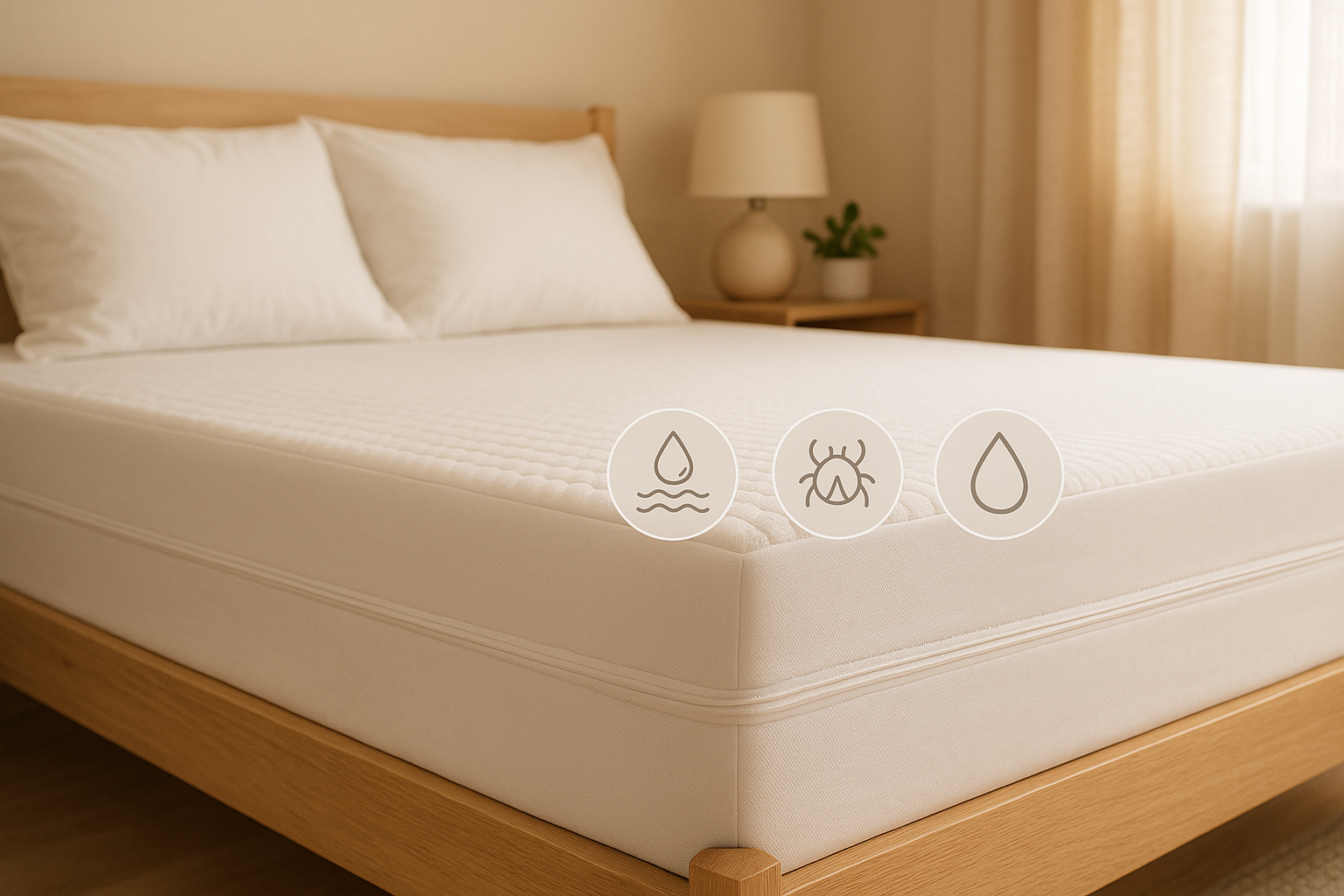
Your back hurts when you wake up, or you’re sweating through the night, or you’ve spent three evenings on Amazon scrolling through hundreds of mattress listings without getting closer to a decision. This guide is for you. It focuses on brands that are genuinely available in the United States in 2026, with verified pricing and real trade-offs rather than marketing copy.
We didn’t sleep on these mattresses ourselves. What we did do is cross-reference expert reviews and brand specifications to build a clear-headed comparison you can actually use.
What Makes a Mattress Worth Recommending?
Before getting into specific models, it’s worth spelling out the criteria that matter most. Pressure relief matters at the shoulders and hips for side sleepers and along the lumbar curve for back sleepers. Motion isolation is critical if you share the bed. Foam generally outperforms innerspring here. Temperature regulation is a persistent weakness of traditional memory foam, now addressed with varying success by gel layers, open-cell foam, and hybrid coil designs. Edge support is often underrated: weak perimeter edges effectively shrink your usable sleep surface by 20 to 30%, which you’ll notice if you sleep near the side of the bed or sit on the edge to get dressed.
Sleep trial length and warranty terms have also become meaningful differentiators. In the USA, 100 nights has become the floor for reputable online brands; 365 nights is now offered by several major players and genuinely removes purchase anxiety.
Most sleepers under 230 lbs. are well served by a medium to medium-firm feel, roughly a 5 to 6.5 on a 10-point firmness scale. Heavier sleepers generally need firmer support to prevent excessive sinkage and premature wear.
Purple: The Grid That Changed the Conversation
Purple isn’t a foam mattress, and it isn’t a traditional innerspring. The brand’s defining feature is its Purple Grid: a hyper-elastic polymer grid that flexes under pressure points while remaining firm beneath the rest of the body. It collapses under your shoulder and hip, supports your lower back, and doesn’t trap heat the way dense memory foam does. That last point alone makes Purple worth considering for hot sleepers.
The current flagship, the Purple Mattress, is now offered in a hybrid version with pocketed coils beneath the Grid layer. Pricing starts at around $999 for a twin and approximately $1,499 for a queen, up to around $1,999 for a king. Higher-tier models push into the $2,000 to $2,999 range for a queen.
Who it suits best: Hot sleepers and combination sleepers who have found traditional memory foam too warm or too slow to respond. The Purple Grid technology mimics the strong pressure relief of foam without sleeping hot at night. The feel is genuinely unlike anything else; some people take to it immediately, others never bond with it. That’s precisely why the sleep trial exists.
Who should look elsewhere: Strict stomach sleepers who need a very firm, flat surface often find the Grid too giving at the surface level. Budget shoppers will find Purple firmly in the mid-to-premium tier.
Browse Purple Mattresses on AmazonCasper: Solid, Versatile, and Slightly Overrated
Casper essentially created the American mattress-in-a-box category and has continued refining its lineup. The current entry-level model, the Casper One, is an all-foam mattress with a zoned support system: firmer in the center (lumbar zone) and softer at the head and foot ends. Firmness lands around 6.5 out of 10, which is medium-firm.
The Casper One has a price range of $599 to $1,358 depending on size. For a queen, expect to pay roughly $874 to $1,074, though Casper runs promotions frequently and prices fluctuate.
The zoned design is genuinely useful for back sleepers and lighter side sleepers. Reviewers consistently note that the Casper is particularly well suited to lightweight sleepers, those under 130 lbs., where its responsive polyfoam provides good contouring without the excessive sinkage that denser foams can create for lighter bodies.
The Casper has a balanced foam feel, which is honest if unexciting: it’s not the most pressure-relieving mattress in its price range, not the coolest-sleeping, and not the bounciest. But it does most things reasonably well, and for many sleepers that reliability is exactly the point.
The higher-end Casper Nova and Wave Hybrid models extend the lineup toward $2,795 for a queen, adding more sophisticated zoning and hybrid construction. At that price point it’s worth putting them side by side against Purple’s mid-tier options before deciding.
Browse Casper Mattresses on AmazonThe Best Amazon Mattresses in 2026
Amazon has become a legitimate first stop for mattress shopping, not just for convenience but because several strong brands sell primarily through the platform. Three names appear consistently at the top of credible roundups:
Nectar Classic: Best Overall Value
The Nectar Classic is a 12-inch memory foam mattress with a medium feel (around 6.5 out of 10). It comes with a 365-night sleep trial and a lifetime warranty, a combination that’s hard to beat at this price tier. Its cool-to-the-touch top layer disperses heat noticeably better than traditional memory foam.
List price runs from approximately $1,053 to $2,296 for a queen before discounts, but Nectar runs promotions almost continuously and a queen regularly comes in around the $600 to $700 range after sales. Always check the current price before assuming the sticker figure applies.
Best for: side and back sleepers who want memory foam comfort without premium-brand markups.
Zinus Green Tea: Best Budget Pick
For a guest room, a first apartment, or a firm price ceiling, Zinus is the honest answer. The Green Tea Memory Foam Mattress has accumulated over 167,000 Amazon reviews, is fiberglass-free, comes in a medium-firm feel, and is available under $300. Don’t expect the pressure relief or durability of a $1,000+ mattress. But for the price, it consistently outperforms expectations, especially for back sleepers and lighter individuals.
Helix Dawn: Best Hybrid on Amazon
For sleepers who want the bounce and airflow of coils with a foam comfort layer on top, the Helix Dawn is a hybrid mattress priced at around $699 for a queen, available in twin through California king sizes, backed by a 365-night sleep trial. It skews firm, making it a natural fit for stomach sleepers and heavier back sleepers.
Explore Top-Rated Mattresses on AmazonHow to Choose: A Practical Framework
There is no single best mattress: there is a best mattress for your sleep position, body weight, and budget.
By sleep position: Side sleepers need more give at the shoulder and hip; a medium or medium-soft feel (4 to 6 out of 10) works for most. Back sleepers want lumbar support without excessive sinkage, so medium-firm (5.5 to 7) is the general sweet spot. Stomach sleepers need firm support to prevent the spine from arching; anything below a 6 is usually a mistake.
By body weight: Sleepers under 130 lbs. sink less into any mattress and tend to prefer softer, more responsive surfaces. Over 230 lbs., the calculus reverses: denser support layers and firmer foams become necessary to avoid premature sagging.
By sleep temperature: Prioritize hybrid construction or the Purple Grid if you tend to sleep hot. Thick memory foam will trap heat regardless of marketing language around “cooling gel.”
By budget:
- Under $400: Zinus and similar value-foam brands are your realistic options.
- $400 to $800: Nectar Classic, Helix Dawn, Casper One, all solid choices from established brands with meaningful trial periods.
- $800 to $1,500: Purple, Casper Nova, Helix Midnight Luxe, all with genuinely premium construction.
- Above $1,500: Purple RestorePlus, Casper Wave Hybrid, Saatva Classic (a luxury innerspring brand with white-glove delivery). Worth considering only if your previous mattress failed you in specific, identifiable ways.
For a broader comparison of international picks and buying criteria, our complete mattress ranking guide covers additional options across markets.
Frequently Asked Questions
What's the difference between Purple and Casper — which one should I choose?
The fundamental difference is the comfort layer. Casper uses polyfoam with a zoned support system that feels familiar: slightly springy, pressure-relieving, and temperature-neutral rather than warm. Purple replaces foam entirely with its polymer Grid, which creates a distinctly different sensation: firm support beneath body weight combined with instant give at pressure points, and better airflow than foam.
If you’ve always slept on foam and been reasonably happy, Casper is the safer bet. If you’re a hot sleeper or have tried multiple foam mattresses without finding the right feel, Purple is worth a genuine trial period. Both brands land in the $900 to $1,500 range for a queen depending on the specific model and current promotions, so price is rarely the deciding factor between them.
Is a 365-night sleep trial really necessary, or is 100 nights enough?
A hundred nights is sufficient for most people. It typically takes around 30 nights for your body to adapt to a new mattress. After that, you’ll know whether the feel is fundamentally right. The main value of a longer trial (Nectar and Helix both offer 365 nights) is psychological: it removes the pressure to decide quickly, which can itself distort your perception of comfort.
One practical caution: initiating a return in month 11 is logistically messier than month 3. If something isn’t working, act early. And confirm the pickup process before you buy. Most brands arrange free collection, but the details vary.
Do I need a box spring with a mattress-in-a-box?
No. All the brands covered here (Purple, Casper, Nectar, Helix) are designed to work on a flat platform base, a slatted frame with slats no more than 3 inches apart, or an adjustable base. A traditional box spring with a wire spring system inside is actually counterproductive with foam and hybrid mattresses: it adds unnecessary height and can void warranties.
If you’re using an older metal frame with widely spaced rails, add a bunkie board or a solid platform surface first. Using the mattress directly on the floor is technically fine short-term but reduces airflow beneath the mattress and can trap moisture over time.
How long should a quality mattress last?
Most foam and hybrid mattresses are realistically built for 8 to 10 years of regular use. Premium brands typically offer 10-year warranties, which cover manufacturing defects rather than normal wear. Sagging is the primary failure mode: a visible indentation exceeding 1.5 inches generally signals it’s time to replace. Heavier sleepers will typically see earlier degradation.
To extend lifespan: rotate the mattress 180° (head to foot) every six months, use a quality mattress protector from day one, and ensure your foundation provides even, consistent support across the full surface.
Are mattresses bought through Amazon as good as buying directly from the brand?
Yes, for the most part. Brands like Nectar, Zinus, and Helix sell identical products on Amazon and on their own websites, and prices are usually comparable, occasionally lower on Amazon during Prime Day or major sale events.
The one area where buying direct can be cleaner is after-sale service. Initiating a warranty claim or return sometimes moves faster through a brand’s own customer support team than through Amazon’s system for large, bulky items. Whatever you choose, verify that the seller on Amazon is the brand itself or a listed authorized reseller: third-party sellers occasionally offer older inventory or discontinued model versions.
Which US mattress size should I pick?
The standard size lineup in the United States is: Twin (38" x 75"), Twin XL (38" x 80"), Full (54" x 75"), Queen (60" x 80"), King (76" x 80"), and California King (72" x 84"). All major brands covered here (Purple, Casper, Helix, Nectar) offer the full range.
For a single adult, a Full works but a Queen is noticeably more comfortable. Couples almost always benefit from a Queen at minimum, or a King if either person moves frequently in their sleep or if pets or children regularly join. The California King gives more length than a standard King (4 inches) but is slightly narrower: it’s a practical choice mainly for sleepers taller than 6'2".