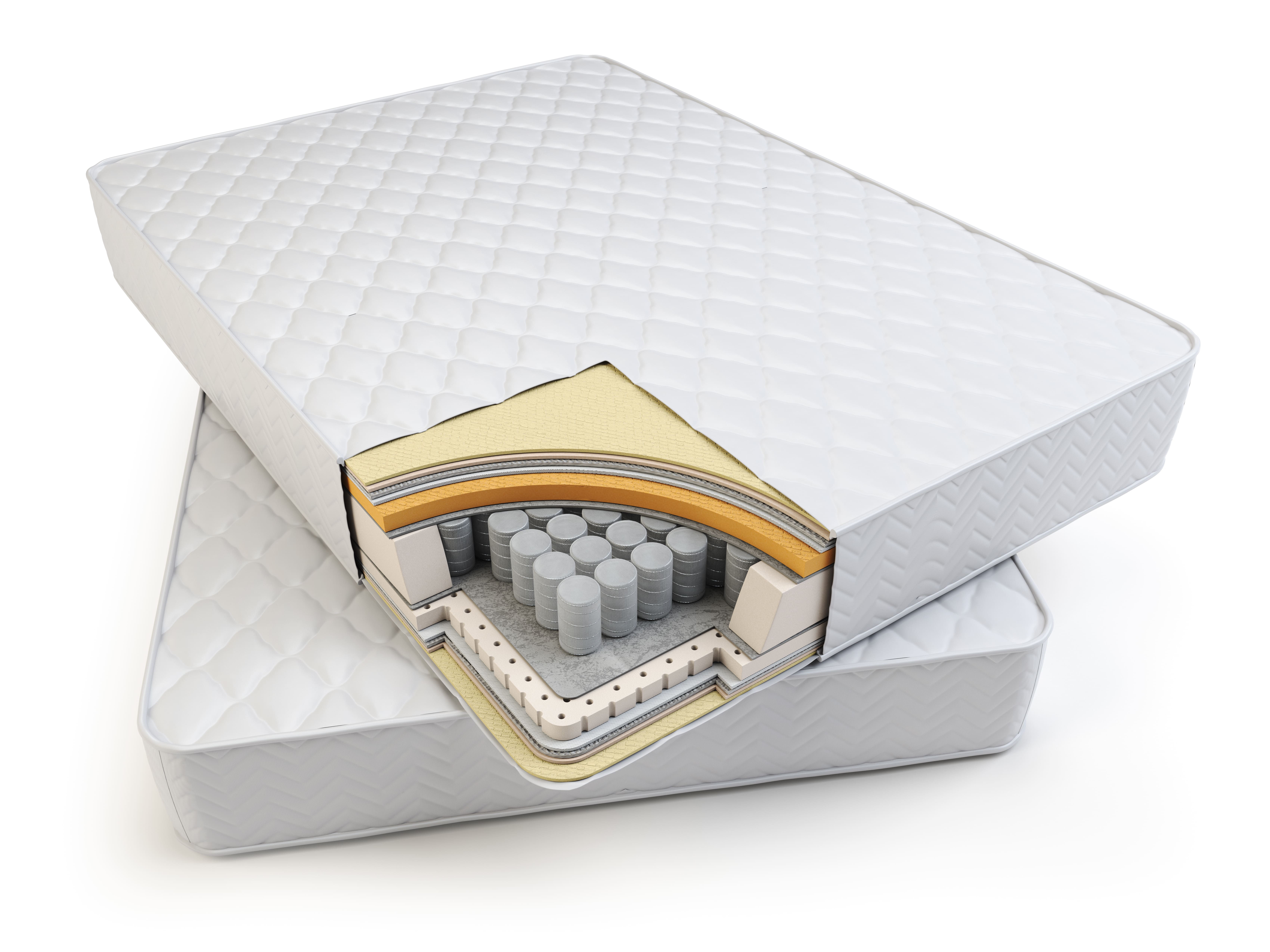
Choosing a mattress is an important decision: we spend about a third of our lives on it. Among the many options available, three main technologies dominate the market: latex mattresses, foam mattresses, and spring mattresses. This guide aims to help you understand the fundamental differences between these three types, so you can make an informed choice that suits your needs.
Quick Comparison Table
| Technology | Comfort | Support | Thermoregulation | Durability | Budget |
|---|---|---|---|---|---|
| Latex | Elastic, bouncy | Excellent | Very good | 10–15 years | Starting from ~€900 |
| Foam | Contouring | Variable | Average to good | 5–10 years | Starting from ~€250 |
| Springs | Firm, ventilated | Firm and precise | Very good | 8–12 years | Starting from ~€400 |
The 3 technologies in detail
The latex mattress
Latex can be natural (derived from rubber tree sap) or synthetic. Natural latex is more durable and elastic, and its longevity is recognized by the industry at 15 years or more for quality models. There are mattresses made of 100% latex or hybrids (latex + springs). Thanks to its cells, it offers excellent ventilation, ideal for people who sweat. The GOLS (Global Organic Latex Standard) certification guarantees the content of organic latex and the absence of harmful substances: this is the reference to look for for an eco-friendly purchase. Several French brands, such as Kipli or Latexbio, offer 100% natural latex models certified GOLS, made in France, available from around €800–900 for a 140×200 cm size.
The foam mattress
There are three main categories of foam, with very different characteristics and price ranges:
- Polyurethane foam: entry-level, low density, limited lifespan.
- HR foam (high resilience): good support, good value for money, recommended starting from 35 kg/m³.
- Memory foam: conforms to the body’s curves, ideal against pressure points — choose a density ≥ 50 kg/m³ for satisfactory durability.
The spring mattress
Several technologies are available, with very distinct levels of comfort and motion isolation:
- Biconical springs: old models, practically absent from new collections.
- Multispring springs: continuous structure, homogeneous support, attractive value for money in the entry-level range.
- Pocket springs: each spring is individually encased, providing excellent sleeping independence, very good ventilation, and precise support in body areas.
Detailed Comparison
Comfort and Feel at Sleep
The feel varies radically from one technology to another. Latex provides a bouncy sensation and dynamic support: the body is supported without sinking in. Memory foam, on the other hand, offers a very enveloping cocoon effect, with the body gradually nestling in as the material adapts to body heat. Springs, for their part, offer a firmer and more tonic welcome, often appreciated by sleepers who like to feel a reactive surface beneath them.
Firmness and Support
Latex ensures uniform support across the entire surface of the mattress, promoting good spinal alignment, regardless of sleep position. Foam varies greatly depending on its density: HR foam provides adequate support, while memory foam effectively relieves pressure points (shoulders, hips). Pocket springs are particularly effective for heavier individuals, thanks to their ability to provide firm and localized support.
Adaptation to Morphology
Latex often comes in zoned versions (7 comfort zones), allowing support to be tailored to different parts of the body. Memory foam precisely molds to the contours of the sleeper, which is particularly beneficial for those suffering from joint pain. Springs offer more standardized support but are very effective for larger body types or back sleepers.
Thermal Regulation
Thermal regulation is a criterion often underestimated. Latex, thanks to its open-cell structure, allows for very good air circulation. Pocket springs benefit from excellent natural ventilation, with air circulating freely between the coils. Classic or memory foam tends to retain more body heat — a drawback mitigated in recent models equipped with ventilation channels or integrated gel foam.
Durability
Natural latex is the most durable technology: quality models last between 10 and 15 years, or even longer with proper maintenance. Well-constructed pocket springs last 8 to 12 years. Foam heavily depends on the chosen density: HR foam ≥ 35 kg/m³ lasts 7 to 10 years, while quality memory foam (≥ 50 kg/m³) lasts between 6 and 9 years.
Environmental Impact
Certified GOLS natural latex is the most eco-friendly option: renewable material, biodegradable, with low chemical emissions. Polyurethane foam involves more intensive chemical processes and has low recyclability at the end of its life. Metal springs are technically recyclable, but assembly with other materials often makes disassembly complex and costly.
Find a certified GOLS natural latex mattress on Amazon.frBudget
The price ranges for 2026 in France are as follows. Foam mattresses are the most accessible entry-level option, starting at around €250 for decent HR foam and up to €600–900 for quality memory foam models. Pocket springs start at around €400 for entry-level and reach €900–1,500 for mid/high-end. Natural latex represents a larger investment — expect to pay from €800–900 for a 140×200 cm certified GOLS — but its superior lifespan often makes it a better long-term calculation.
Box Spring Compatibility
Compatibility with your existing box spring is a point to check before purchase. Latex is ideally used on a slatted base (maximum recommended spacing: 6 cm). Foam works well with both slatted bases and upholstered bases. Springs perform better with a spring or rigid slatted base — avoid upholstered bases that limit mattress ventilation.
Which mattress according to your profile?
Specific needs
The profile of each sleeper strongly influences the optimal choice. People prone to night sweating will be better served by latex or pocket springs, whose natural ventilation effectively regulates temperature throughout the night. In case of back pain, memory foam or zoned latex is preferable as it reduces pressure points on sensitive areas. Those suffering from allergies will direct their choice towards certified hypoallergenic natural latex or a spring mattress with a washable dust mite cover at 60 °C.
Morphology
People of heavy build (over 90–100 kg) will find the most suitable support in quality pocket springs or firm latex, whose resistance to compression ensures spinal alignment over the long term. Thinner or lighter individuals will be more comfortable on soft foam or medium comfort latex, which better accommodates a lower body weight.
Sleeping environment
In a warm climate or in a poorly ventilated room, latex and springs are preferable for their ability to dissipate heat. For a shared room with sleepers on different cycles or with distinct morphologies, memory foam or pocket springs offer the best sleeping independence, limiting the transmission of movements from one side of the bed to the other. Note: latex, due to its highly elastic nature, absorbs slightly less movement than pocket springs or memory foam — a point to keep in mind for couples with staggered sleep patterns.
Personal priorities
Your budget and values also guide your choice. With a limited budget, HR foam remains the best compromise between quality/durability/price. If you prioritize eco-responsibility, certified GOLS natural latex is the reference. For maximum durability with the least compromise, quality latex or high-end pocket springs are the most durable choices over 10 years and beyond.
To compare all the technologies and brands available in France, check out our complete mattress comparison .
Compare pocket spring mattresses available on Amazon.fr View on AmazonPractical Tips Before Buying
How to Properly Test a Mattress?
Take advantage of home trial periods, now offered by most online brands — usually a minimum of 100 nights, with free mattress return if you are not satisfied. In-store, lie down in your usual sleeping position — on your back, on your side, or on your stomach — and stay for at least 10 minutes to feel the actual comfort. If you sleep as a couple, test it together: the mattress’s reaction under a second weight can significantly change the sensation perceived by each person.
To Absolutely Avoid
Do not choose a mattress solely based on price: a model that is too cheap will quickly deform and harm the quality of your sleep. Always check compatibility with your existing box spring — a poor match between the two can halve the mattress’s lifespan. Finally, do not neglect thermal regulation: a mattress unsuitable for your thermal profile can cause nighttime awakenings as debilitating as poor support.
Questions to Ask Yourself Before Buying
- Do I often feel hot at night?
- Am I prone to lower back or neck pain?
- Is my current mattress too soft, too firm, or simply worn out?
- Is my priority comfort, budget, or durability?
- Should I consider the needs of a partner with different sleeping habits?
FAQ
What is the average lifespan of each mattress?
The lifespan varies depending on the quality of manufacturing and usage, but the usual ranges are as follows: certified natural latex lasts 10 to 15 years, making it the most durable technology; well-designed pocket spring mattresses last 8 to 12 years; quality HR foam lasts 7 to 10 years; memory foam lasts 6 to 9 years depending on density — be sure to choose ≥ 50 kg/m³ to aim for the higher end of this range. These durations assume use on a suitable base, regular flipping of the mattress when the model is reversible, and the use of a breathable mattress protector that protects the materials from moisture and dust mites.
Are all mattresses compatible with an electric or adjustable base?
No, and this is a crucial point to check before purchase, as a compatibility error can irreparably damage the mattress. Foam and soft latex mattresses are generally compatible with adjustable electric bases, provided they are flexible enough — check the thickness and the absence of a rigid layer in the composition. Traditional spring mattresses or biconical spring mattresses are incompatible, as their structure resists bending and can permanently deform. Some hybrid mattresses are compatible depending on the flexibility of their comfort layer: always consult the product sheet or contact the manufacturer before purchase. For an adjustable or medical bed, HR foam or latex remains the safest and most common choice.
How to maintain your mattress to maximize its longevity?
Maintenance directly affects the longevity of the mattress, and a few simple gestures make a real difference. Air it out every morning by leaving the bed open for 10 to 15 minutes to expel accumulated body moisture overnight. Flip it head-to-foot every 3 to 6 months if the model is reversible, to evenly distribute wear. Use a breathable and washable mattress cover at 60 °C to protect against dust mites, stains, and sweat. Avoid placing heavy loads for extended periods, as this would deform the comfort layers. In case of a stain, clean with cold water and mild soap — never use harsh chemicals that alter foams and latex.
Is a latex mattress suitable for allergy sufferers?
Natural latex is naturally hypoallergenic, antibacterial, and resistant to dust mites, making it a top choice for people suffering from respiratory allergies or asthma. Its open-cell structure limits moisture accumulation, the main cause of dust mite proliferation. However, it is important to distinguish between two situations: people allergic to dust or dust mites fully benefit from certified GOLS natural latex, while the rare individuals with a specific allergy to latex proteins (natural rubber allergy) must avoid it and opt for an HR foam or pocket spring mattress with a treated hypoallergenic cover. In case of doubt, consult your doctor or allergist before purchase.
Is a hybrid mattress preferable to a purely foam or latex mattress?
The answer depends on your sleeping profile and priorities. A hybrid mattress (foam + springs or latex + springs) cleverly combines the advantages of both technologies: the pocket spring base provides ventilation, dynamic support, and sleeping independence, while the upper comfort layer in foam or latex ensures enveloping and pressure relief. This type of mattress is particularly suitable for couples whose body types or sleeping habits differ, as well as for people who suffer from heat at night. On the other hand, a 100% latex or 100% HR foam mattress is often more consistent for very specific needs: strict eco-design, particular thermal profile, or targeted budget — hybrids generally fall into the mid or high-end range.
What budget can one expect to find a good mattress in 2026?
In 2026, the price ranges in the French market are quite clear. For a quality HR foam mattress (density ≥ 35 kg/m³), expect to pay around ~250–400 €. A mid-range pocket spring mattress is around ~600–900 €. Certified natural latex GOLS starts at around ~800–900 € for a 140×200 cm, and can exceed 1,500 € for high-end models. These prices are before promotions, which are common in this sector: comparing several brands and taking advantage of sales or trial periods can allow access to a higher range for a controlled budget.
What trial period can one expect when purchasing online?
Almost all brands selling online now offer a home trial period of at least 100 nights, with free mattress return in case of dissatisfaction — this has become the industry standard in 2026. Some brands go up to 120 or 365 nights. This period is crucial as the body generally takes 3 to 6 weeks to adapt to a new mattress: discomfort felt in the first nights may spontaneously disappear over time. Always take full advantage of the trial period before requesting a return, and check the specific conditions — especially if the trial also covers king-size mattresses or natural latex models, which may be subject to slightly different conditions depending on the brand.