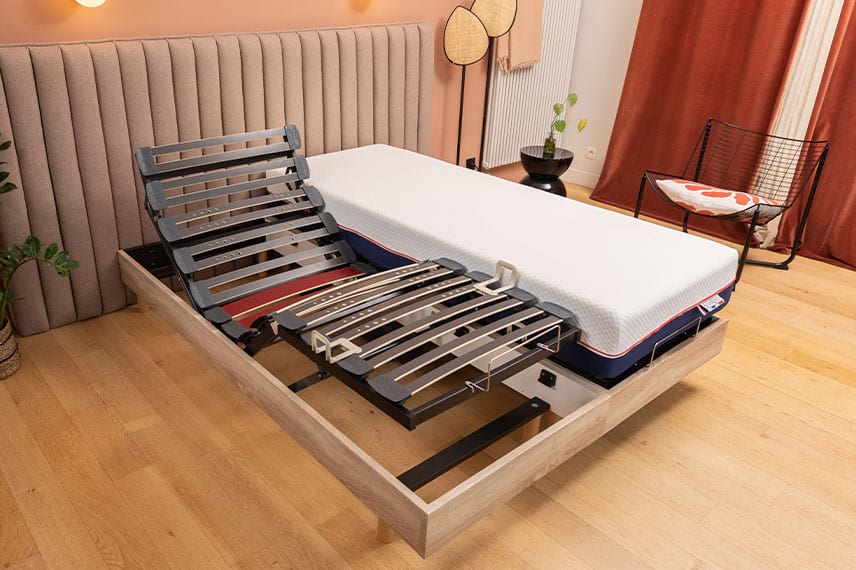
Choosing a mattress for an electric bed is a crucial step to ensure restorative sleep and maintain health. Given the diversity of models and technologies, it is essential to understand the bedding compatibility criteria to optimize comfort, durability, and the benefits of your relaxation bed. This article guides you clearly and accessibly in selecting the right mattress for your electric bed.
Definition and Context
What is an electric bed?
An electric bed, or relaxation bed, is a motorized base that allows you to adjust the inclination of the head, back, and legs. It promotes relaxation, comfort while reading or watching, and meets specific needs related to health or mobility.
Why is the choice of mattress crucial?
An unsuitable mattress can harm the operation of the electric base, accelerate its wear, and compromise sleep quality. Conversely, a compatible mattress follows the movements of the base, supports the spine, and improves the quality of rest (source: INSV).
Bedding Compatibility: Essential Criteria
For a mattress to work with an electric bed, it must meet several criteria:
- Softness and flexibility: to follow the movements of the base without deforming.
- Adequate support: uniform support, good pressure distribution.
- Durability: elastic and durable materials.
Suitable Mattress Technologies
Polyurethane or Memory Foam
- Advantages: Excellent adaptability, good support, pressure relief.
- Limitations: Sometimes retains heat.
Latex (natural or synthetic)
- Advantages: Elasticity, durability, ergonomic support.
- Limitations: More expensive, heavier mattresses.
Latex is often the best choice for a relaxation base: its great elasticity allows it to conform to the joints of the base without deforming or breaking over time. A 100% natural latex model like that from Kipli combines this flexibility with excellent ventilation, which is valuable on a bed that is poorly ventilated due to its mechanics. For more information, check our natural latex mattress buying guide .
Discover the Kipli natural latex mattress, suitable for relaxation basesSprings
- Disadvantages: Incompatible with electric bases (lack of flexion, rapid wear).
To remember: prioritize foam or latex mattresses.
Recommended Thickness
- < 20 cm: limited comfort, rapid wear.
- > 30 cm: too rigid to follow movements.
- Ideal: between 20 and 30 cm depending on body type.
Firmness and Comfort
The right mattress should offer a balance between support and comfort. A mattress that is too firm increases pressure points, while one that is too soft lacks support. If you are unsure about this point, our firmness guide (firm, balanced, or soft) will help you decide based on your body type.
Advantages and Limitations
Advantages
- Relieves back and muscle pain.
- Promotes circulation (elevated legs).
- Improves breathing (elevated torso).
- Offers sleeping independence (2 mattresses on a double base).
- Aids autonomy for the elderly or those with reduced mobility.
Limitations
- Higher cost than traditional mattresses.
- Significant weight, especially in latex.
- Regular maintenance recommended.
Comparison with Other Technologies
| Mattress Type | Compatible? | Strengths | Weaknesses |
|---|---|---|---|
| Foam / Memory Foam | Yes | Adaptability, comfort | Retains heat |
| Latex | Yes | Durability, elasticity | Weight, cost |
| Springs | No | Ventilation, price | Incompatible, rapid wear |
| Hybrid | Sometimes | Balanced comfort and support | Check spring rate, flexibility |
Concrete Use Cases
- Back Pain: memory foam or latex mattress + electric base = precise adjustment and relief. Check our mattress guide for back pain .
- Reduced Mobility: increased autonomy, easier access to the bed.
- Couples: double base with two single mattresses = personalized comfort.
Practical Tips from Our Expert
Best Practices
- Ensure the mattress is compatible with electric bases.
- Choose the right size and thickness.
- Opt for breathable materials.
- Air out the room, use a mattress protector, and rotate the mattress if possible.
Mistakes to Avoid
- Using a spring mattress: incompatible.
- Choosing a mattress that is too thick or too thin.
- Neglecting sleeping independence for couples.
FAQ – Answers to Frequently Asked Questions
Can a mattress topper be used on an electric bed?
Yes, provided you choose a soft and sufficiently thin topper so as not to hinder the mattress's flexion when the base articulates. Thin latex or memory foam toppers (3 to 5 cm) work well: they follow the movements without creating a breaking point. Avoid thick and rigid toppers, or those with springs, which would block the inclination and wear out prematurely. Also, consider securing it with elastic straps to prevent it from sliding during position changes.Is a mattress for an electric bed suitable for everyone?
Generally, yes, as long as the technology and firmness are adapted to your body type and sleeping position. A light sleeper will prefer a soft to balanced feel, while a heavier individual will need firmer support, all while remaining within a flexible technology (foam or latex). The electric bed is particularly beneficial for those with circulation issues, reflux, mild apnea, or back pain, as well as seniors and those with reduced mobility for whom inclination facilitates getting in and out of bed. Only sleepers specifically seeking traditional spring mattresses will not find satisfaction, as this technology is incompatible.What is the lifespan of a mattress for an electric bed?
On average, 8 to 10 years, like a traditional mattress, but wear may be slightly faster due to the repeated flexions imposed by the motorized base. A good density latex mattress generally withstands these stresses better than an entry-level foam. To preserve its longevity, choose a model specifically designed for relaxation, respect the minimum density (at least 50 kg/m³ for foam), air it out regularly, and avoid leaving the base in an inclined position permanently. Careful maintenance and a protective cover significantly extend its lifespan.Is the mattress for an electric bed suitable for children?
Yes, but under supervision and with a secure base equipped with anti-pinch systems to avoid any risk during motorized movements.What are the signs that indicate it's time to replace your mattress?
Visible sagging, persistent hollows, pain or stiffness upon waking, increasing discomfort, as well as signs of mold or visible wear on the cover are all warning signals.Raising Awareness About Sleep Issues
Sleep is a fundamental pillar of health. Proper bedding can significantly improve the quality of nights. Choosing the right mattress for an electric bed is an investment in comfort, recovery, and long-term well-being.