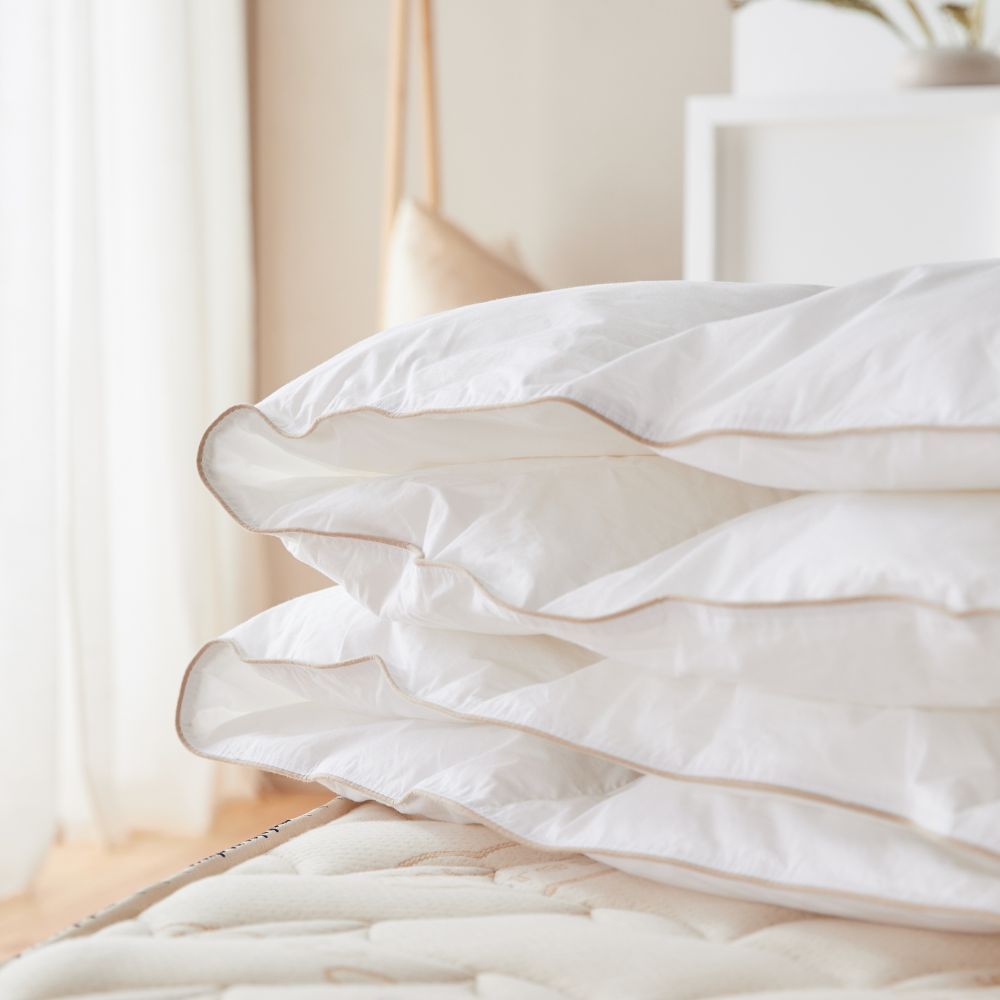
You wake up too often at night, have difficulty falling asleep, or are simply looking to reduce a background of anxiety at bedtime. The weighted blanket often comes up in this kind of conversation, balancing scientific promise and trendy effect. Here is what we really know, and how to choose the right one.
What Research Says (Without Overselling)
The weighted blanket — also known as a weighted blanket or weighted blanket — is based on a simple principle: the weight applied to the body would activate the parasympathetic nervous system, promoting a sense of calm similar to that of deep pressure on the skin. This is known as deep pressure stimulation.
The most cited study remains that of Ekholm, Spulber, and Adler, published in the Journal of Clinical Sleep Medicine in 2020. This randomized controlled trial involved 120 adults suffering from clinical insomnia and an associated psychiatric disorder (major depression, bipolar disorder, ADHD, or generalized anxiety). Participants used an 8 kg chain blanket or a light control blanket for four weeks.
After four weeks, the advantage of the weighted blanket on ISI (Insomnia Severity Index) scores was significant (p < 0.001), with a large effect size (Cohen’s d 1.90). ISI scores decreased from an average of 21.7 before the intervention to 9.2 at the end of the study. Symptoms of depression and anxiety also significantly decreased in participants using the weighted blanket.
These results are encouraging. But a few nuances are necessary: the study concerns patients followed for psychiatric disorders, not the general population. And using an 8 kg blanket (a weight much higher than usual recommendations) in a clinical context does not necessarily translate to a similar effect for someone who sleeps well most of the time. Other more modest studies suggest more discreet benefits in populations without pathology.
The honest conclusion: for anxious or slightly insomniac sleepers, weighted blankets are worth trying. For severe sleep disorders, they can complement medical follow-up, but not replace it.
What Weight to Choose?
This is the most frequently asked question, and the answer is quite simple. The most common rule of thumb: about 10% of body weight, plus or minus a kilogram depending on personal preference. An adult weighing 70 kg would therefore look for a blanket weighing 6 to 8 kg; someone weighing 90 kg would look for 8 to 10 kg.
A few useful clarifications:
- Below 5 kg, the deep pressure effect is often insufficient to be perceived.
- Above 12 kg, comfort decreases for the majority of users: one feels constrained rather than enveloped.
- If you share a bed, each person should ideally have their own weighted blanket rather than choosing a common one.
- For children, weighted blankets are available, but the choice of weight must be validated by a pediatrician or doctor. Never put a weighted blanket on a child under 3 years old: the risk of suffocation is real.
Materials: Cotton, Minky, Fleece… Which One to Choose?
The outer cover of the blanket greatly influences thermal sensation and tactile comfort. The three main families:
Cotton: breathable, easily washable, suitable for people who get hot at night. Percale or flannel cotton is the classic choice, no surprise there. If you sleep in a heated room in winter or tend to sweat, this is the material to prioritize.
Minky (microfiber plush): very soft to the touch, immediate “hug” effect. However, it is not very breathable, which can become uncomfortable if you already tend to get hot. Suitable for children or chilly individuals who use the blanket on a couch.
Bamboo or Tencel: increasingly common options, slightly more expensive. These thermoregulating materials manage humidity better than microfiber, without the coolness of cotton. A good compromise for sleepers with variable thermal profiles.
As for the weighting itself, it is ensured either by glass beads (quieter and more uniform, preferable), plastic pellets (cheaper but sometimes noisy), or, more rarely, metal chains as in the Ekholm study.
Maintenance: The Often Overlooked Point
A weighted blanket of 7 or 8 kg does not fit in all washing machines. Check your drum capacity before buying: it generally requires at least 8 to 10 kg capacity to properly wash a 7 kg blanket. Otherwise, dry cleaning or a self-service laundromat (15 kg drums) quickly becomes a constraint.
Some models offer a removable cover that can be washed separately, which greatly simplifies daily life: wash the cover every two weeks like a pillowcase, and the inner blanket two to three times a year.
For drying: most models tolerate tumble drying at low temperature, but check the label. Glass beads withstand well; plastic pellets may deform at high temperatures.
View on AmazonContraindications: Who Should Avoid the Weighted Blanket?
Before ordering, here are some profiles for which caution is advised:
Children under 3 years old: categorically not recommended. The risk of suffocation is too high. For older children (autism, sensory disorders), use exists but must be supervised by a healthcare professional.
People with respiratory disorders: severe asthma, untreated sleep apnea, COPD. The extra weight on the chest can complicate breathing. Consult your doctor before trying.
Claustrophobia or hypersensitivity to pressure: for some profiles, the feeling of being “crushed” produces the opposite effect of what is sought. It should be tried with a guaranteed return period.
Very frail elderly individuals: difficulties in lifting the blanket if getting up at night, risk of falling.
If you have any doubts about your medical situation, discuss it with your doctor. The weighted blanket is a comfort accessory, not a certified medical device.
Budget and Price Range
The market has become significantly democratized. Today, you can find entry-level models at accessible prices, and high-end versions in premium materials (bamboo, certified organic cotton OEKO-TEX®) at much higher rates. The range extends from basic models under €50 to premium versions around €150, or even more for larger sizes or noble materials.
What justifies a higher price: the quality and uniformity of the weighting (well-distributed beads in small independent pockets), the breathability of the cover, and especially the ease of maintenance (removable cover, machine compatibility).
A simple rule: it is better to invest a little more in a well-designed model than to buy cheaply and end up with poorly distributed weighting that slides to one side.
Compare cotton weighted blankets on Amazon.frKey Takeaways
The weighted blanket is not a baseless gadget, but it is also not a universal solution. For anxious individuals at bedtime, light sleepers, or those looking to improve their sleep quality without medication, it is truly worth trying. The benefit/risk ratio is favorable for the vast majority of healthy adults.
Choose a weight around 10% of your body mass, a material suited to your sleeping temperature, and check that you can wash it at home before proceeding to checkout.
To go further in choosing your bedding accessories, consult our bedding accessories guide .
Do weighted blankets really work, or is it a placebo effect?
The question is legitimate. Studies on weighted blankets are still few and often focus on specific populations (autism spectrum disorders, psychiatric disorders), making conclusions difficult to generalize. The study by Ekholm et al. (2020), conducted on 120 patients with insomnia and associated psychiatric disorders, showed a very significant reduction in insomnia severity after four weeks of use. Other studies point towards an increase in salivary melatonin at the beginning of the night with a weighted blanket. That said, the placebo effect is difficult to completely exclude in sleep studies, and research on healthy sleepers remains limited. Our position: existing evidence is encouraging, the risk for a healthy adult is low, and a trial period of a few weeks allows one to decide for oneself.
What weight to choose for a child?
For children, the 10% body weight rule also applies, but it must be validated by a pediatrician or doctor, especially if the use is within the context of sensory disorders or ADHD. Never use a weighted blanket for a child under 3 years old: the risk of suffocation is too high. For older children, the child must always be able to lift and remove the blanket on their own. If the child is very small or has motor difficulties, consult a healthcare professional before any use.
Can a weighted blanket be used if one suffers from sleep apnea?
With caution. Sleep apnea is an obstruction of the airways during the night; the extra weight of a weighted blanket on the chest can worsen this obstruction or increase the feeling of oppression in some people. If your apnea is mild and well-controlled (by a CPAP device or a mandibular splint), the impact of a 6 to 8 kg blanket is generally low. However, if your apnea is severe or untreated, seek advice from your doctor or pulmonologist before trying. When in doubt, start with a minimal weight (5 to 6 kg) to assess your tolerance.
Is a separate cover needed for a weighted blanket?
Not mandatory, but highly recommended. Weighted blankets are difficult to wash in a machine once their weight exceeds 7 or 8 kg: a drum of at least 10 kg capacity is needed, and the drying cycle is long. With a removable cover in cotton or bamboo, you wash the cover regularly (about every two weeks) like any bedding, and you only wash the inner blanket two to three times a year. This also extends the product’s lifespan.
Can a weighted blanket help with daily anxiety, not just at night?
Yes, and this is actually how weighted blankets were first used in therapeutic contexts: sessions with occupational therapists, psychiatric units, support for autism spectrum disorders. Deep pressure stimulation can have a calming effect during the day as well: on a couch, in transport, or during stressful moments. Some models are designed to be lighter (3 to 4 kg) for daytime use. That said, if your anxiety is debilitating or chronic, a weighted blanket does not replace appropriate follow-up — it can simply contribute, marginally, to improving your daily comfort.