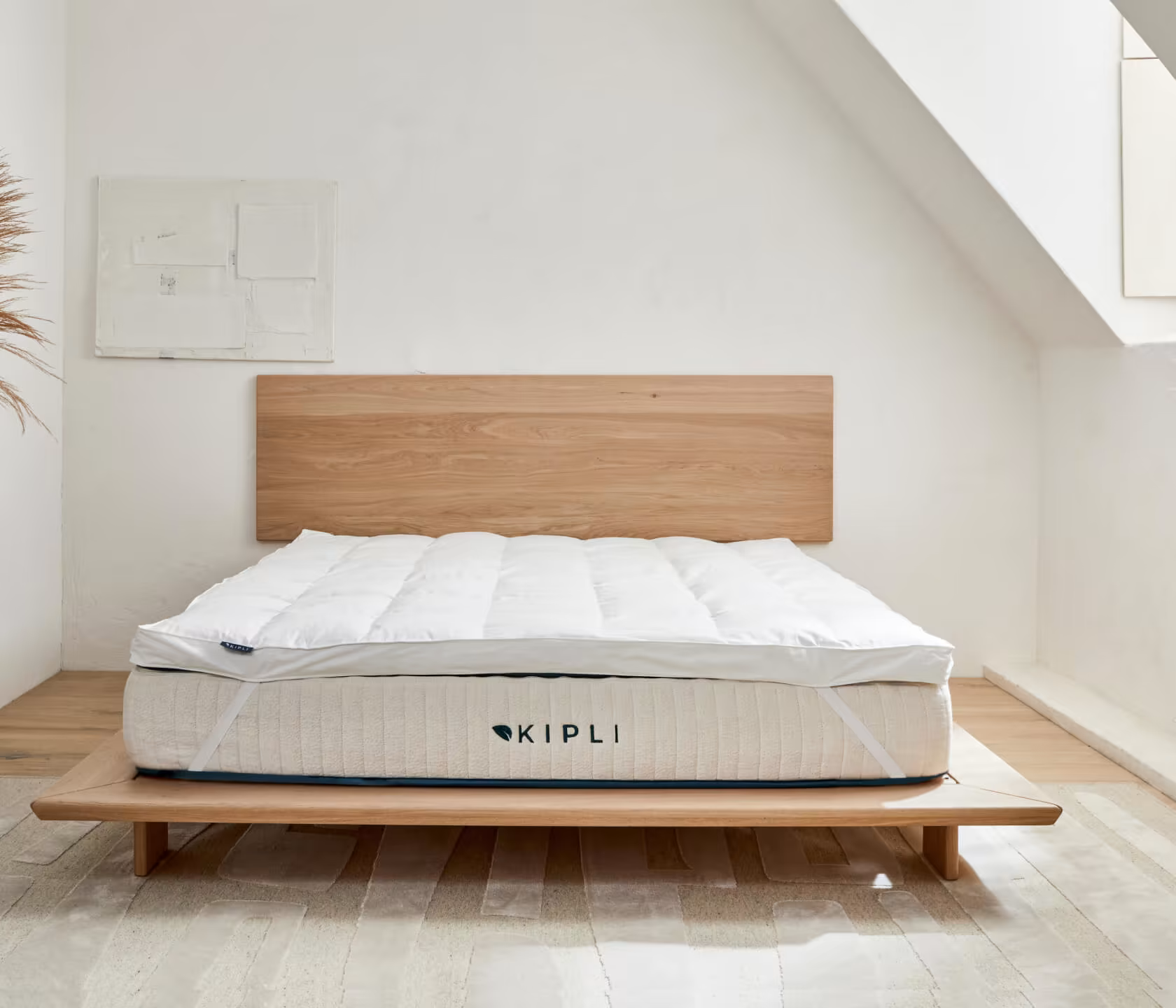
A back that aches upon waking, a mattress that is too firm purchased a few years ago — this is often the situation that leads to seeking a mattress topper rather than a complete replacement. The Kipli natural latex mattress topper is one of the few models that seriously meets this need, without compromising on materials or durability.
1. Presentation of the Kipli Mattress Topper
A Committed Brand
Kipli is a French bedding brand founded in 2017, specializing in products made from natural and bio-sourced materials, without chemical foam. Its manufacturing is artisanal and European — the mattress topper is produced in France — and the brand is present in France, Belgium, Switzerland, and Italy. Several recognized international certifications govern its materials.
Composition
- 100% natural latex certified GOLS and Eurolatex
- Cover: organic cotton + Tencel, washable at 30 °C
- Thickness: 5 cm
- Density: 65 kg/m³
- Firmness: medium-firm to plush
- Manufacturing: France
2. Comfort and Material Analysis
Comfort
The Kipli mattress topper offers a soft welcome with a balanced enveloping sensation, distinctly different from the sluggishness of memory foam. It effectively relieves sensitive areas — shoulders and hips — and revitalizes a mattress that is too firm or slightly aging. The honeycomb structure of the latex ensures an immediate elastic response: the body is supported without being “held back,” which limits nighttime awakenings related to position changes.
Composition
The formulation without synthetic foam or chemical treatment is one of the strong selling points of the product. The cover made of organic cotton and Tencel is breathable and pleasant to the touch from the very first night. The latex comes from sustainably managed rubber tree plantations, which reinforces the environmental consistency of the whole.
See the natural latex mattress topper on the official Kipli website (100-night trial, free shipping)Morphology and Sleep Positions
The mattress topper is suitable for both light and heavy body types thanks to the high density of the latex (65 kg/m³). It is particularly well-suited for back or side sleepers, for whom it reduces pressure points. Stomach sleepers, on the other hand, may find the 5 cm thickness slightly too soft: it can induce a slight lumbar arch over time.
Thermoregulation
The natural ventilation of the honeycomb latex, combined with the breathability of the Tencel cover, ensures excellent thermal regulation. Unlike viscoelastic foam mattress toppers, latex does not retain body heat — a desirable quality for sleepers who sweat easily or who live in warm climate regions.
Maintenance and Durability
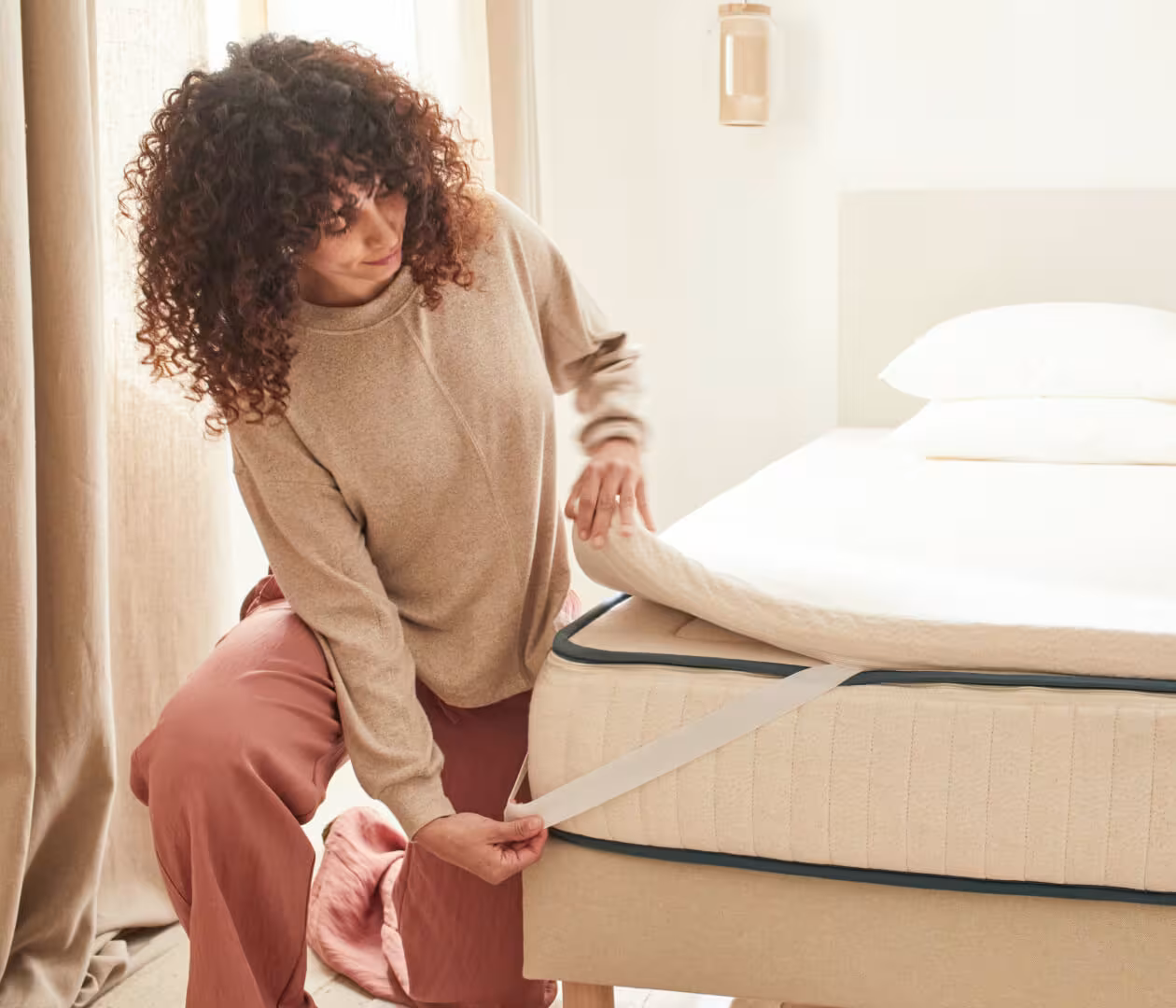
The cover is machine washable at 30 °C. The latex core does not need washing: it only requires airing out about once a month and avoiding direct sunlight, which degrades latex over time. Its natural resilience gives it an estimated lifespan of 8 to 10 years — well beyond synthetic foam mattress toppers (3 to 5 years). Its high weight necessitates using a fitted sheet with a depth of at least 30 cm to keep it in place.
Price
The Kipli mattress topper is priced starting at €359 for 80x200 and up to €599 for 180x200 (prices observed on the official website). This is a premium positioning, but consistent with the quality of materials and French manufacturing. Interest-free installment payments are offered on the official website, and shipping is free in mainland France.
3. Advantages and Disadvantages
Advantages
- 100% natural latex, certified GOLS and Eurolatex
- Balanced comfort and highly breathable
- Organic cotton + Tencel cover, machine washable
- Ideal for sleepers sensitive to heat or synthetic materials
- Consistent and documented environmental commitment
- Handcrafted in France
- 10-year warranty — among the longest on the market
Disadvantages
- High price compared to foam toppers
- Too soft for fans of extreme firmness
- Quite heavy, may slip if the fitted sheet is not deep enough
4. For what type of sleeper?
Recommended for:
- Sleepers sensitive to the environment and natural materials
- People suffering from back pain on a mattress that is too firm
- Couples looking to improve comfort without changing everything
- Profiles that sweat a lot at night
- Sleepers on their side or back
Less suitable for:
- Those looking for a very firm mattress topper
- Sleepers exclusively on their stomach
- Small budgets
5. Where to buy the Kipli mattress topper?
The mattress topper is available directly on the brand’s official website, with free shipping within about ten days, 100 nights trial with free return and full refund, and a 10-year warranty against manufacturing defects.
View on Amazon6. Alternatives to Consider
If the Kipli mattress topper does not quite meet your expectations, several options are worth exploring. Other natural latex mattress toppers are available at a slightly lower price range, with a firmness that is sometimes more pronounced — useful if you find the Kipli too soft. On the opposite end, models combining wool and latex target an audience very committed to eco-design, often at a higher price. For tighter budgets, memory foam mattress toppers offer good value for money but sacrifice breathability and longevity. To compare all available models, check out our complete selection of tested mattress toppers .
View on Amazon7. The Opinion of Our Expert
The Kipli mattress topper is one of the best choices for discerning sleepers looking for a high-end, ethical, and breathable product. Its 10-year warranty — significantly above the industry standard — reflects the brand’s confidence in its materials and craftsmanship. Specifically, it allows you to:
- Relieve a mattress that is too firm without investing in a complete replacement
- Sleep more comfortably in summer thanks to the breathability of the perforated latex
- Avoid exposure to chemical treatments present in synthetic foams
- Invest in the long term in a durable, healthy, and traceable product
At €359 for a single, it’s a budget not to be underestimated. But when spread over a lifespan of 8 to 10 years, the annual cost becomes quite reasonable — especially compared to a foam mattress topper that needs to be replaced every 3 to 5 years.