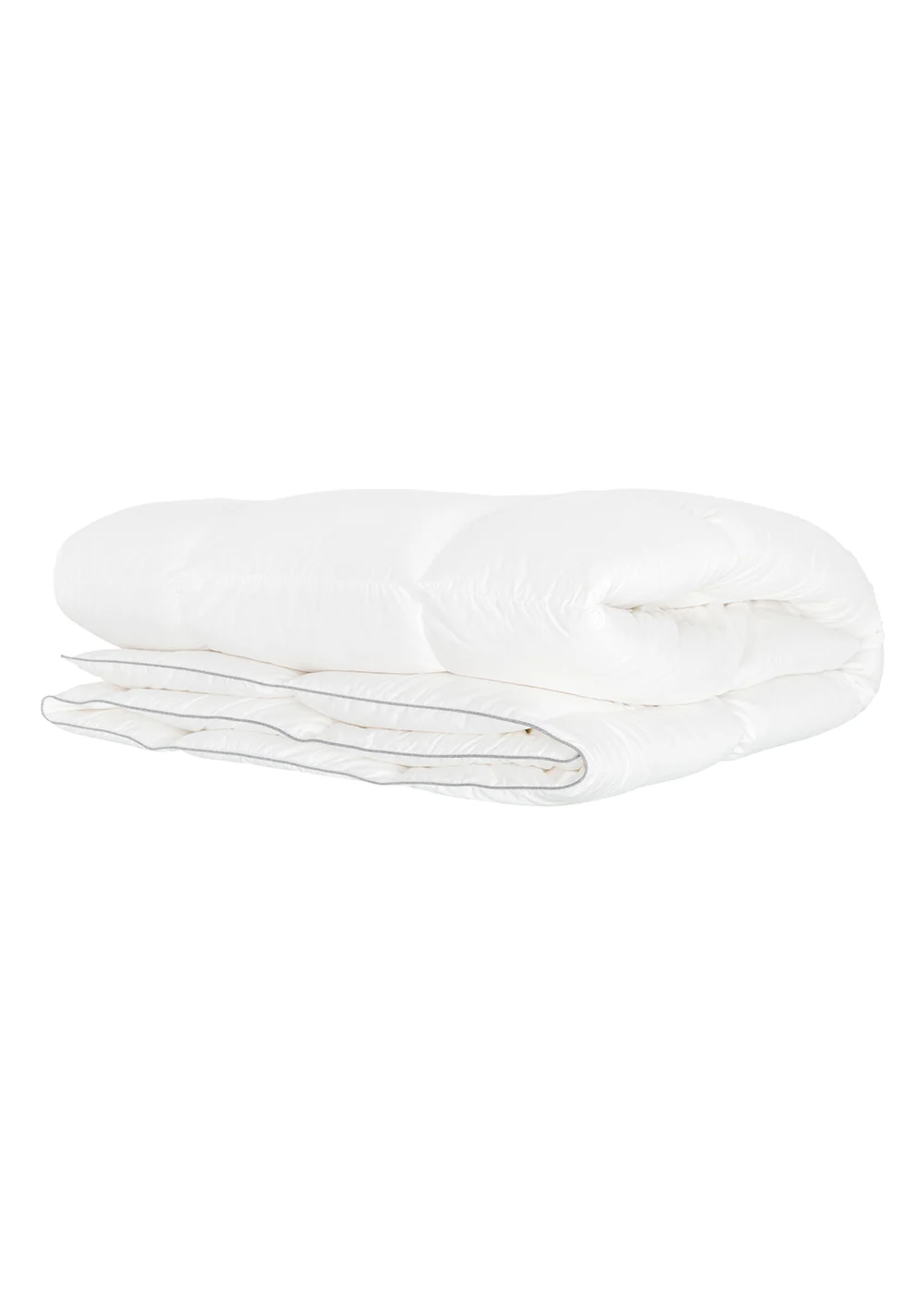
A back that aches upon waking, an overheated room, nights spent pushing the duvet away at 3 a.m.: before investing in a high-end duvet, it’s best to ensure that the chosen model truly fits your needs. The Aoste temperate duvet from Pyrenex is often cited as a reference in French bedding with natural down. Let’s see what it’s really worth and for whom it is made. You can also check our selection in the duvet reviews section to compare with other models.
1. Presentation of the Pyrenex brand and the Aoste Tempérée model
A century-old French house
Founded in 1859 in the Pyrenees, Pyrenex is a family-run manufacturer that masters the entire production chain of its natural down products. It claims 100% French manufacturing and products with a low environmental impact. With over 165 years of history, the workshop in Saint-Sever-de-Rustan perpetuates a recognized know-how even among the great luxury hotels in Europe.
The Aoste Tempérée model
The Aoste Tempérée duvet is a mid-season model, designed for rooms maintained between 18 and 20 °C. It belongs to Pyrenex’s premium collection and is distinguished by the quality of its filling made of white goose down from France, selected for its lightness and high insulating power (750 cuin).
Features:
- Filling: 90% white goose down from France, 10% feathers
- Cover: combed cotton percale
- Greenfirst® anti-dust mite treatment (based on essential oils)
- Oeko-Tex Standard 100 label
- Filling weight: 200 g/m²
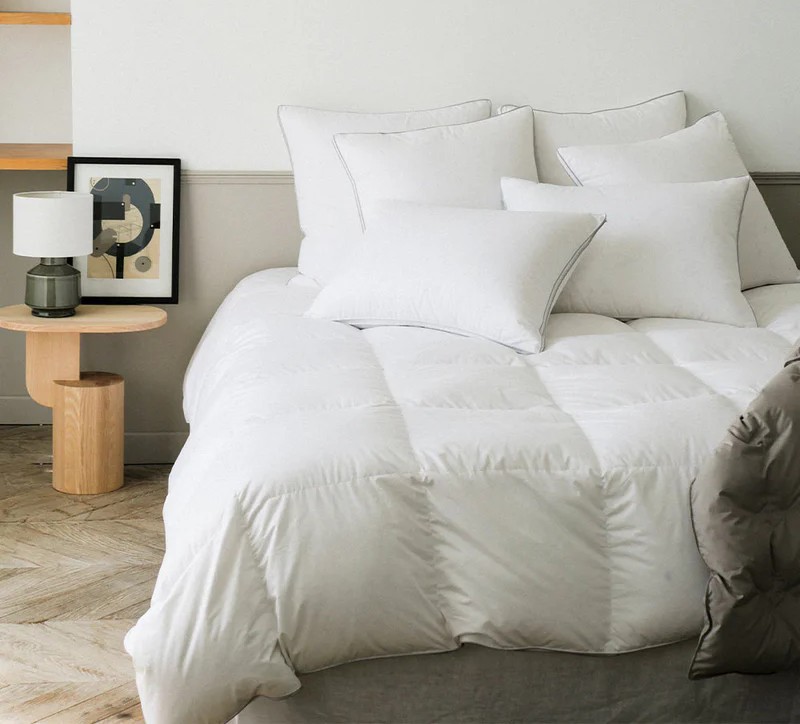
- Finishes: white piping, quilted in squares
2. Complete Analysis: Comfort, Performance, and Durability
Comfort and Sleep Sensation
The white goose down generously inflates without weighing down, creating a protective envelope that naturally adapts to body movements. For sleepers who tend to push their duvet away in the middle of the night, this enveloping comfort without a feeling of suffocation is a clear advantage over synthetic models. The touch of the cotton percale is discreet: no rustling with the slightest nocturnal movement.
Composition and Materials
Goose down has a significantly better weight-to-warmth ratio than synthetic fibers, and especially a capacity to redeploy after compression that the latter quickly loses. The cotton percale is soft and durable; the Greenfirst® treatment fights dust mites without chemical biocides, making it suitable for sensitive skin and children from 36 months old.
Thermoregulation
Natural down regulates body heat by absorbing and then redistributing moisture. In a room heated to 18-20 °C, the Aoste maintains a constant and gentle warmth, without generating the frequent overheating associated with low-end synthetic duvets. However, if your room regularly drops below 17 °C at night, this model will be too light.
Maintenance and Durability
- Machine washable at 40 °C, gentle drying allowed (preferably a large capacity drum, with drying balls to restore loft)
- Estimated lifespan: 10 to 15 years with regular maintenance
- Pyrenex recommends regularly airing the duvet and using a cotton percale protective cover to preserve the down from perspiration.
Value for Money
With a price starting at around €495 (size 140×200 cm, price observed in 2026), the Aoste duvet clearly positions itself in the high-end market. This price level is justified by a fully traceable local manufacturing process, a durability well above average, and the use of exceptional goose down. When spread over 10-15 years of product life, the cost per night remains well below that of an entry-level duvet replaced every 3-4 years.
Search for the Pyrenex Aoste duvet on Amazon.fr3. Strengths / Weaknesses
Advantages
- 100% French white goose down duvet, selected for its fineness and loft (750 cuin)
- Ethical and traceable French manufacturing, from feather to finished product
- Ideal thermal regulation for temperate rooms (18-20 °C)
- Greenfirst® plant-based anti-mite treatment without biocides
- Great sleeping comfort: light, fluffy, and enveloping
- Durability up to 15 years with proper care
Disadvantages
- High price: a significant investment, even if it pays off in the long term
- Insufficient for unheated cold environments (prefer a winter duvet of 300 g/m² or more below 17 °C)
- Bulky for small washing machines of less than 7 kg: a trip to the laundromat is necessary
4. For which type of sleeper is it recommended?
- Temperate to warm sleepers, in rooms kept between 18 and 20 °C all night
- Couples: the breathability of goose down limits common overheating and heat-related awakenings
- People sensitive to chemicals: the Greenfirst® treatment without biocides is suitable for reactive skin and children from 36 months
- Back or side sleepers: the filling conforms to the body shape without creating pressure points
5. Where to buy this duvet? At what price?
Indicative price: starting from around €495 (140×200 cm) up to over €950 for larger sizes (prices observed in 2026, subject to variation depending on retailers)
Manufacturer’s warranty: 5 years
Delivery: free from a certain purchase amount depending on the stores
Return possible within 14 days (legal right of withdrawal)
6. Alternatives to Consider
- Dodo Alaska: a more affordable synthetic version, well-suited for tight budgets, but significantly less breathable and durable than natural down
- Castex Siberia: 90% down filling, warmer (ideal for unheated rooms), also made in France
- Ikea SÄFFEROT: an accessible entry-level option, but with limited comfort and durability over time
7. The opinion of our bedding expert
The Pyrenex Aoste Tempérée duvet is a safe bet for buyers concerned about the quality of their bedding. It combines comfort, durability, and naturalness with a level of requirement that is rare in the French market. The fineness of its percale, the quality of the selected white goose down, and the longevity of the product make it a purchase you won’t regret, provided you accept the initial investment.
Final advice
Before buying, check the average temperature of your room in winter. This model is not suitable for unheated cold environments: below 17 °C, consider the winter version or a 4-season duvet. For well-insulated and regularly heated rooms, however, it’s a hard choice to beat in this price range.
8. Specific FAQ
Is this duvet suitable for people with back pain?
The duvet itself does not have orthopedic virtues: it is primarily the mattress and pillow that determine the alignment of the spine during sleep. However, its soft and lightweight comfort indirectly improves sleep quality for people suffering from back tension, as it prevents micro-awakenings related to feelings of suffocation, excessive weight, or thermal discomfort — three factors that exacerbate nocturnal muscle contractions. If you regularly wake up with a tense back, start by assessing the firmness of your mattress: a quality duvet improves the thermal environment but will not correct a mattress that is unsuitable for your body type. For chronic lower back pain, a mattress with differentiated support will often be more helpful than changing the duvet.
Can it be tested or returned?
Yes. In accordance with French withdrawal rights, any purchase made at a distance can be returned within 14 calendar days from receipt, provided that the duvet is returned in its original packaging, unused, and with all its labels intact. Note: return shipping costs may be borne by the customer depending on the retailer — check before placing your order. Pyrenex also has physical retail locations, particularly in the South-West of France, where it is possible to see and touch the duvet before purchase, which is especially interesting for a product at this level of investment.
What is its average lifespan?
The Pyrenex Aoste temperate duvet can last between 10 and 15 years with careful maintenance, which is about two to three times longer than an entry-level synthetic duvet. To achieve this longevity, three essential rules apply: air out the duvet daily by hanging it outside for a few minutes in dry weather, always use a cotton percale duvet cover to protect the down from sweat and stains, and limit washes to a maximum of twice a year — in a large capacity machine (minimum 7 kg), at 40 °C, with tumble drying at low temperature and drying balls to restore volume. Natural down naturally redeploys after each use, which synthetic fibers cannot do once compressed.
Is the Pyrenex Aoste duvet suitable for allergy sufferers?
Yes, in the vast majority of cases. The Greenfirst® treatment is formulated with essential oils, without biocides or aggressive chemical compounds for the respiratory tract. The duvet also benefits from the Oeko-Tex Standard 100 label, which certifies the absence of harmful substances tested against more than 100 chemical parameters, a particularly important safety guarantee for sensitive sleepers or young children. For the rare cases of severe allergy to down itself (proven hypersensitivity to feather proteins), a washable anti-dust mite cover at 60 °C will provide an effective additional barrier. In case of doubt, consult an allergist before purchasing.
Is a specific bed base required to use this duvet?
No, the duvet is completely independent of the bedding system: it adapts to all types of bed bases (slatted, upholstered, adjustable) and mattresses, regardless of the technology (springs, foam, latex, hybrid). The only truly recommended accessory is a cotton percale duvet cover: this breathable fabric protects the down from sweat and stains, facilitates maintenance, and significantly extends the product’s lifespan. Avoid polyester or microfiber covers, which are less breathable and may reduce the thermoregulating performance of natural down.
What size should be chosen for a double bed?
For a bed of 140×190 or 140×200 cm, the 240×220 cm size is generally recommended for shared use: it offers enough width for each sleeper to have their share of coverage without pulling on the other’s, which limits nighttime awakenings. If you sleep separately or if you are particularly cold, two individual duvets in 140×200 cm (one per person) are the most comfortable solution, a practice common in Nordic countries and increasingly adopted in France. Note that the price of the Aoste duvet increases proportionally with size: be sure to compare the available formats before ordering.
What is the difference between the Aoste duvet and other Pyrenex models?
Pyrenex offers several ranges of temperate and winter duvets, with the main differences being the type of down and the weight. The Aoste (200 g/m²) is filled with white goose down from France at 750 cuin, making it a very fluffy mid-season model for rooms between 18 and 20 °C. The Colombia (220 g/m²) is slightly warmer, also made of goose down. Winter models like the Accous exceed 300 g/m² and are suitable for unheated rooms or very cold sleepers. For tighter budgets, Pyrenex also offers models made of duck down or synthetic materials, which are significantly cheaper but have a shorter lifespan and lower thermoregulation. The hierarchy is clear: the Aoste represents the right compromise between mid-season lightness and excellent filling quality.
The Pyrenex Aoste temperate duvet is a premium product, meeting the highest expectations in terms of comfort, durability, and naturalness. For a controlled budget or different needs, our section duvet reviews lists other models to compare before making your decision.