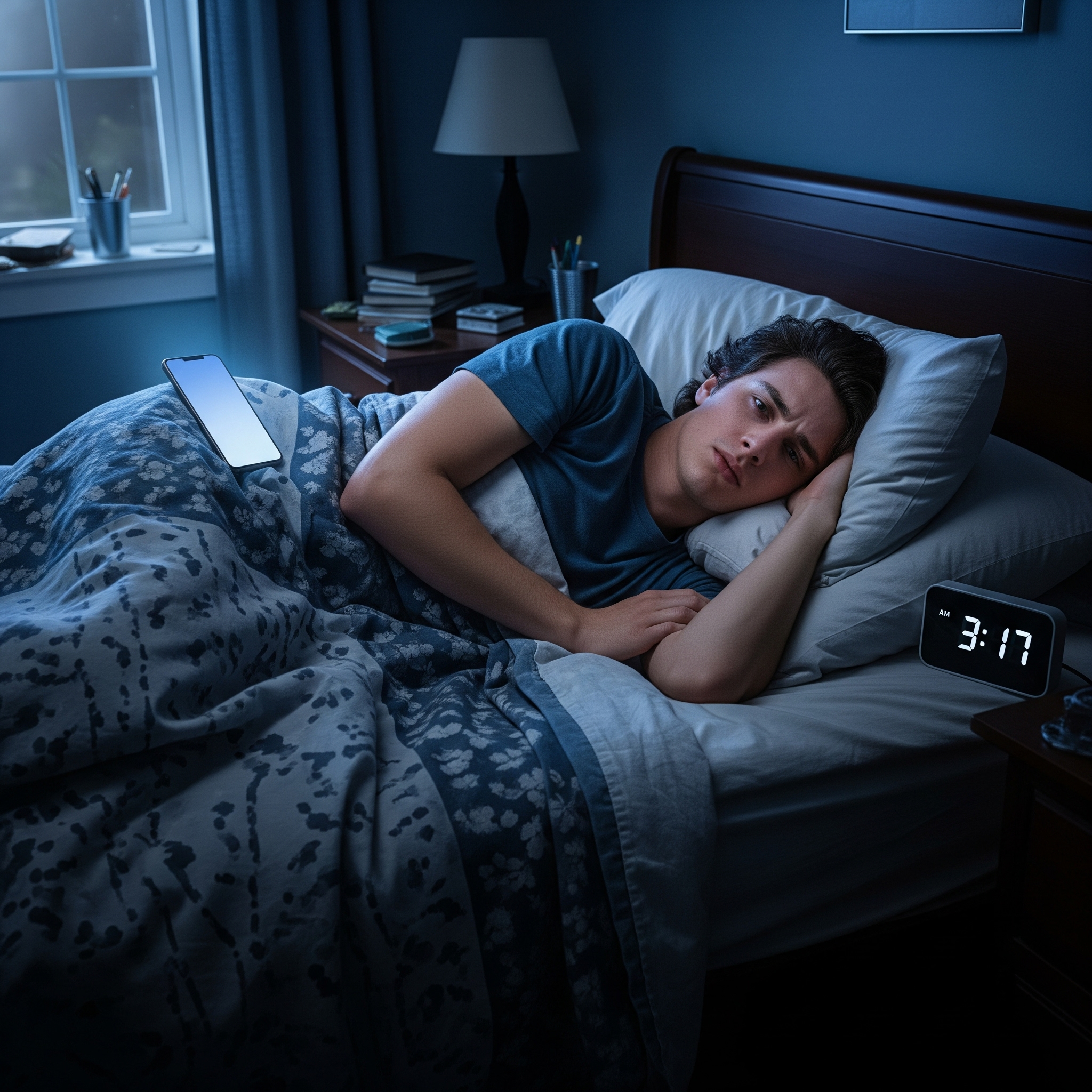
You feel tired upon waking despite long nights? Do you toss and turn constantly, or wake up in the middle of the night for no reason? This guide reviews the 7 most common causes of disturbed sleep, with concrete solutions to address them.
Understanding Sleep: A Fragile Balance
Sleep is structured in 90-minute cycles, alternating between light, deep, and paradoxical phases. Its quality depends on the regularity of these cycles, as well as factors related to the environment, lifestyle, and emotional state.
Disturbed sleep can lead to:
- Drowsiness
- Irritability
- Decreased concentration
- Increased long-term risks of cardio-metabolic diseases
The 7 Common Causes of Poor Sleep
1. Stress and Anxiety
Overwhelming thoughts, rumination, mental tension… Mental hyperactivation prevents falling asleep and disrupts nighttime recovery.
2. Poor Sleep Hygiene
- Irregular schedules
- Use of screens before bedtime
- Caffeine after 4 PM
- Heavy or late meals
3. Inadequate Sleep Environment
- Unsuitable mattress or pillow
- Bedroom temperature too warm
- Noise, light, stale air
Tip: A quiet, dark, well-ventilated room at 18 °C is ideal for good sleep.
4. Circadian Rhythm Disorders
Night work, jet lag, prolonged screen use disrupt the biological clock. Result: difficulty falling asleep, non-restorative sleep.
5. Sleep Disorders
- Sleep Apnea: breathing interruptions causing micro-awakenings
- Restless Legs Syndrome: irresistible urge to move
- Chronic Insomnia: requires specialized care
6. Stimulants or Sedatives
- Coffee, tea, tobacco, alcohol
- Certain medications like corticosteroids or antidepressants
They alter the structure or depth of sleep.
7. Psychological or Hormonal Factors
- Mood disorders or depression
- Hormonal changes (menopause, pregnancy)
- Chronic stress or burnout
Concrete Examples
- Shifted Schedules: Daytime sleep is naturally more fragmented as it conflicts with the biological clock. Gradually adjusting bedtime and wake-up times helps resynchronize the circadian rhythm.
- Unsuitable Mattress + Screens in Bed: A common combination — postural discomfort and the light stimulation from screens delay falling asleep and increase nighttime micro-awakenings.
Our Practical Tips for Restoring Peaceful Sleep
Create a Bedtime Routine
- Fixed hours
- Calm activities before sleep (reading, soft music, meditation)
Arrange Your Environment
- Suitable bedding (mattress, pillow, duvet)
- Dark, quiet, temperate room (16–18 °C)
Regulate Your Light Exposure
- No screens an hour before bedtime
- Enjoy natural light during the day
Limit Stimulants
- No coffee after 3 PM
- Reduce alcohol and tobacco
Consult for Persistent Issues
If your troubles last more than 3 weeks, consult a doctor or a sleep center (see INSV for addresses in France).
To learn more, check out our guide on nighttime micro-awakenings and our guide to improving sleep without medication .
View on Amazon