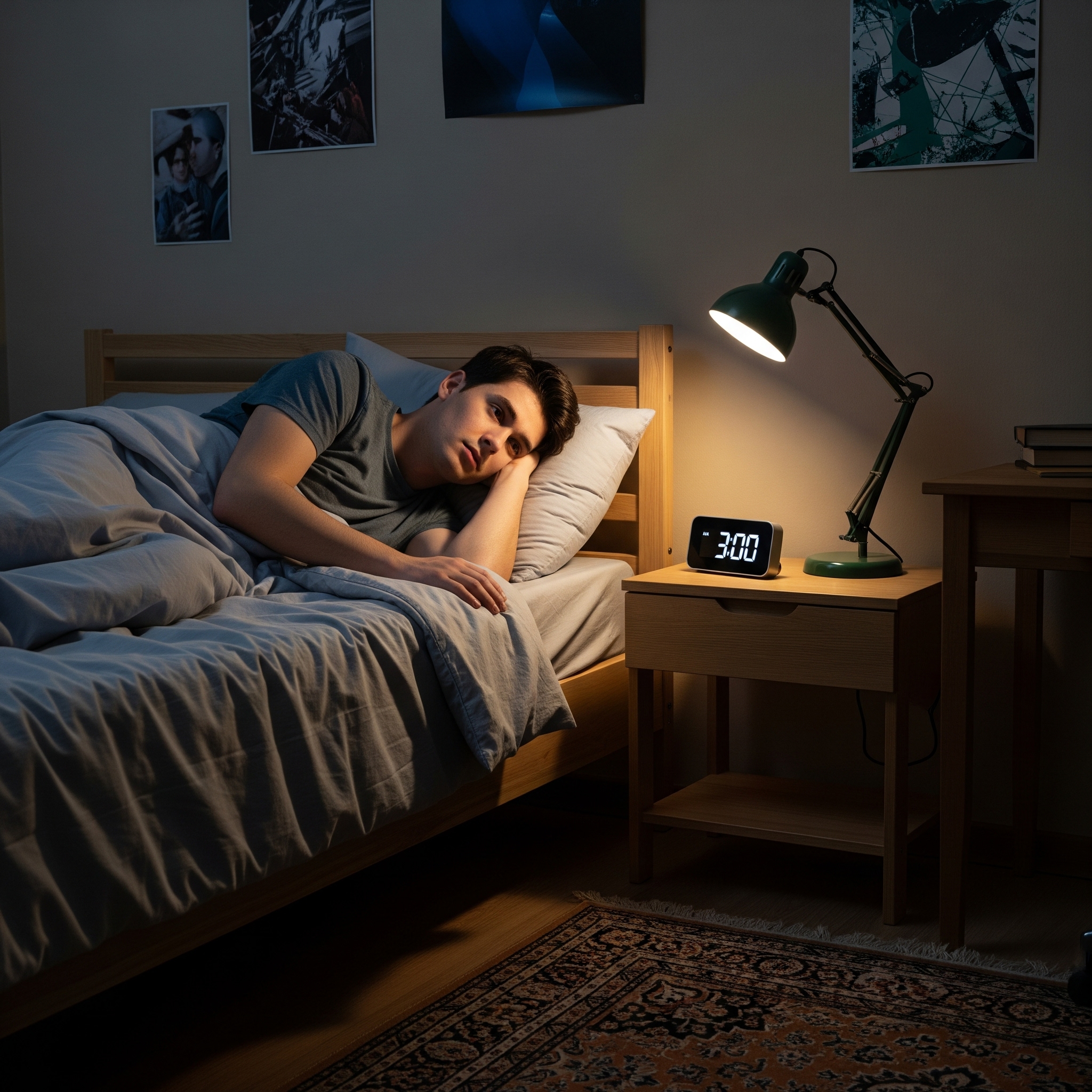
Do you often wake up for no apparent reason during the night? These micro-awakenings, although often unconscious, can affect the overall quality of your sleep. Understanding their origin and acting on the right levers can significantly reduce their frequency in the vast majority of cases.
Micro-awakens: what are we talking about?
What is a micro-awaken?
A micro-awaken is a very brief interruption of sleep, often lasting less than 15 seconds. It is an integral part of the natural sleep cycles — each cycle lasts about 90 minutes and ends with a slight rise towards wakefulness — but in excess, it deeply disrupts nighttime recovery. Most of the time, the sleeper has no conscious memory of it, making the phenomenon even more difficult to identify without monitoring.
Why are they problematic?
One or two micro-awakens per cycle are perfectly normal and do not require any intervention. It is when they become too numerous — generally beyond 15 to 20 per night — that they begin to encroach on the phases of deep sleep and REM sleep, which are the two most restorative phases. This leads to persistent fatigue upon waking, difficulties in concentration and attention during the day, drowsiness that sets in by the afternoon, as well as mood swings or irritability that are hard to control. Taken together, these signals should raise alarms.
Better Understanding the Causes of Micro-Awakings
Physiological Causes
Transitions between sleep cycles (approximately every 90 minutes) are the most common and benign cause. On the other hand, certain underlying conditions deserve special attention: obstructive sleep apnea, which causes repeated micro-awakenings related to breathing pauses, and restless legs syndrome (RLS), characterized by an irresistible urge to move the lower limbs at night. Both disorders require a medical diagnosis before any further steps.
Environmental Causes
The bedroom environment plays a major and often underestimated role. Sudden noises — partner’s snoring, outside traffic, pets — are one of the primary sources of avoidable micro-awakenings. Temperature is also crucial: a room that is too hot (above 19 °C) disrupts the body’s natural thermoregulation, which needs to lower slightly to initiate and maintain sleep. Finally, exposure to screens before bedtime delays melatonin secretion due to the emitted blue light, thereby shifting the entire circadian cycle.
Psychological and Behavioral Causes
Chronic stress and anxiety are among the most common sleep disruptors: they keep the nervous system on high alert, making each cycle transition more likely to result in a full awakening. Irregular sleep schedules — weekend shifts, short nights during the week compensated for in the morning — desynchronize the biological clock and multiply phases of instability. Similarly, intense mental activity (work, screens, stimulating conversations) in the hour leading up to bedtime significantly increases the likelihood of nighttime fragmentations.
What are the long-term consequences?
Chronically fragmented sleep is not trivial. Cognitively, studies show a decline in memory performance, learning, and decision-making, comparable to that observed after a sleepless night. Metabolically, the deprivation of deep sleep leads to an increase in cortisol levels, heightened insulin resistance, and hormonal imbalances that can promote weight gain. In the long term, fragmented sleep is associated with an increased risk of cardiovascular diseases, hypertension, and lasting emotional instability. These consequences justify serious management as soon as the disorders persist for several weeks.
How to Calm an Agitated Sleep? Our Practical Tips
1. Create a Sleep-Friendly Environment
The ideal bedroom for sleeping is cool (between 18 and 19 °C), quiet, and completely dark. To achieve this level of silence, using earplugs or a white noise machine is a simple and effective solution, especially in urban areas or when a partner snores. Blackout curtains or a sleep mask block residual light sources — street lamps, standby lights from electronic devices — that can trigger micro-awakenings even through closed eyelids.
Find a white noise machine for sleep on Amazon2. Establish a Regular Routine
Regularity is the cornerstone of stable sleep: going to bed and waking up at the same time, including on weekends, synchronizes the biological clock and reduces phases of instability at the end of the cycle. It is advisable to limit naps to a maximum of 20 minutes and to schedule them before 3 PM to avoid encroaching on evening sleep pressure. Soothing rituals — reading paper books, slow breathing exercises like heart coherence, guided meditation — help prepare the nervous system to switch to rest mode.
3. Monitor Your Diet
What you eat and drink in the evening directly influences the quality of your night. Caffeine has a half-life of about 5 to 7 hours: a coffee consumed at 4 PM is still active at midnight. Alcohol, although it promotes falling asleep, significantly fragments sleep in the second half of the night and should be avoided in the 3 to 4 hours before bedtime. Heavy or very fatty meals keep digestion active for several hours. Conversely, certain foods rich in tryptophan (bananas, milk, eggs, nuts, pumpkin seeds) promote the synthesis of serotonin and melatonin.
4. Reduce Screen Exposure
Turning off smartphones, tablets, and televisions at least one hour before bedtime remains one of the most effective yet least applied tips. The blue light from screens blocks the production of melatonin and keeps the brain in active mode. If complete cessation proves difficult, activating a warm light filter (night mode) on devices is an acceptable compromise, provided that stimulating activities (social media, games, work) are not engaged in.
5. Take Care of Your Bedding
Bedding is often the weak link in agitated sleep, especially since an unsuitable mattress affects multiple fronts at once: poor back support, pressure points on the shoulders and hips, and heat retention. A mattress with a structure that promotes air circulation — pocket springs, perforated natural latex, or hybrid technology — prevents nighttime overheating, which is one of the most common triggers for micro-awakenings. Morphological adaptation is also essential: a mattress that is too firm for a side sleeper will create repeated muscle tension, which is equally disruptive.
View on AmazonHow Micro-Arousals Manifest: Typical Examples
Persistent Fatigue Despite 7 Hours of Sleep
A sleeper can accumulate more than 30 micro-arousals per night without being aware of them, yet feel exhausted upon waking despite a theoretically sufficient duration of sleep. The most common causes in this profile are a mattress that retains too much heat, low-intensity but regular environmental noise (ventilation, distant traffic), or residual light. The solutions to explore as a priority are more breathable bedding (latex or pocket springs), complete blackout of the room, and effective sound insulation with earplugs or white noise.
Systematic Waking in the Middle of the Night
Waking that occurs systematically between 2 AM and 4 AM may indicate a cortisol spike related to chronic stress or an unresolved sleep cycle transition, sometimes exacerbated by mild nocturnal hypoglycemia. The first measures to test are slow breathing exercises (heart coherence) before bedtime, eliminating screens after 9:30 PM, and possibly a light low-glycemic snack an hour before sleeping. If awakenings persist beyond 3 weeks, a medical consultation is recommended to rule out sleep apnea or RLS.
To deepen your understanding of sleep disorders and find other potential solutions, check out our dedicated section on sleep disorders .
Compare breathable latex and pocket spring mattresses on AmazonFAQ – Answers to Your Questions
Is it normal to wake up at night?
Yes, absolutely. Between 5 and 10 micro-awakenings per night are considered physiological and are an integral part of the normal progression of sleep cycles. Each cycle of about 90 minutes ends with a slight rise towards wakefulness, which can manifest as a change in position, a brief glance into the dark, and then a quick return to sleep that is not remembered. It only becomes a problem when these awakenings become too frequent, too long, or affect your energy and abilities during the day. If you feel rested in the morning, your micro-awakenings are probably within the normal range.
Are micro-awakenings related to age?
Yes, this is one of the most documented changes in sleep. Starting around age 50, the proportion of deep sleep (stage N3) gradually decreases in favor of light sleep stages, making transitions between cycles more unstable and increasing the likelihood of micro-awakenings. The time it takes to fall asleep also tends to lengthen, and definitive awakenings occur earlier in the morning. These changes are normal and do not mean that sleep is pathological. However, they warrant particular attention to the sleep environment, bedding, and bedtime hygiene to compensate for this increased natural fragility.
Can micro-awakenings be measured by oneself?
Some smartwatches and sleep tracking apps allow for an estimation of sleep phases and identification of patterns of nighttime fragmentation. These tools are useful for detecting a trend and initiating reflection, but their accuracy remains limited: they work through actigraphy (movement measurement) and do not always reliably distinguish between different sleep stages. For a valid medical diagnosis, only a laboratory polysomnography sleep study or nocturnal oximetry prescribed by a doctor can provide an accurate assessment, especially in cases of suspected sleep apnea.
Can a mattress cause micro-awakenings?
Absolutely, and it’s more common than one might think. A worn or unsuitable mattress for your body type can affect several mechanisms at once: pressure points at the shoulders, hips, or lower back generate muscle tension that prompts the body to turn frequently, triggering micro-awakenings. A non-breathable memory foam mattress can lead to nighttime overheating, one of the most effective disruptors of deep sleep. Finally, a mattress that transmits too much movement from a partner is a direct source of involuntary fragmentation. Generally, a mattress over 8 to 10 years old deserves serious evaluation.
What bedding should be chosen to reduce heat-related micro-awakenings?
To combat nighttime overheating, prioritize a mattress whose structure promotes air circulation: pocket springs offer excellent natural ventilation due to the space between the coils, perforated natural latex effectively dissipates moisture and heat, and hybrid technologies (springs + open-cell foam) combine both advantages. In terms of budget, expect to spend from around €350 for a quality entry-level model in 140×190 cm, up to over €1,000 for premium ranges. Pair it with a cover made of organic cotton or bamboo (naturally temperature-regulating) and a lightweight duvet suitable for the season for optimal results.
Should one consult a doctor for frequent micro-awakenings?
A medical consultation is necessary when micro-awakenings persist for more than 3 weeks despite implementing good sleep hygiene practices, or when they are accompanied by signs suggestive of an underlying pathology: loud snoring with breathing pauses (sleep apnea), uncomfortable sensations in the legs at rest (restless legs syndrome), unexplained night sweats, or waking with palpitations. These symptoms require an appropriate assessment — sometimes a polysomnography — to rule out any serious medical cause before relying solely on behavioral adjustments.