You lie down, close your eyes, and that’s where it begins: a tingling sensation, an electric current, or a deep itch in your legs that forces you to move them, to get up, to walk. As soon as you lie back down, it starts again. This long night ahead is known by millions of French people every week without even having a name for what they are experiencing.
Restless Legs Syndrome (RLS), also known as “nocturnal restlessness” or Willis-Ekbom disease, is one of the most common causes of sleep disorders. Yet, it remains largely underdiagnosed: many people think it’s “in their head” or have normalized these difficult nights for years.
What a person with RLS really feels
RLS is not just about moving legs. These uncontrolled movements are accompanied by unpleasant sensations or even pain at rest, in one or both legs. Patients often describe an irresistible urge to move, as if something is “crawling” inside their limbs. The sensation disappears as soon as you get up or walk, but returns as soon as you go back to rest.
Four criteria allow doctors to make the diagnosis:
- An overwhelming urge to move the legs, accompanied by unpleasant sensations
- Onset or worsening at rest (sitting or lying down)
- Partial or total relief by movement
- A clear predominance in the evening and at night
These symptoms are not trivial in terms of sleep. Falling asleep becomes a challenge, awakenings multiply, and the quality of recovery collapses. The syndrome also causes memory and concentration problems, direct consequences of chronically fragmented sleep.
Note: In about 80% of patients, involuntary nocturnal jerks (periodic limb movements) add to the symptoms, which can be particularly bothersome for the partner sharing the bed.
Who is affected? Many more people than you think
RLS affects approximately 8.5% of the French population. In total, 1.9% of French people experience daily symptoms that require specific management.
The prevalence of this condition gradually increases until the age of 65 and is twice as common in women. Several life stages seem particularly favorable: pregnancy (especially the third trimester), menopause, and generally any context of iron deficiency.
RLS can appear at any age, including in children, although the most disabling forms tend to manifest from the age of forty.
The causes: genetics, iron, and dopamine
Two main factors are identified: a genetic factor (the existence of familial forms converges in this direction) and a brain iron deficiency—anemia or iron metabolism disorders promote the onset of restless legs syndrome.
The role of iron deserves attention. It is not necessarily the iron deficiency in the blood that poses a problem, but the availability of iron in the central nervous system. Iron is an essential cofactor for the synthesis of dopamine, the neurotransmitter that regulates movement control. When the dopaminergic circuit malfunctions in certain areas of the brain, the signals sent to the limbs become erratic, particularly at night.
This is why some dopamine antagonist medications (prescribed for nausea or psychiatric disorders) can trigger or worsen RLS. Other aggravating factors are documented: chronic kidney failure, diabetes, and certain forms of peripheral neuropathies.
What you can do without a prescription
The treatment of restless legs syndrome primarily relies on hygiene and dietary measures: reducing the consumption of stimulants such as coffee, tea, alcohol (especially white wine and champagne), and nicotine. Going to bed and getting up at fixed times, and sleeping in a cool room, ideally below 18 °C, without too much covering.
These recommendations may seem trivial, but they have a real impact on the frequency and intensity of symptoms. Here’s what helps the most concretely:
Before bed. A warm or cold bath for the legs (depending on what relieves) can alleviate unpleasant sensations. Some people find that alternating hot/cold works better. Gentle stretching of the calves and thighs, practiced for about twenty minutes before bed, reduces episodes for many.
The room and environment. A room that is too warm exacerbates RLS in almost all patients. Aiming for a temperature between 16 and 18 °C is advice that aligns with what is recommended for most sleep disorders. Heavy blankets or overly tight sheets that compress the legs should be avoided.
Physical activity. Regular walking, cycling, swimming: moderate physical activity during the day is associated with a reduction in symptoms. However, be careful not to engage in intensive sports in the evening, which would have the opposite effect.
Caffeine and alcohol. These two substances are particularly treacherous for people with RLS. Alcohol in the evening, even in small amounts, notably worsens nocturnal symptoms in many patients.
When to consult and what assessment to do?
If symptoms occur several nights a week and begin to seriously disrupt your sleep or that of your partner, a consultation with a general practitioner is essential. There is no specific test to diagnose RLS: the diagnosis is clinical, based on the four criteria mentioned above.
A blood test may be prescribed to check for iron deficiency, anemia, or other biological anomalies that could explain or worsen the syndrome. If ferritin is low, iron supplementation can bring significant, sometimes spectacular improvement.
In case of diagnostic doubt or a severe resistant form, the doctor may refer you to a neurologist or a sleep center.
Medications: for whom, for what?
There is no medication that can permanently cure restless legs syndrome. Medical treatments aim to relieve symptoms when they severely degrade quality of life and sleep.
The medical treatment primarily relies on dopaminergic medications, which compensate for the dopamine deficiency in the involved nerve circuits. These treatments are effective but not without risks: they require rigorous medical monitoring, particularly because a phenomenon of augmentation (paradoxical worsening of symptoms in the long term) can occur with certain molecules.
Other classes of medications may be proposed depending on the patient’s profile: anticonvulsants acting on neuropathic pain, or low-dose opioids in very severe and refractory forms. These prescriptions always fall under the specialist’s purview.
RLS and bed quality: the role of the sleep environment
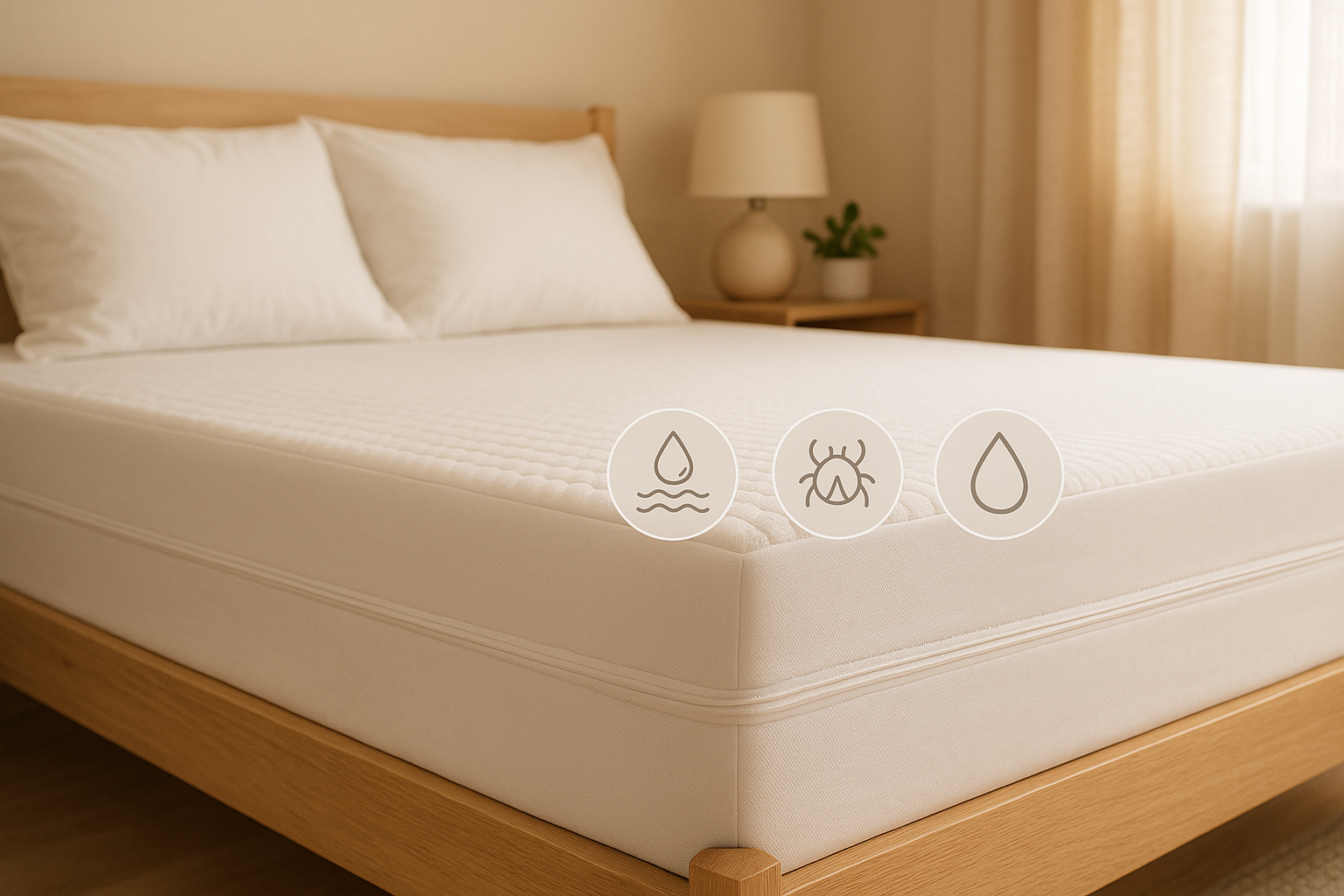
The sleeping environment plays an amplifying role, in both directions. A mattress that is too warm, which retains body heat and raises the temperature of the lower limbs, can exacerbate sensations. People suffering from RLS generally benefit from a mattress with good thermal regulation and should avoid standard polyurethane mattress protectors that create a barrier to heat.
See breathable mattress protectors on AmazonFor other sleep disorders that can coexist with RLS , such as frequent nighttime awakenings or excessive sweating at night, find our dedicated guides.
Is restless legs syndrome common?
Yes, much more than one might think. In France, the prevalence is estimated at around 8.5% of the general population, making it one of the most widespread sleep disorders. Among these individuals, nearly 2% experience daily symptoms that are intense enough to require medical management. Despite this frequency, RLS remains largely underdiagnosed: many patients wait several years before naming their symptoms, either because they minimize them or because the disorder is not systematically mentioned in general consultations. Women are twice as affected as men, and the frequency increases with age, particularly after 50.
How to distinguish RLS from a simple cramp or a temporary restlessness?
A cramp is a painful, sudden muscle contraction that lasts from a few seconds to a few minutes and disappears spontaneously—it is not triggered by rest and does not respond to walking in the same way. RLS, on the other hand, manifests as an irresistible urge to move, associated with unpleasant sensations (tingling, burning, electric current sensation) that systematically appear at rest, worsen in the evening and at night, and are relieved, at least temporarily, by movement. If these four criteria are repeatedly met, it is not just a simple fatigue cramp. A one-time restlessness after a long day of sitting does not constitute RLS; it is the regularity, the irresistible nature, and the impact on sleep that make the difference.
Can one recover from restless legs syndrome?
In the majority of cases, RLS is a chronic condition that is managed rather than cured. That said, some so-called “secondary” forms, triggered by iron deficiency, pregnancy, or a medication, can completely disappear once the cause is corrected. Properly conducted iron supplementation is sometimes enough to eliminate symptoms for months, or even permanently. For primary forms (genetic or idiopathic), the goal of treatment is to reduce the frequency and intensity of episodes to preserve sleep and quality of life. With good management combining hygiene and dietary rules and, if necessary, appropriate medication, the vast majority of patients manage to sleep well.
Is RLS worsened during pregnancy?
Yes, pregnancy is a well-documented triggering or aggravating factor, especially in the third trimester. Several mechanisms are involved: the demand for iron increases significantly during pregnancy, which can create or worsen a brain iron deficiency; hormonal changes (estrogens, progesterone) also seem to play a role. In the vast majority of cases, symptoms regress spontaneously after childbirth. During pregnancy, treatment is primarily non-pharmacological (gentle exercise, leg baths, iron supplementation if a deficiency is confirmed) since most dopaminergic medications are not recommended for pregnant women. It is important to discuss this with your doctor or midwife without delay.
Should I consult a specialist or is the general practitioner sufficient?
For the majority of cases, the general practitioner is the right starting point. They can make the clinical diagnosis, prescribe a blood test to check for iron deficiency, and offer hygiene and dietary advice. If symptoms are severe, daily, resistant to initial measures, or if the diagnosis is uncertain, a referral to a neurologist or sleep center is justified. The specialist has a wider therapeutic range and can adjust treatments with more precise monitoring, particularly to avoid the augmentation effect sometimes associated with dopaminergic medications.
Do certain foods or habits worsen symptoms?
Yes, and the impact can be immediate. Caffeine (coffee, tea, energy drinks, cola) is one of the first factors to reduce, particularly in the second half of the day. Alcohol, even in small amounts in the evening, worsens nocturnal symptoms in many patients—white wine and champagne seem particularly problematic. Nicotine should also be avoided. Conversely, ensuring sufficient iron intake through diet (red meat, legumes, leafy green vegetables) can help mitigate episodes in the long term, especially in cases of deficiency. Some patients also report worsening with first-generation antihistamines (sleeping pills or over-the-counter allergy medications): this is a point to check with your doctor.