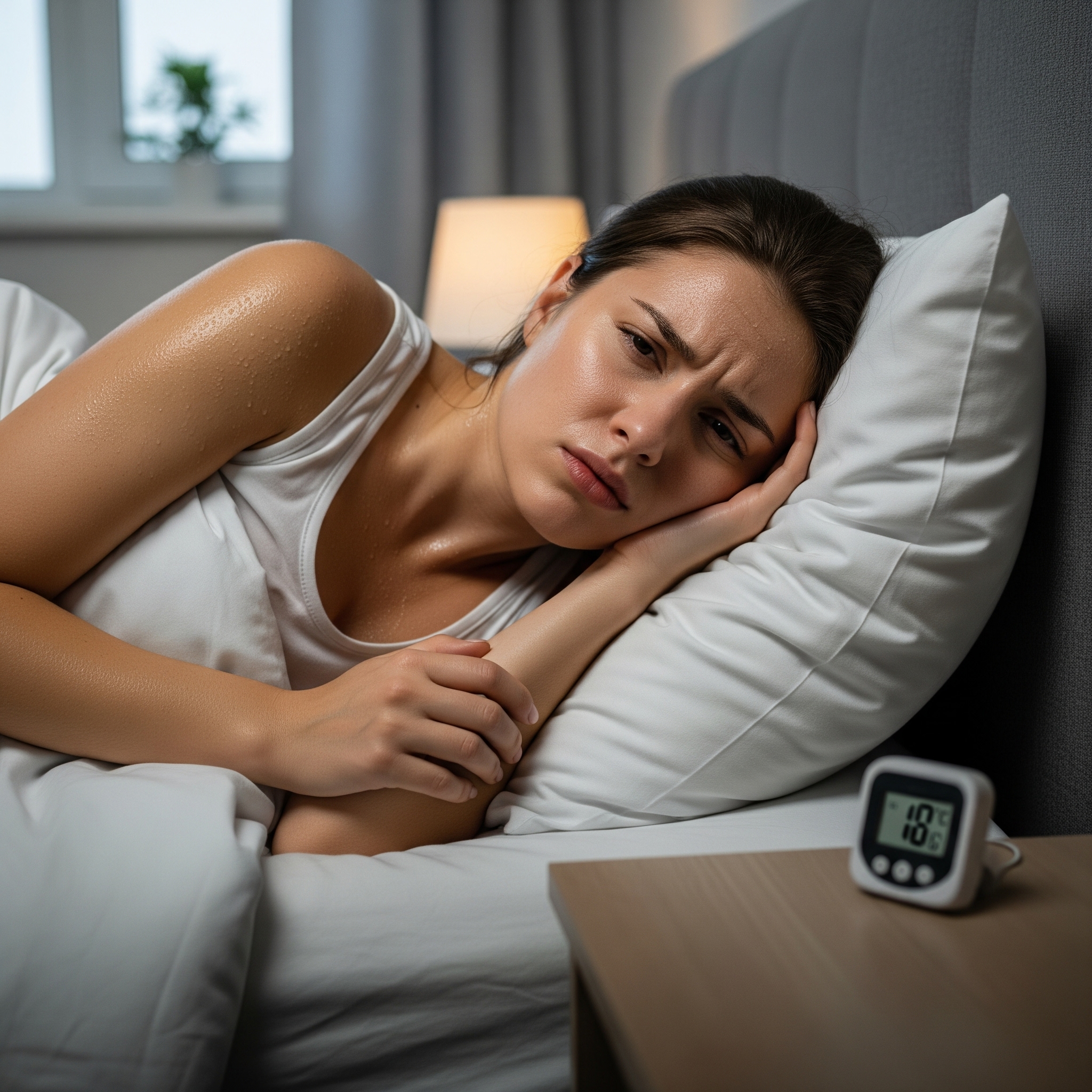
Waking up in the middle of the night, sheets damp, skin clammy: night sweats are an unpleasant experience that many people go through. Is it a matter of bedding? Health? Or simply an environment that is too warm? This guide helps you better understand this common phenomenon and how to effectively remedy it.
What are night sweats?
Sweating is a natural mechanism for thermal regulation. We refer to night sweats when it becomes excessive during sleep, outside of extreme conditions (high heat, too many blankets). It can be occasional or regular, and sometimes indicative of an imbalance or an unsuitable environment.
How does thermal regulation work at night?
The body follows a circadian cycle: internal temperature drops at the time of falling asleep and rises towards the end of the night. Sweating helps to expel excess heat. It can be triggered by:
- A bedroom that is too hot or poorly ventilated — the ideal temperature is between 16 and 18 °C
- Non-breathable bedding
- A duvet that is too warm for the season
- Stress or nightmares
- Certain medical treatments or hormonal changes
What are the main causes of night sweats?
Environmental factors
- Ambient temperature too high (above 20 °C)
- Inadequate mattress or duvet (non-ventilated foam, synthetic filling)
- High humidity, poorly ventilated room
Physiological factors
- Stress, anxiety, emotional overload
- Hot flashes (menopause)
- Fever, infections, or metabolic disorders
- Hyperthyroidism, diabetes, sleep apnea syndrome
Medical factors
- Medications (antidepressants, corticosteroids, etc.)
- Infectious diseases or cancers (less common)
In the case of frequent, intense, and unexplained night sweats: a medical consultation is recommended.
What bedding should you choose to limit sweating at night?
Mattress
- Memory foam: not breathable if not ventilated
- Natural latex: very airy, a good alternative for hot sleepers
- Pocket springs: excellent ventilation
Duvet
- Prefer lightweight or thermoregulated models
- Fillings in wool, cotton, tencel, or breathable technical fibers
Sheets and covers
- Avoid synthetic textiles
- Choose percale cotton, linen, tencel, or bamboo for their absorption and thermal regulation capabilities
Common situations and suitable solutions
- In case of hormonal changes (menopause, andropause): favor a pocket spring or natural latex mattress and a lightweight wool or tencel duvet for optimal thermal regulation. A room maintained at 16–17 °C helps to alleviate night sweats.
- If you are very physically active: opt for a lightweight organic cotton or synthetic duvet and a ventilated latex mattress topper to absorb effort-related sweat. Be sure to ventilate the room after exercising.
- In case of chronic stress: the priority is a soothing evening routine (breathing, meditation, disconnecting from screens), complemented by breathable bedding and a cool room.
Our expert tips for a dry sleep
- Maintain a room temperature between 16 and 18 °C
- Choose breathable bedding: including mattress, sheets, and duvet
- Take a lukewarm shower before bed
- Avoid alcohol and heavy meals in the evening
- Engage in a relaxing activity (reading, breathing, meditation)
Find a breathable mattress suitable for your profile → See the selection at lematelas.fr