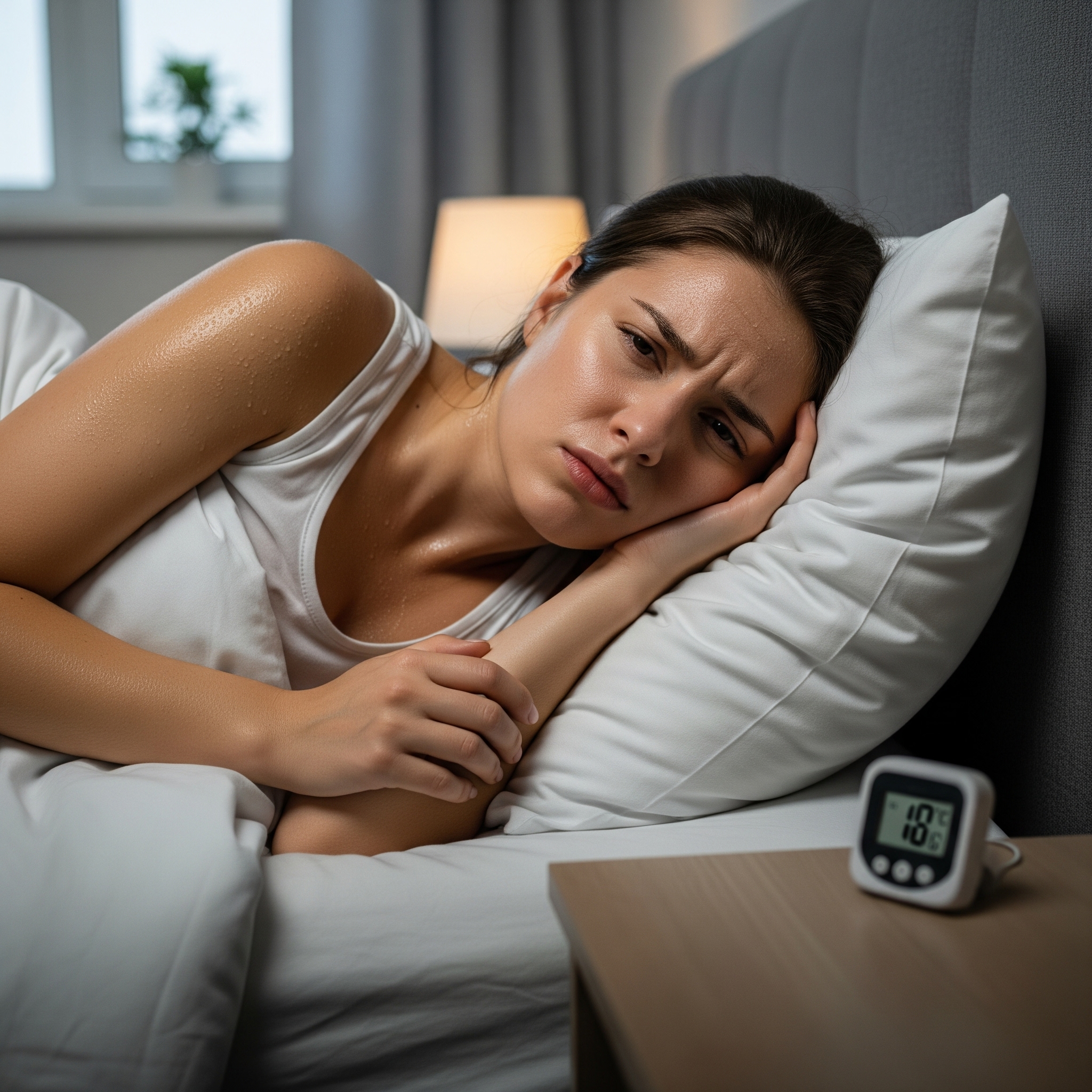
Waking up in the middle of the night, sheets damp, skin clammy: night sweats are an unpleasant experience that many people go through. Is it a matter of bedding? Health? Or simply an environment that is too warm? This guide helps you better understand this common phenomenon and effectively address it.
What is Night Sweating?
Sweating is a natural mechanism for thermal regulation. We refer to night sweating when it becomes excessive during sleep, outside of extreme conditions (high heat, excess bedding). It can be occasional or regular, and sometimes indicative of a physiological imbalance or an unsuitable sleep environment. It is important to distinguish between an exceptionally hot night in summer and a phenomenon that repeats week after week.
How does thermal regulation work during the night?
The body follows a circadian cycle: internal temperature drops at the time of falling asleep and gradually rises towards the end of the night. Sweating helps to release excess heat when this mechanism is disrupted. It can be triggered by:
- A room that is too hot or poorly ventilated — the ideal temperature is between 16 and 18 °C
- Non-breathable bedding that traps body heat
- A duvet that is too warm for the season
- Stress or nightmares, which raise core temperature
- Certain medical treatments or hormonal changes
What are the main causes of night sweats?
Environmental factors
- Ambient temperature too high (above 20 °C)
- Inappropriate mattress or duvet (non-ventilated foam, waterproof synthetic filling)
- High humidity, poorly ventilated room, or blackout curtains retaining heat
Physiological factors
- Stress, anxiety, emotional overload
- Hot flashes (menopause, andropause)
- Fever, infections, or metabolic disorders
- Hyperthyroidism, diabetes, sleep apnea syndrome
Medical factors
- Medications (antidepressants, corticosteroids, certain antihypertensives)
- Chronic infectious diseases or cancers (rarer causes but should not be overlooked)
Important: in case of frequent, intense, and unexplained night sweats — especially if accompanied by persistent fatigue, weight loss, or recurrent fever — a medical consultation is essential. These associated symptoms may indicate a condition requiring a precise diagnosis.
Which bedding to choose to limit sweating at night?
Mattress
Choosing the mattress is one of the most effective levers against night sweating. Not all materials are equal in terms of breathability:
- Memory foam: comfortable but not very breathable if the foam is not perforated or ventilated; to be avoided for sleepers who naturally feel hot.
- Natural latex: open cell structure that promotes continuous air circulation; an excellent alternative for hot sleepers. Models can be found starting from a few hundred euros up to high-end ranges (Talalay, Dunlopillo, etc.).
- Pocket springs (hybrid): the air column between the springs ensures natural ventilation; the best option for couples with different profiles. Brands like Tediber offer hybrid models specifically designed to dissipate heat.
Duvet
- Prefer lightweight or thermoregulated models, ideally classified by weight according to the season.
- The most breathable fillings: wool (natural moisture regulation), organic cotton, tencel, or thermoregulating technical fibers.
- Avoid thick synthetic-filled duvets that trap water vapor.
Sheets and covers
- Eliminate synthetic textiles (polyester, microfiber) that retain heat and sweat.
- Favor percale cotton (light, cool), linen (very breathable, improves with washing), tencel, or bamboo for their absorption capacity and softness on sensitive skin.
Frequent Situations and Adapted Solutions
- In case of hormonal changes (menopause, andropause): favor a pocket spring or natural latex mattress and a light duvet made of wool or Tencel for optimal thermal regulation. Keeping the room between 16 and 17 °C helps to significantly reduce the intensity of night sweats; some women also find it beneficial to place a cooling pillow under the pillow.
- If you are very physically active: after a late workout, body temperature remains elevated for several hours. Choose an organic cotton duvet or a lightweight filling and a ventilated latex mattress topper to absorb residual moisture. Make sure to air out the room at least 30 minutes before bedtime.
- In case of chronic stress: the autonomic nervous system activated by anxiety triggers sweating regardless of ambient heat. The priority is a soothing evening routine (abdominal breathing, guided meditation, disconnecting from screens 1 hour before bedtime), complemented by breathable bedding and a cool room.
Our Expert Tips for a Dry Sleep
- Maintain a room temperature between 16 and 18 °C — this is the range that corresponds to the natural drop in core temperature when falling asleep.
- Invest in fully breathable bedding: mattress, mattress protector, sheets, and duvet should form a cohesive set to wick away moisture.
- Take a lukewarm shower (not cold) before bed: a cold shower can cause a thermal rebound that delays falling asleep.
- Avoid alcohol and heavy meals in the evening: alcohol dilates blood vessels and increases sweating; a hearty meal raises digestive thermogenesis.
- Air out the room for at least 10 minutes every morning to eliminate moisture accumulated overnight.
- Engage in a relaxing activity (reading, breathing, meditation) to lower cortisol levels before bed.
FAQ: Answers to Your Questions About Night Sweats
Is it normal to sweat a little at night?
Yes, slight night sweating is completely normal and is part of the body’s natural functioning: the internal temperature drops at the time of falling asleep, which can trigger mild sweating to dissipate the heat accumulated during the day. This mechanism becomes problematic when sweating is abundant enough to wet clothing or sheets regularly, or when it disrupts sleep. In this case, it is advisable to first examine the environment (temperature, bedding) before consulting a doctor if no improvement is observed after two to three weeks of adjustments.
Can children be affected?
Yes. Children, especially young ones, are particularly sensitive to ambient temperature: their thermoregulation system is still immature, making them more vulnerable to overheating. They often sweat if they are too bundled up, wear synthetic pajamas, or sleep in a poorly ventilated room. The solution is often simple: reduce bedding layers, opt for lightweight cotton pajamas, and maintain the room temperature between 18 and 20 °C. In cases of excessive sweating accompanied by fever or agitation, medical advice is recommended.
What is the difference between occasional and chronic sweating?
Occasional sweating occurs in an identifiable and temporary context: a hot summer night, a fever episode, a boozy evening, or temporary stress. It disappears as soon as the cause fades and usually does not require special investigation. Chronic sweating, on the other hand, occurs several times a week over an extended period, with no obvious link to external heat or an exceptional event. It may signal a hormonal imbalance (menopause, hyperthyroidism), an infectious disease, or a medication side effect. It is this persistent form that warrants a medical consultation, especially if accompanied by other symptoms.
Can a fan or air conditioning be used?
Yes, with some precautions. A fan is effective for circulating air in the room and creating a feeling of coolness, provided it is not directed straight at the face or torso: a continuous airflow on the skin can cause mucous membranes to dry out and promote colds. Aim it at a wall or the ceiling for indirect diffusion. Air conditioning is more effective in high heat, but be careful not to set it below 18 °C: a significant difference between indoor and outdoor temperatures can disrupt the immune system. Also, consider slightly humidifying the air if the AC dries out the atmosphere.
Can a mattress protector reduce night sweating?
Indirectly, yes. A breathable mattress protector—made of cotton, Tencel, or bamboo—absorbs moisture emitted by the skin before it penetrates the mattress, thus improving comfort felt from the very first night. It does not address the underlying cause of excessive sweating, but it plays a valuable role as a thermal and hygrometric buffer. Additionally, it significantly extends the lifespan of the mattress by protecting it from salt deposits and acids in sweat, which degrade foams and fabrics over time. For maximum effectiveness, wash it regularly at 60 °C.
Should you change your mattress if you sweat a lot at night?
Not necessarily as a first resort. Before investing in a new mattress, start by adjusting the room temperature, changing your sheets to breathable natural materials, and adding a suitable mattress protector. If these measures remain insufficient and your mattress is over 8 to 10 years old—or if it is made of dense non-ventilated memory foam—a replacement with a pocket spring or natural latex model may make a noticeable difference. Take advantage of home trial periods (often 100 nights with online brands) to test in real conditions before making any final commitment.