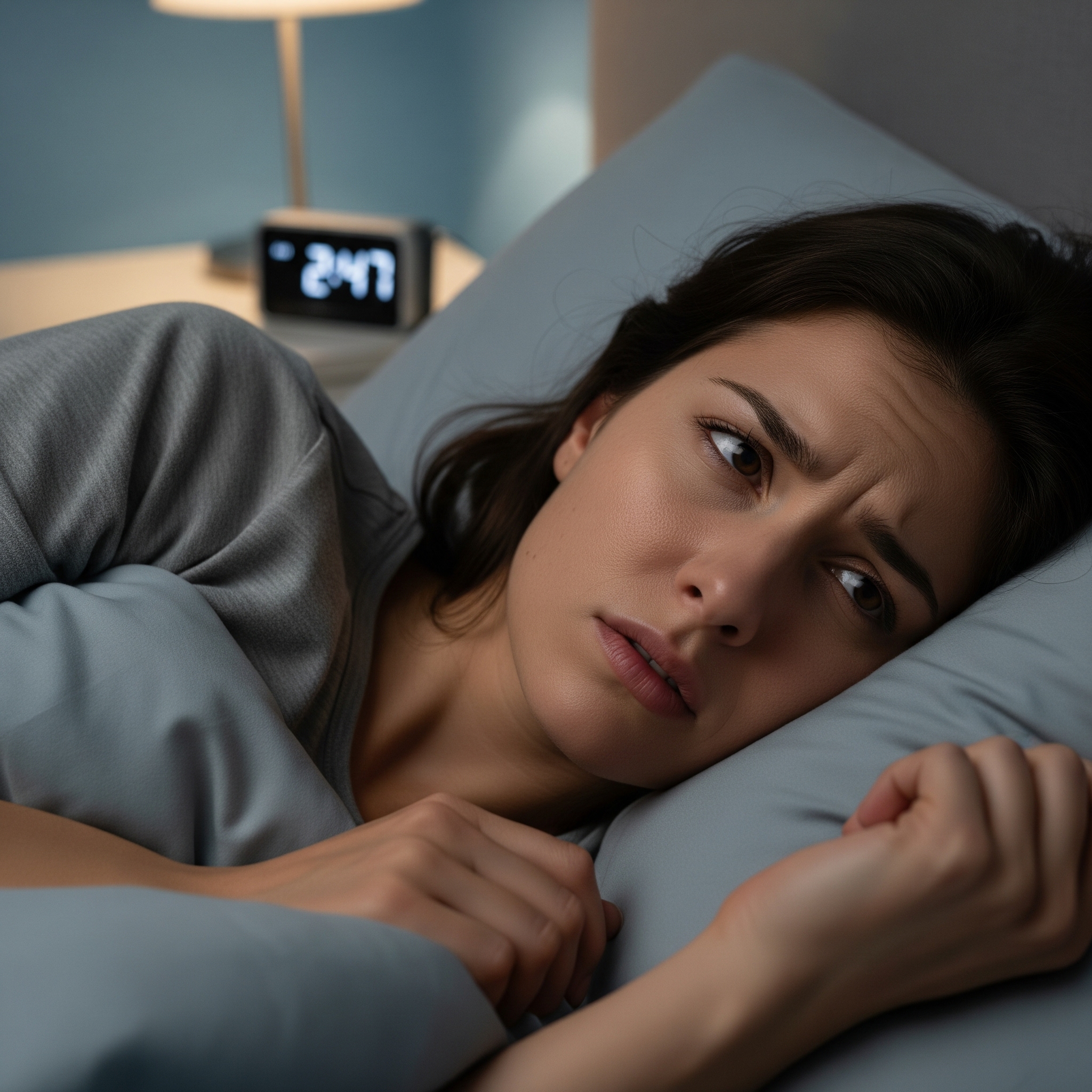
Nighttime awakenings, or fragmented sleep, affect a large part of the population. When they become regular, they impair sleep quality and daytime alertness. This guide helps you understand the causes, distinguish normal situations from sleep disorders, and identify concrete improvement levers to regain continuous nights.
What you will learn here
- What nocturnal awakenings are and why they occur
- The main categories of possible causes
- Guidelines to distinguish a true sleep disorder
- Practical solutions to better manage this phenomenon
Nocturnal awakenings: what exactly are we talking about?
Definition
Nocturnal awakenings occur when a person wakes up one or more times during the night, outside the normal sleep cycle. These awakenings become problematic if they:
- Occur more than three times a week
- Are accompanied by difficulties in falling back asleep
- Impact quality of life (fatigue, irritability, cognitive issues)
A sleep cycle lasts on average 90 minutes. It includes several phases (light, deep, paradoxical). Micro-awakenings can naturally occur at the end of each cycle: they are generally imperceptible but can become bothersome for some sleepers.
The Major Causes of Nighttime Awakenings
1. Physiological Causes
Several factors related to the normal functioning of the body can disrupt the continuity of sleep. Aging leads to a gradual lightening of deep sleep, making transitions between cycles more noticeable. Nocturia — the need to urinate at night — is particularly common after the age of 50 and is one of the primary causes of fragmentation in adults. Joint or digestive pain, as well as poor regulation of body temperature, also play a significant role.
2. Psychological or Emotional Causes
Chronic anxiety and stress are among the most common triggers for nighttime awakenings. Mental ruminations at bedtime keep the nervous system alert, making the second half of the night particularly restless. Periods of intense emotional change — grief, separation, work overload — amplify this phenomenon in active adults. In these situations, working on stress management during the day is often as effective as optimizing the sleep conditions themselves.
3. Environmental or Habit-Related Factors
The sleep environment is an often underestimated lever. External noises or a partner’s snoring disrupt transitions between cycles without the sleeper always being aware of it. Light — streetlights, nightlights, indicator lights from electronic devices — stimulates alertness and delays the secretion of melatonin. The room temperature is a crucial factor: according to sleep specialists, the ideal bedroom temperature for an adult is between 16 and 19 °C, a range that allows the body to maintain its natural thermal decline. Finally, caffeine consumption (tea, coffee, sodas) after 2 PM, alcohol, and exposure to screens in the evening are habits directly correlated with nighttime awakenings.
Accessories to improve the sleep environment (masks, earplugs) on Amazon4. Underlying Sleep Disorders
In some cases, frequent nighttime awakenings may signal a structural sleep disorder. Obstructive sleep apnea causes repeated micro-awakenings, often imperceptible to the sleeper but identifiable through snoring or breathing pauses reported by others. Restless legs syndrome generates sensations of discomfort that prevent or interrupt sleep. Chronic insomnia, finally, combines difficulties in falling asleep with prolonged awakenings during the night.
These causes should be explored with a professional if awakenings persist despite good sleep habits.
Key Takeaways
- A few awakenings at night are normal and are part of the natural architecture of sleep.
- Frequent, disruptive awakenings or those accompanied by daytime fatigue should be taken seriously.
- The causes are often multiple: lifestyle, physiology, sleep hygiene, underlying conditions.
- Simple solutions can effectively address the issue. Medical support is helpful in case of persistence or doubt.
Tips and Simple Guidelines
- Keep a sleep diary: note your bedtime, wake-up time, and how you feel upon waking. After two weeks, recurring patterns often emerge, making it easier to identify causes.
- Establish a soothing evening routine : paper reading, slow breathing, dim lighting. Starting to disconnect screens at least an hour before bedtime helps to naturally restart melatonin secretion.
- Reserve the bed for sleep: avoid screens, work, or meals in bed to strengthen the mental association between bed and sleep.
- In case of prolonged wakefulness: do not stay in bed ruminating. Get up, change rooms, read for a few minutes in dim light, then return to bed as soon as the first signs of drowsiness reappear.
- Check your bedding: an unsuitable mattress can cause pain that fragments sleep — consult our guide on the link between bedding and back pain upon waking . Bedding over eight to ten years old should be reevaluated, as its support and thermoregulation properties gradually degrade.
FAQ
How many nighttime awakenings are normal?
Micro-awakenings occur naturally at the end of each sleep cycle, approximately every 90 minutes. They are imperceptible to most sleepers as they last only a few seconds before the brain dives back into a new cycle. Waking up 1 to 2 times per night without difficulty falling back asleep remains within the physiological norm and does not warrant particular concern. However, beyond this frequency — especially if awakenings last more than 20 minutes or impact daytime alertness — it is advisable to identify the cause, whether behavioral, environmental, or medical.
How to fall back asleep quickly after a nighttime awakening?
The first rule is to avoid looking at the time or a screen: the displayed number fuels anxiety, and blue light delays the re-secretion of melatonin. Instead, practice slow and deep breathing — inhaling for 4 seconds, exhaling for 6 seconds — to lower the heart rate and signal to the nervous system that the situation is under control. If you haven’t fallen back asleep after 20 minutes, calmly get up, go to another room in dim light (no screens), read or engage in a low-stimulation activity, and wait for physical signs of drowsiness before returning to bed. This technique, derived from cognitive-behavioral therapy for insomnia (CBT-I), is recognized as the most effective non-drug approach in the long term.
When should you consult a doctor for nighttime awakenings?
A consultation is necessary if awakenings occur more than three nights a week for over a month, if you experience persistent daytime fatigue despite adequate sleep time, or if you suspect sleep apnea (loud snoring, breathing pauses reported by a third party, morning headaches). A general practitioner can perform an initial evaluation and, if necessary, refer you to a sleep specialist or prescribe a nocturnal ventilatory polygraphy. Do not wait several years before consulting: an untreated sleep disorder has documented cardiovascular, metabolic, and cognitive repercussions.
Can bedding cause nighttime awakenings?
Yes, and it is often an underestimated cause. A mattress that is too firm creates pressure points on the shoulders and hips, forcing the body to reposition frequently during the night. Conversely, a mattress that is too soft does not adequately support the spine, generating muscle tension that interrupts deep sleep. An unsuitable pillow for your sleeping position — too high for a back sleeper, too flat for a side sleeper — can cause cervical pain at night. Finally, bedding that is past its prime (beyond eight to ten years) loses its supportive and thermoregulating properties, two factors directly involved in sleep fragmentation. Consulting our sleep disorder guide can help you match symptoms with appropriate bedding solutions.
Does alcohol help you sleep without waking up?
No, this is one of the most widespread myths about sleep. While alcohol may sometimes facilitate initial falling asleep by acting as a sedative, it deeply fragments the second half of the night: as it metabolizes, it causes a rebound of REM sleep with frequent awakenings, sweating, nightmares, and a feeling of non-restorative sleep. Alcohol-related awakenings typically occur four to five hours after falling asleep, precisely in the middle or end of the night. It also reduces deep sleep, a phase essential for physical and immune recovery. Its overall effect is therefore clearly negative on sleep quality, even at moderate doses and even when it helps with falling asleep.
Can stress and anxiety really cause awakenings at fixed times?
Yes, and this phenomenon has a physiological explanation. Under chronic stress, cortisol levels — the wakefulness hormone — can be elevated at unusual times during the night, particularly between 3 AM and 5 AM, when the homeostatic pressure of sleep naturally lightens. The brain, in a state of heightened alertness, seizes this window of vulnerability to process deferred ruminations. Stress management techniques practiced during the day — meditation, heart coherence, journaling — have shown measurable beneficial effects on the frequency of these anxious awakenings, directly affecting the nocturnal secretion profile of cortisol. If the phenomenon persists, consulting a specialized psychologist or a sleep doctor is recommended.