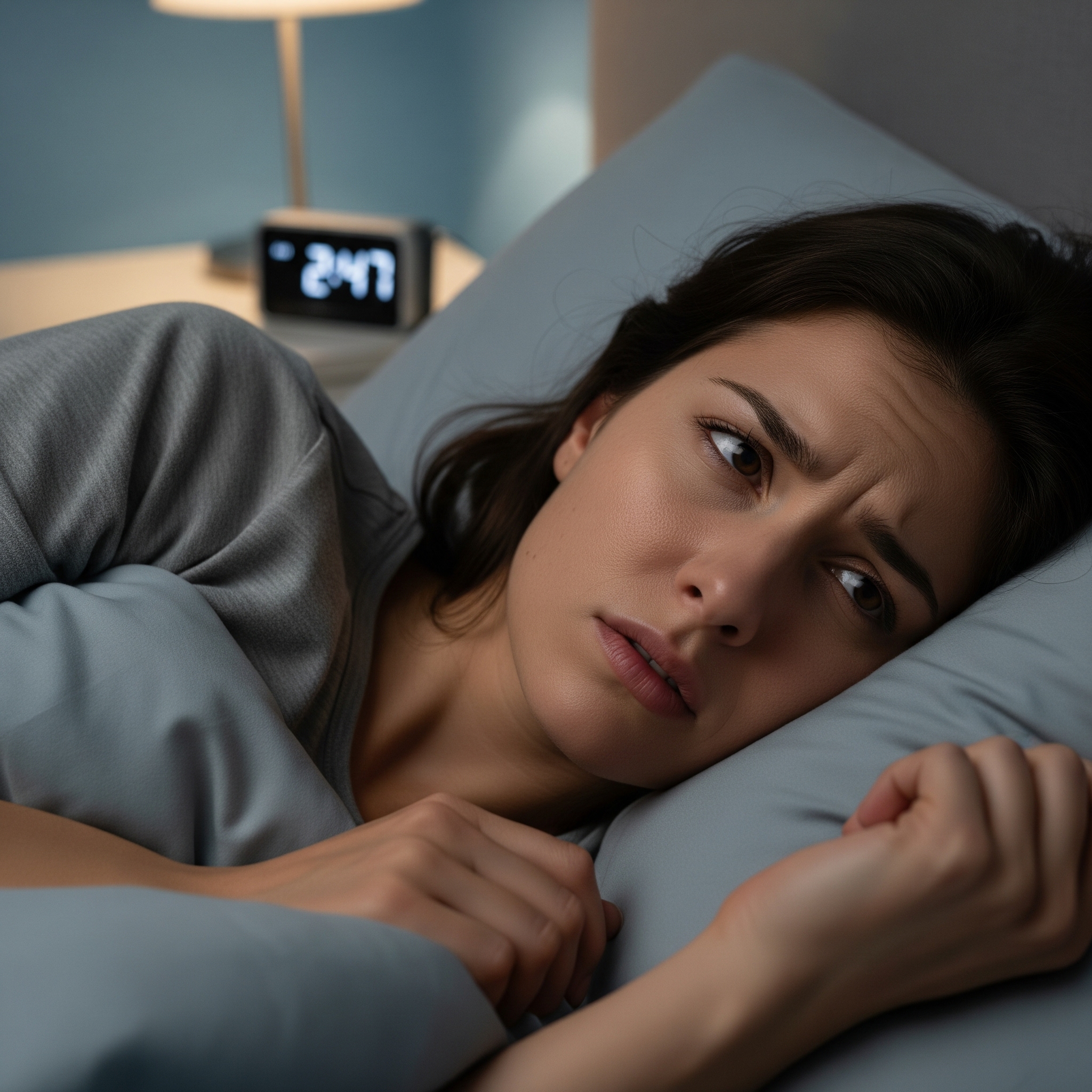
Nighttime awakenings, or fragmented sleep, affect a large part of the population. When they become regular, they impair sleep quality and daytime alertness. This guide helps you understand the causes, distinguish normal situations from sleep disorders, and identify improvement levers.
What you will learn here
- What nighttime awakenings are and why they occur
- The main categories of possible causes
- Guidelines to distinguish a true sleep disorder
- Practical solutions to better manage this phenomenon
Nighttime awakenings: what exactly are we talking about?
Definition
We talk about nighttime awakenings when a person wakes up one or more times during the night, outside the normal sleep cycle. These awakenings become problematic if they:
- Occur more than three times a week
- Are accompanied by difficulties in falling back asleep
- Impact quality of life (fatigue, irritability, cognitive issues)
A sleep cycle lasts on average 90 minutes. It includes several phases (light, deep, paradoxical). Micro-awakenings can naturally occur at the end of each cycle: they are generally imperceptible but can become bothersome for some sleepers.
Major causes of nighttime awakenings
1. Physiological causes
Factors related to the normal functioning of the body:
- Aging (lighter sleep with age)
- Nocturia (the need to urinate at night)
- Joint or digestive pain
- Poorly regulated body temperature
2. Psychological or emotional causes
- Anxiety, chronic stress
- Mental ruminations at bedtime
- Emotional disorders (grief, separation, mental overload)
These factors mainly affect active adults and individuals going through periods of change.
3. Environmental or habitual factors
- External noises or snoring
- Light (streetlights, nightlights, screens)
- Room temperature too hot or too cold — the ideal room temperature is between 16 and 18 °C
- Unsuitable or uncomfortable bedding
- Coffee, alcohol, or screens before bed
4. Underlying sleep disorders
In some cases, frequent nighttime awakenings may signal a sleep disorder, such as:
- Sleep apnea
- Restless legs syndrome
- Chronic insomnia
These causes should be explored with a professional if awakenings persist despite good sleep habits.
Key takeaways
- A few awakenings at night are normal.
- Frequent, bothersome awakenings or those accompanied by fatigue should be taken seriously.
- The causes are often multiple: lifestyle, physiology, sleep hygiene, pathologies.
- Simple solutions can effectively address the issue. Medical support is helpful in case of doubt.
Simple tips and guidelines
- Keep a sleep diary: note your bedtime, wake-up time, and how you feel upon waking.
- Establish a soothing evening routine : reading, slow breathing, dim lighting.
- Reserve the bed for sleep: avoid screens, work, or meals in bed.
- In case of prolonged awakening: do not stay in bed ruminating. Change rooms, read for a few minutes, then return to bed as soon as sleep returns.
- Check your bedding: an unsuitable mattress can cause pain that fragments sleep — consult our guide on the link between bedding and back pain upon waking .
Improve your bedding for deeper sleep → See the selection on lematelas.fr