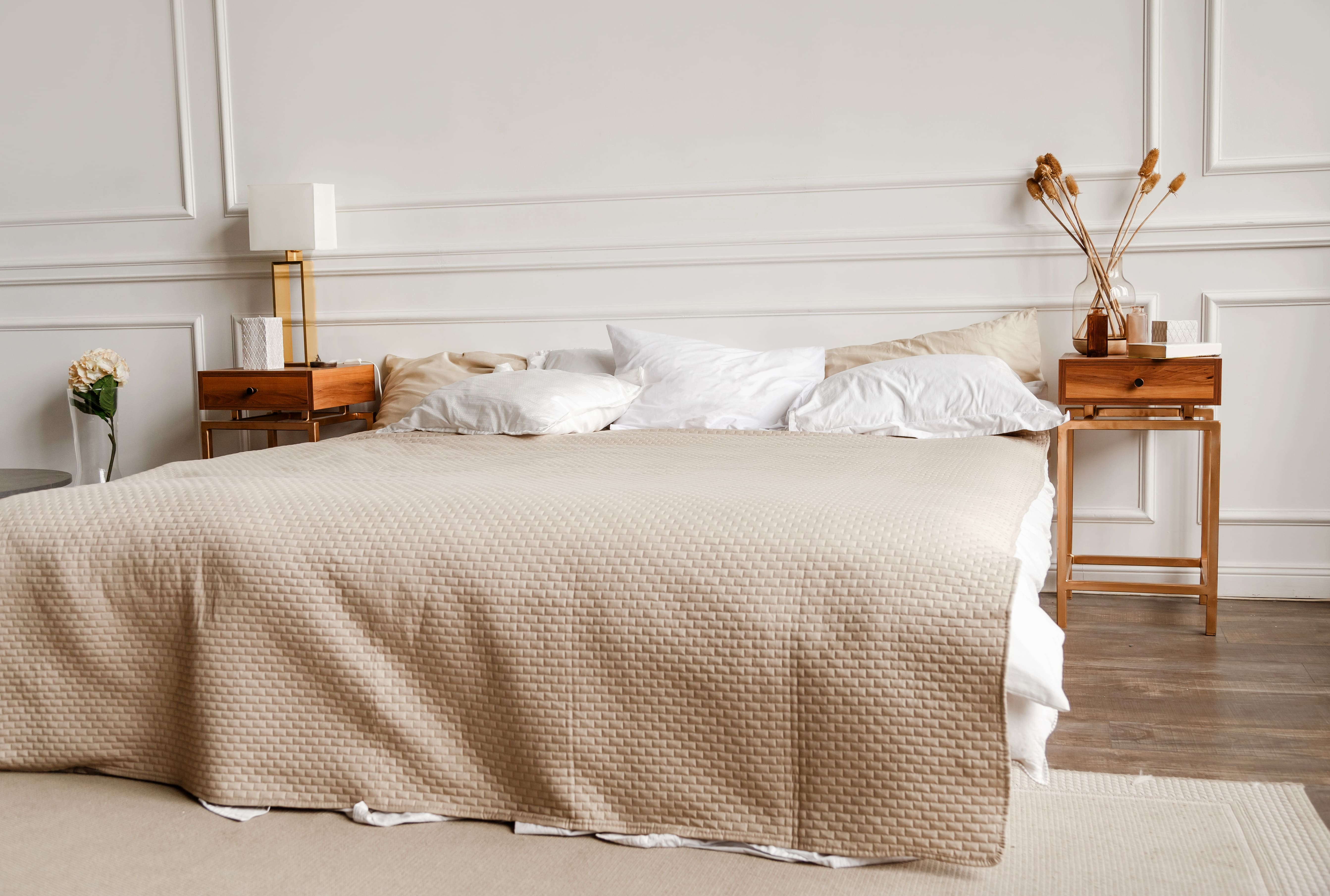
Sleeping with a clean, fluffy, and well-maintained duvet is essential for restorative sleep. A true thermal barrier, the duvet accumulates moisture and dust over the nights. While many sleepers neglect its care, rigorous maintenance can double its lifespan. This guide provides you with all the keys to maintain your duvet daily and during seasonal changes.
Why is duvet maintenance crucial?
A quality duvet represents an investment. Poorly maintained, it quickly loses its insulating properties and can become a breeding ground for allergens.
- Hygiene and health: The accumulation of sweat and dead skin promotes the development of dust mites.
- Maintaining comfort: A filling that clumps creates thermal bridges (cold spots).
- Economy: A well-maintained synthetic duvet lasts about 5 years, while a down model can last 10 to 12 years with proper care.
Summary of maintenance by filling type
Each material has specific cleaning requirements. Here’s a summary table to avoid mistakes during washing:
| Filling type | Washing frequency | Recommended temperature | Drying |
|---|---|---|---|
| Synthetic | 2 times a year | 40 °C to 60 °C | Tumble dryer possible |
| Down and feathers | 1 time a year | 30 °C to 40 °C (delicate) | Tumble dryer essential |
| Wool or Silk | Rarely | Dry cleaning | Air dry in the shade |
| Cotton / Bamboo | 1 to 2 times a year | 30 °C to 40 °C | Air dry |
If your duvet no longer regains its fluffiness after washing or if its filling forms irregular lumps, it is probably time to replace it. High-end natural duvets often come with an extended trial period from certain French manufacturers.
View on AmazonWashing: the expert’s golden rules
Check the drum capacity
A duvet should never be compressed in the machine drum. For a double duvet (240 × 220 cm), a minimum 10 kg machine is necessary. If your home machine is too small, prefer laundromats or a professional dry cleaner.
Choosing the detergent
Use a liquid detergent rather than powder, as it rinses out more easily and does not leave residues in the fibers. For natural duvets, choose a special “wool” or “delicate laundry” detergent to preserve the natural oils in the down that ensure its fluffiness.
The critical drying step
Poor drying is the primary cause of duvet degradation. If moisture remains in the filling, mold and persistent odors can develop.
- The tumble dryer: This is the ideal solution for restoring volume. Use a moderate temperature cycle.
- The tennis ball trick: Place two clean tennis balls in the drum. As they bounce, they will “beat” the filling and prevent the feathers or fibers from forming compact clumps.
- Air drying: If you don’t have a tumble dryer, lay the duvet flat (not hanging) on several lines to evenly distribute the weight. Shake it every 3 hours to aerate the fibers.
Daily tips to extend lifespan
Maintenance is not limited to annual washing. Simple daily actions make a difference:
- Shake the duvet every morning: This helps reinject air into the filling and evenly distribute the fibers.
- Ventilate the room: Open the windows for 15 minutes a day, even in winter, to expel accumulated body moisture overnight. A well-ventilated room also contributes to better sleep quality .
- Use a protective cover: A cotton or linen cover acts as a first filter against dust and sweat. Ideally, wash it every week or every two weeks.
How to store your duvet at the end of the season?
When the nice days arrive, the storage of your winter duvet must be careful:
- Pre-wash: Never store a duvet that has not been washed and perfectly dried.
- Breathable bag: Use a fabric (cotton) bag rather than a plastic one. Plastic traps residual moisture and can yellow the cover.
- Avoid excessive compression: While vacuum storage bags are convenient for saving space, they are not recommended for natural down duvets as they can break the down clusters.
Key takeaways
Maintaining your duvet is a guarantee of lasting comfort and health. By respecting washing temperatures and ensuring complete drying, you preserve the thermal properties of your bedding. Remember that a duvet that no longer regains its fluffiness after washing or shows signs of mold should be replaced to ensure optimal sleep hygiene. To further your bedding maintenance, check out our guide on how to clean your mattress .
FAQ
How often should you wash a duvet?
For optimal hygiene, wash your synthetic duvet every 6 months and your natural down duvet once a year, provided you air it daily. This schedule assumes the systematic use of a duvet cover, which serves as the first barrier and is washed every one to two weeks. Adjust the frequency to your situation: in cases of significant night sweating, allergies, or if a pet sleeps on the bed, an additional wash mid-season is recommended. Between full washes, good sun airing is sufficient to sanitize the filling.
Can you use fabric softener?
It is best to avoid it. Fabric softener tends to grease the fibers and reduce the insulating power and fluffiness of the duvet.How to remove a yellow stain from a duvet?
Yellow stains usually come from sweat and sebum that penetrate the cover. Start by applying a mixture of baking soda and white vinegar directly to the area, let it sit for about twenty minutes, then blot without rubbing. For stubborn and old stains, sodium percarbonate dissolved in hot water is a particularly effective natural alternative to use before machine washing. Avoid bleach, which weakens the fibers and can create permanent stains. Always finish with complete drying to prevent odors from reappearing.
Can an old duvet cause back pain?
Indirectly, yes. If the duvet no longer maintains a constant temperature, you risk tensing up during sleep, leading to muscle tension. Additionally, a sagging duvet no longer provides the comfort necessary for relaxation.Can all duvets be machine washed?
No. Wool or silk duvets generally do not withstand machine washing: wool felts and shrinks, silk loses its luster. For these materials, opt for professional dry cleaning. Synthetic, cotton, or down duvets can be machine washed, provided the drum is large enough (minimum 10 kg for a double duvet 240 × 220 cm): a compressed duvet does not rinse properly and remains damp inside. When in doubt, always refer to the care label sewn into the corner of the duvet, and prefer a laundromat if your home machine is too small.