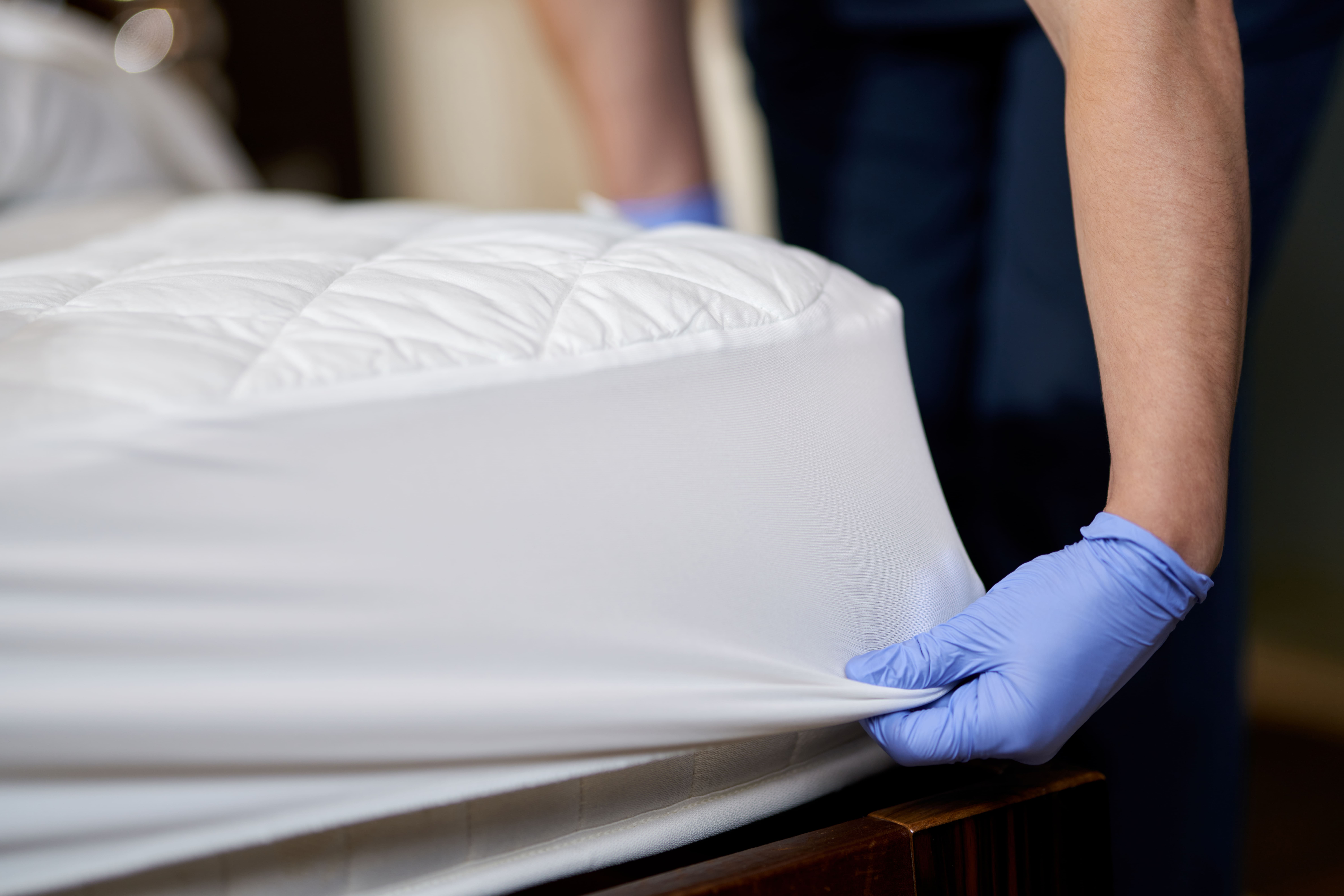
The mattress cover is often overlooked, yet it serves as an essential barrier against sweat, dust mites, and allergens. Proper maintenance improves your sleep quality and extends the lifespan of your mattress. Here are our clear and practical tips.
What is a mattress cover?
The mattress cover (also called a ticking) is the first textile layer that wraps around the mattress:
- Protects against moisture, sweat, and stains
- Limits the accumulation of dead skin, a source of allergens
- Prevents the proliferation of dust mites, bacteria, and mold
More and more mattresses today come equipped with removable covers that are machine washable.
Different types of protections
Removable cover
- With zipper
- Machine washable
- Main barrier against allergens and dirt
Full cover
- Envelopes the entire mattress
- Often waterproof and dust mite resistant
Mattress protector (or mattress pad)
- Placed on top of the cover
- Washable more frequently
- Extends the cleanliness of the main cover
Common materials
- Cotton: natural, breathable, hypoallergenic
- Polyester: durable but less breathable
- Technical blends (polyurethane, Tencel…): waterproof and often dust mite resistant
How often should you wash the mattress cover?
| Type of protection | Recommended frequency | For whom? |
|---|---|---|
| Mattress cover | 1 to 2 times/year (normal use) | All sleepers |
| Every 2–3 months | Allergic individuals, pets, heavy sweating | |
| Immediately after an accident | Stains, urine, vomit | |
| Mattress protector / mattress pad | Every 2 to 4 weeks | Children, allergic individuals |
| Mattress topper | 1 to 2 times/year | Sleepers seeking extra comfort and support |
Washing too frequently can damage the fibers or treatments (dust mite resistance, waterproofing).
The best way to space out washes of the integrated cover — which is often difficult to remove and replace — is to add a washable mattress pad or protector on top, which absorbs sweat and dirt for you and is much easier to machine wash.
View on AmazonRisks of poor maintenance
- Proliferation of dust mites → allergies, asthma, eczema
- Mold due to moisture → health risks
- Premature wear of the mattress and unpleasant odors
Best practices for maintaining your cover
- Air out the room every day
- Vacuum the mattress (if the cover is not removable) once a month
- Follow washing instructions:
- 30–40 °C (up to 60 °C if allowed)
- Gentle spin
- Dry in the open air, flat if possible
- Use a gentle liquid detergent
- Pre-treat stains locally (black soap, baking soda, white vinegar)
- Never put a damp cover back on the mattress
For optimal protection, a suitable mattress protector provides an additional layer that can be washed more often, thus preserving the mattress cover and extending its lifespan. You can also complement maintenance with a regular cleaning of the mattress itself .
Common mistakes to avoid
- Washing too hot or too often without necessity
- Using bleach or harsh solvents
- Neglecting the mattress protector, which can be washed more frequently
Protecting and maintaining your bedding: a layer of protection that can be washed more often than the cover is the best investment for keeping a mattress healthy.
View on Amazon