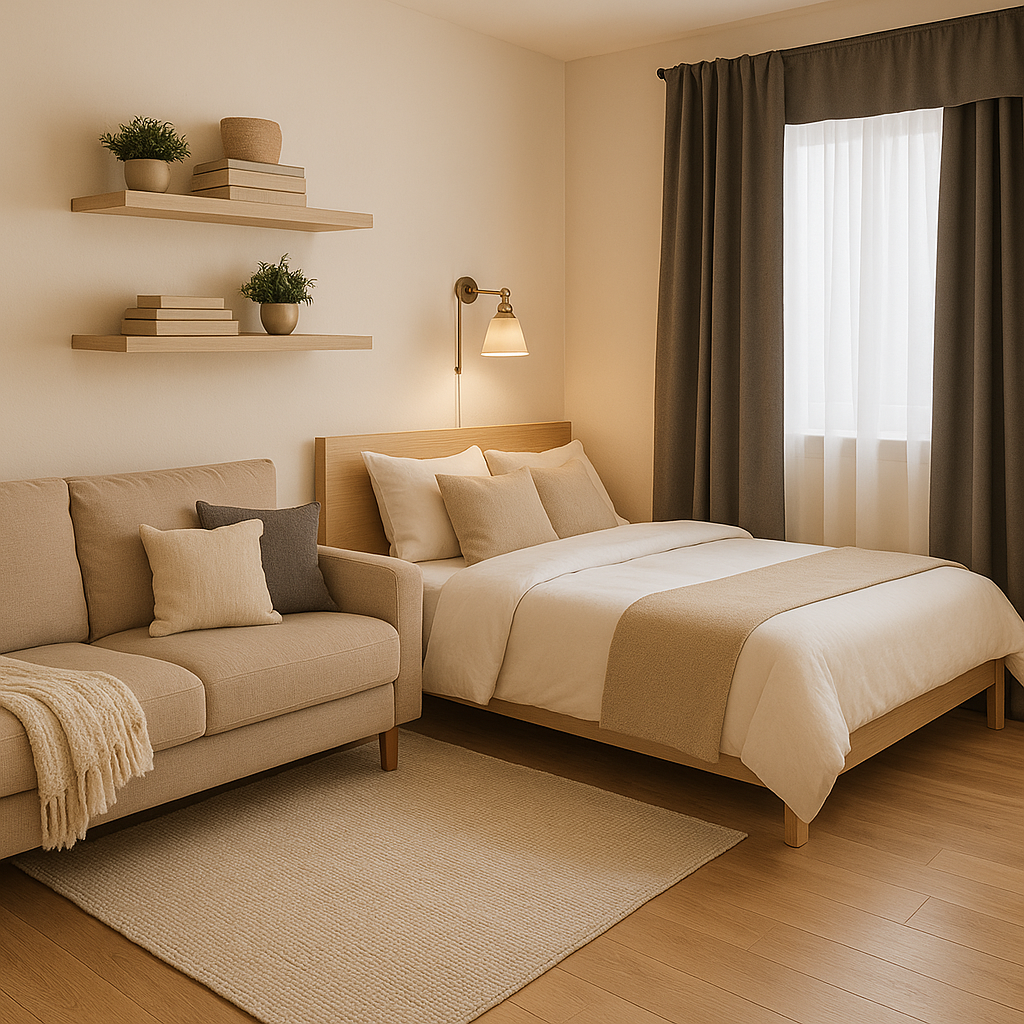
Laying your mattress directly on the floor, or even lying directly on the hardwood: what once seemed like a camping whim or a night of emergency at a friend’s place has become, in just a few years, a real trend. On social media, in minimalist and biohacking circles, the idea that sleeping closer to the ground would be better for the back and health circulates with growing conviction. But how valid is it really? Is there solid evidence, or is it just one of those fads that the web loves? Here’s an honest and documented overview.
An ancient practice brought back to life
Even before the first Mesopotamian civilizations invented elevated bedding filled with reeds, humans slept on the ground. So this is not an anthropological novelty: it is, on the contrary, the “default” state of our species for hundreds of millennia. In Japan, this practice has remained alive in the form of the traditional futon placed on a tatami, and researchers have taken an interest in it, particularly because this country ranks among the world records for longevity.
Today, the return to the ground is part of two distinct but converging trends. Minimalism advocates for the radical simplification of living spaces — fewer furniture, fewer expenses, less mental clutter. Biohacking, on the other hand, seeks to optimize biological functions through lifestyle adjustments, including room temperature, light exposure, and… the firmness of the sleeping surface. In both cases, the ground appears as an obvious solution: free, firm, immutable.
What science really says
The central argument of proponents of sleeping on the ground is simple: a mattress that is too soft allows the spine to sag into unnatural curves, while a firm surface forces the body to maintain a more neutral alignment. In other words, when the pelvis sinks deeper into the mattress than the rest of the back — which frequently happens on aging bedding — the spine ends up in a prolonged twisted position that can contribute to morning pain.
However, a meta-analysis of 24 studies has shown that a medium-firm mattress offers the best compromise: relief from back pain, improved spinal alignment, and better overall sleep quality. Yet a medium-firm mattress remains significantly softer than the bare floor.
A study published in Applied Ergonomics specifies that completely rigid surfaces increase peak pressure at bony contact points by 30 to 50% compared to a medium-firm mattress, which can fragment sleep and cause pain. In other words, the ground can correct an excess of softness… but it creates an opposite excess of hardness.
To date, no large-scale clinical trial has directly compared sleeping on a hard floor to sleeping on an adapted mattress. Experts, such as Dr. Whang, a professor in the Department of Orthopedics and Rehabilitation at Yale School of Medicine, who regularly treats patients suffering from back pain, remain cautious: for some profiles, the ground may provide relief; for others, it worsens. The determining variable is less the height of the sleeping surface than the alignment of the spine in the adopted position.
View on AmazonReal benefits, profile by profile
For back sleepers with mild lower back pain, the ground can indeed provide temporary relief. The hard surface prevents the hips and shoulders from sinking, allowing the spine to maintain its natural curves without struggling against a sagging support. A rolled towel placed under the knees significantly improves comfort in this position.
For side sleepers, the situation is much less favorable. The ground does not give under the shoulder or hip; these areas therefore experience significant pressure, which can cause numbness, tingling, and repeated nighttime awakenings. A sufficiently thick futon or a thin mattress placed on the ground is much preferable to the bare surface here.
For stomach sleepers, neither the ground nor any other firm support is recommended: this position excessively arches the lower back, and the hardness of the ground only exacerbates the strain on the cervical and lumbar vertebrae.
Elderly individuals, those with reduced mobility, and those suffering from allergies or certain pathologies represent populations for whom sleeping on the ground presents additional risks that should be seriously evaluated before any trial.
Often underestimated risks
Sleeping on the ground is not trivial, and several points deserve special attention.
Cold and humidity. The ground is, by nature, the coldest area of a room — heat rises. In winter or in poorly insulated homes, this temperature difference can disrupt sleep and promote muscle contractions. Stagnant humidity between the ground and the sleeping surface can also accelerate the development of mold, especially under a mattress placed permanently without sufficient ventilation.
Allergens and dust. The layer of air just above the ground concentrates more fine particles, dust mites, and spores. For individuals prone to allergic rhinitis or asthma, this factor can seriously degrade sleep quality and provoke nighttime respiratory symptoms.
Difficulty getting up. Transitioning from sleeping on the ground to a standing position puts more strain on the knees, hips, and ankles. What is a benign daily exercise at 30 can become a real burden — even a fall risk — with aging or in the case of joint pathology.
Maintenance. A mattress placed directly on the ground without slats or a box spring does not benefit from any ventilation from below. It absorbs bodily moisture without being able to release it, which reduces its lifespan and promotes bacterial proliferation.
Discover futons and floor mattresses available on AmazonPractical tips if you want to try
Are you curious, in good general health, and want to test the experience gradually? Here are some common-sense precautions.
- Start with a nap, not an entire night. A short session of an hour already allows you to assess how your body reacts to the hard surface, without the risk of spending a sleepless night.
- Always place something between you and the ground. A thin futon, a floor mattress, a thick mat, or even a folded blanket in several layers create a thermal barrier and reduce pressure at contact points.
- Prefer the back sleeping position, with a pillow under the neck and, if needed, a roll under the knees to preserve lumbar lordosis.
- Regularly air out your sleeping surface. If you place a mattress on the ground, lift it every morning to let the ground and the underside of the mattress dry in the air.
- Listen to your signals. Persistent pain upon waking, numbness, or fatigue more pronounced than usual are clear indicators that this practice does not suit your body type or health condition.
Sustainable trend or passing phenomenon?
Minimalism and biohacking are not mere fads: they respond to a deep aspiration to simplify and regain control over one’s environment and health. Sleeping on the ground is part of this movement alongside intermittent fasting, cold baths, or morning meditation.
However, science invites nuance. Sleeping on the ground may suit certain profiles, particularly those who sleep on mattresses that are too soft for their body type, but it is not a universal solution or a remedy for chronic back pain. The optimal firmness of a sleeping surface is an individual variable, depending on weight, body type, sleeping position, and spinal condition.
What can be said with certainty: if your current mattress is too soft and sags, the problem lies primarily there — and the ground is only an imperfect palliative. A mattress of appropriate firmness, placed on a box spring that ensures proper ventilation, remains the most documented and comfortable solution for the vast majority of sleepers.
To delve deeper into your thoughts on better sleeping , our complete guide on the Japanese futon explores in detail this traditional alternative that reconciles the spirit of sleeping on the ground with a controlled level of comfort.
Explore firm mattresses for back support on AmazonFrequently asked questions
Is sleeping on the ground really good for the back?
The honest answer is: it depends. For people who usually sleep on a mattress that is too soft — where the pelvis sinks deeper than the shoulders and creates a twist in the spine — a firmer surface can indeed reduce morning lower back pain. However, available studies show that a completely rigid surface is not optimal either: it concentrates pressure at bony contact points (shoulders, hips, heels), which can fragment sleep and generate new discomforts. The strongest scientific recommendation remains that of a medium-firm mattress, which offers both support and adaptation to body curves. The ground can thus serve as a temporary test or a transitional solution, but it does not replace a sleeping surface suited to your body type and preferred sleeping position.
What sleeping positions are compatible with the ground?
The back sleeping position is by far the best suited to the ground or any very firm surface. It distributes weight over a large area and allows, with an appropriate pillow under the neck and possibly a roll under the knees, to maintain natural lumbar lordosis. The side sleeping position is much more problematic: without the cushioning ability of a good mattress, the shoulder and hip experience significant pressure, often leading to numbness and painful awakenings. The stomach sleeping position is discouraged on any firm support, as it accentuates lumbar arching and forces the head into prolonged lateral rotation, which is harmful to the cervical vertebrae.
What are the risks for elderly individuals?
For seniors, sleeping on the ground presents several specific risks that deserve serious consideration. First, getting up from the ground each morning places intense strain on the knees, hips, and ankles, which can become painful in cases of osteoarthritis or rheumatism, and increases the risk of falling — the leading cause of hospitalization for those over 65. Additionally, thermal regulation deteriorates with age: being closer to the cold ground increases the risk of nighttime hypothermia, especially in winter. Finally, the humidity and allergens more concentrated near the ground can exacerbate pre-existing respiratory conditions. For this age group, a bed at an appropriate height with a well-chosen firm mattress remains the top recommendation.
Can you place your mattress directly on the ground without damaging it?
Technically yes, but with precautions. The main threat is humidity: without slats or a box spring, the underside of the mattress is not ventilated and accumulates the moisture vapor released by the body during the night (about 0.5 liters per person). Over time, this promotes the development of mold and bacteria, which degrades the mattress and can affect indoor air quality. To limit this risk, it is advisable to lift the mattress every morning for at least an hour and preferably choose a futon or a floor mattress designed to be used directly on the ground, with naturally breathable materials (latex, wool, cotton). Avoid placing memory foam mattresses and spring mattresses on the ground: they are not designed for this use.
Is the Japanese futon a better alternative to the bare floor?
Yes, in most cases. The traditional Japanese futon is specifically designed to be placed on the ground — on a tatami or on a flat surface — and offers a smart compromise between the firmness of the ground and the minimal comfort necessary for restorative sleep. Its natural materials (cotton, wool, sometimes latex) allow for better breathability than most conventional mattresses placed on the ground. It rolls or folds easily in the morning, which largely resolves the ventilation issue. For minimalism enthusiasts and low bedding advocates, it is a much more refined solution than the bare floor, tested and perfected by centuries of tradition. Our dedicated guide to the Japanese futon details the different models, thicknesses, and materials to help you make the right choice.
How long does it take to get used to sleeping on the ground?
Adaptation varies significantly from person to person, but most people who report this experience mention a transition period of two to four weeks. The first nights are often marked by hip and shoulder pain, more frequent awakenings, and a general feeling of discomfort. These symptoms tend to diminish as the body adapts to the firmer surface and postural muscles strengthen. It is advisable to proceed gradually: start with naps, then partial nights, before fully transitioning. If pain persists beyond three weeks without any improvement, it is best to stop and consult a doctor or physiotherapist, as this may indicate a structural incompatibility with this practice.
Does sleeping on the ground help regulate body temperature?
This is an argument sometimes put forward by biohacking proponents: a slightly lower body temperature would favor falling asleep and sleep depth. In theory, contact with a cool surface could contribute to this. In practice, this effect is difficult to isolate and can reverse in winter or in poorly insulated rooms, where the cold of the ground becomes a negative factor disrupting sleep. A room maintained between 16 °C and 18 °C remains the most documented recommendation for promoting sleep quality, regardless of the height of the sleeping surface.