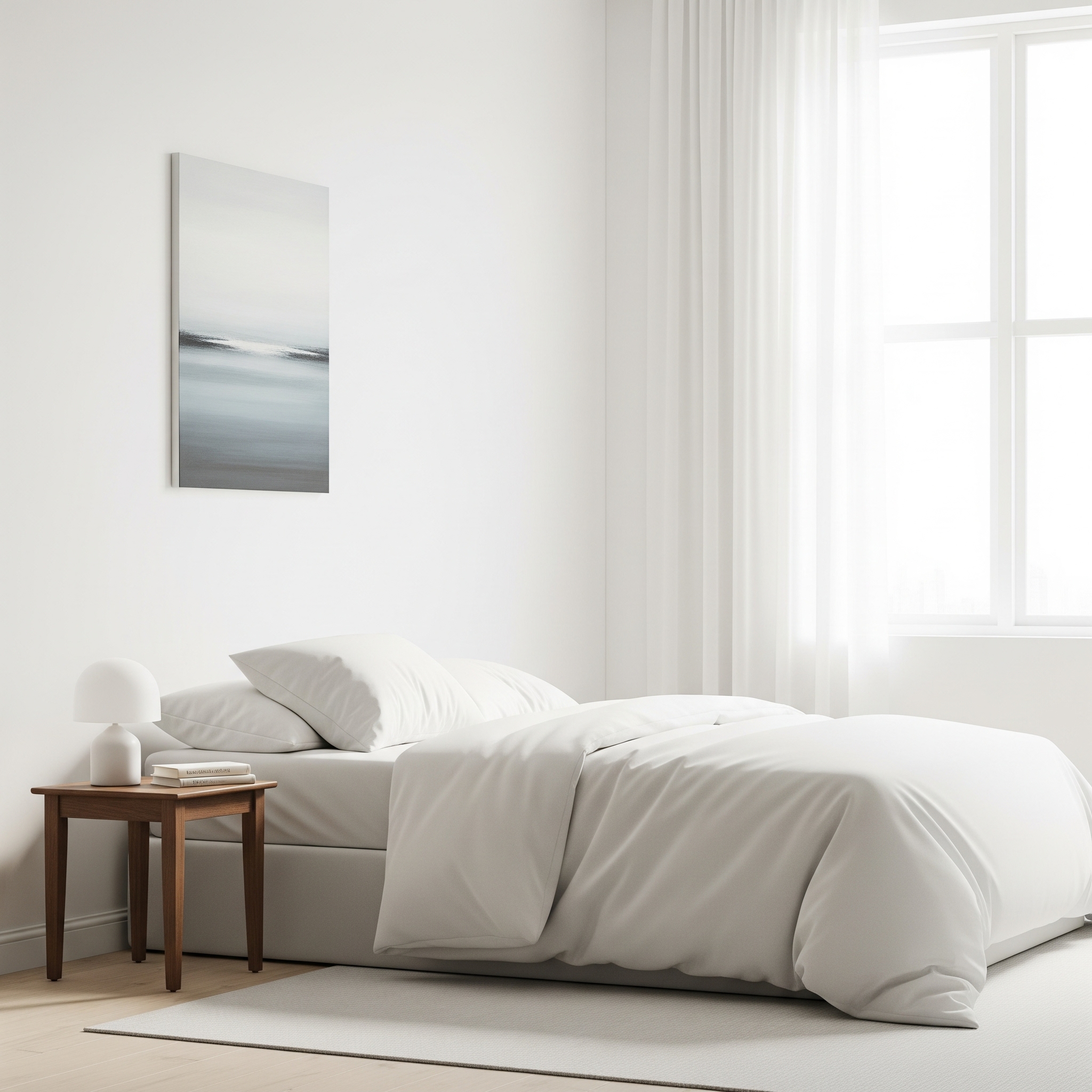
Adopting a minimalist bedroom means rethinking your space to promote simplicity, functionality, and serenity. In an era of overconsumption, this approach brings genuine calmness, conducive to better sleep. To understand the impact of the environment on your rest, read our article on how the bedroom influences sleep quality .
What is minimalism applied to the bedroom?
Minimalism values simplicity and purity. It is characterized by:
- Furniture reduced to the essentials: bed, nightstand, simple wardrobe
- Clean decoration: few objects, neutral colors
- Clear space: absence of clutter on surfaces and under the bed
The goal: to create a serene atmosphere conducive to relaxation and sleep.
How does the environment influence sleep?
According to the National Institute of Sleep and Vigilance (INSV), the bedroom strongly influences the quality of rest. Light, noise, temperature, layout, and visual ambiance play a key role.
A cluttered space stimulates the mind, reminding you of tasks to accomplish. An uncluttered bedroom provides control and calmness, promoting relaxation.
Benefits of a minimalist bedroom on sleep
- Reduction of mental stress
Fewer visual distractions free the mind. - Facilitation of falling asleep
Fewer objects mean fewer sources of distraction. - Improvement of air quality
Less dust and easier cleaning. - Reinforcement of sleep hygiene
A bedroom dedicated exclusively to rest, strengthening routines.
Is minimalism for everyone?
Accessible to all, but to be adapted according to sensitivities. Those attached to personal objects may feel frustration. The essential thing is the balance between functionality, visual harmony, and emotional comfort.
Alternatives and complements: hygge, feng shui, slow living
- Hygge (Denmark): coziness and warm materials
- Feng shui (China): harmonious arrangement of space
- Slow living: reduction of sensory stimuli
These philosophies enrich minimalism with warmth or spirituality.
Concrete examples: when less becomes more
- Marie, 34 years old, Paris: drastic reduction of decor, faster falling asleep, and a feeling of lightness.
- Lucas, 41 years old, Lyon: minimalist furniture, easier cleaning, better sleep.
Practical tips to start the transformation
- Clear surfaces (nightstand, dresser)
- Keep only the essentials useful for daily life
- Optimize storage (under the bed, closed drawers)
- Favor natural materials (organic cotton, light wood)
- Limit the color palette to neutral and calming tones
- Choose a simple and comfortable mattress: our guide to choosing your mattress helps you find the reference that fits into your minimalist approach
Mistakes to avoid
- Wanting to throw everything away quickly
- Confusing minimalism with coldness
- Neglecting the opinions of household members