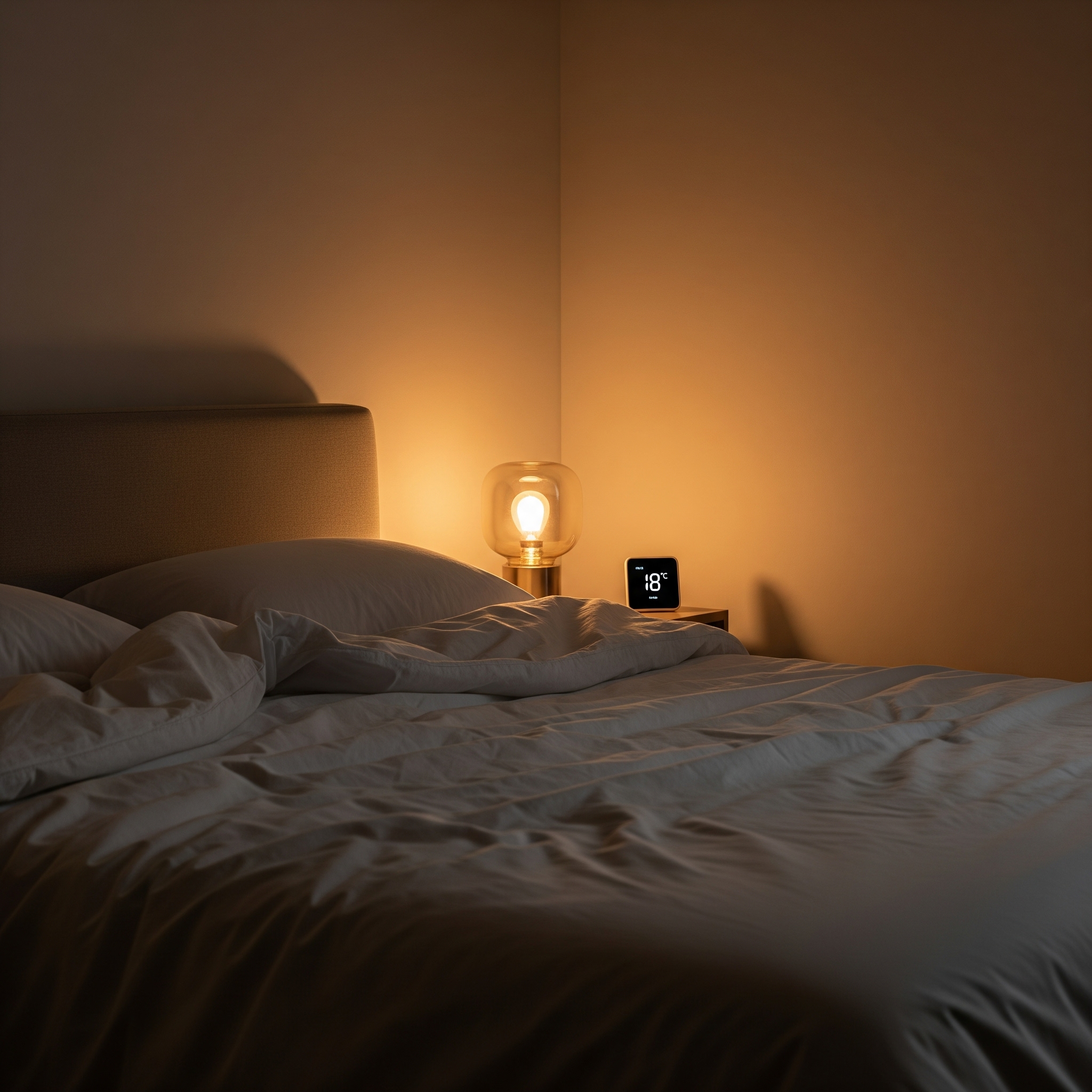
A good night’s sleep does not solely depend on the quality of your mattress or your evening habits. The ambient temperature of your room also plays a crucial role in sleep regulation. Numerous studies show that our bodies need specific thermal conditions to fall asleep quickly and enjoy restorative sleep.
Temperature and Sleep: An Essential Biological Relationship
How Our Body Regulates Temperature During Sleep
The body follows a circadian rhythm, a 24-hour internal clock influenced by light and temperature. As bedtime approaches, the body temperature naturally begins to drop. This decrease signals the brain that it is time to sleep. A room that is too hot or poorly ventilated can disrupt this process, making it difficult to fall asleep.
A Myth to Debunk: “You Need to Heat the Room to Sleep Well”
For a long time, it was believed that sleeping in a warm room was comfortable. However, scientific data and recommendations from experts, such as the National Institute of Sleep and Vigilance (INSV), advocate for cooler temperatures for optimal sleep.
Ideal Room Temperature: Recommendations
- Adults: between 16 and 18°C is generally recommended.
- Babies: slightly warmer, between 18 and 20°C, for increased thermal safety.
- Elderly: also 18 to 20°C, due to increased sensitivity to cold.
These recommendations are validated by the INSV, Public Health France, and other European organizations.
Why a Cool Room Promotes Sleep
- Facilitates the natural decrease in body temperature necessary for falling asleep
- Improves the quality of deep sleep, the restorative phase
- Reduces nighttime awakenings related to thermal discomfort
Consequences of Inappropriate Temperature
Room Too Hot
- Difficulty falling asleep
- Night sweats and micro-awakenings
- Lighter and less restorative sleep
- Increased risk of sleep apnea or snoring
Room Too Cold
- Difficulty falling asleep if the cold is too intense
- Possible muscle tension
- Frequent awakenings to warm up
Adapting According to Climate
In Hot Areas
- Use fans, quiet air conditioners, or air coolers
- Ventilate early in the morning or late in the evening
- Opt for lightweight bedding (cotton, linen, tencel)
In Cold Areas
- Regulated heating with a thermostat
- Duvets suitable for the season
- Thermoregulating mattresses or mattress toppers (latex, ventilated memory foam)
Concrete Cases
- Night worker: blackout curtains + stable temperature around 18°C even during the day
- Sweaty child at night: room at 18°C + breathable cotton pajamas
- Cold-sensitive person: temperature at 19°C + warm duvet with good ventilation
Practical Tips for Optimal Temperature
- Ventilate the room for at least 10 minutes morning and evening
- Avoid unnecessary heat sources (electronics, excessive heating)
- Install an indoor thermometer to monitor the temperature
- Adapt bedding to the season
- Invest in breathable or thermoregulating bedding in case of recurring issues
Mistakes to Avoid
- Overheating the room in winter “for comfort”
- Sleeping with windows closed in summer without ventilation
- Using a duvet that is too warm all year round