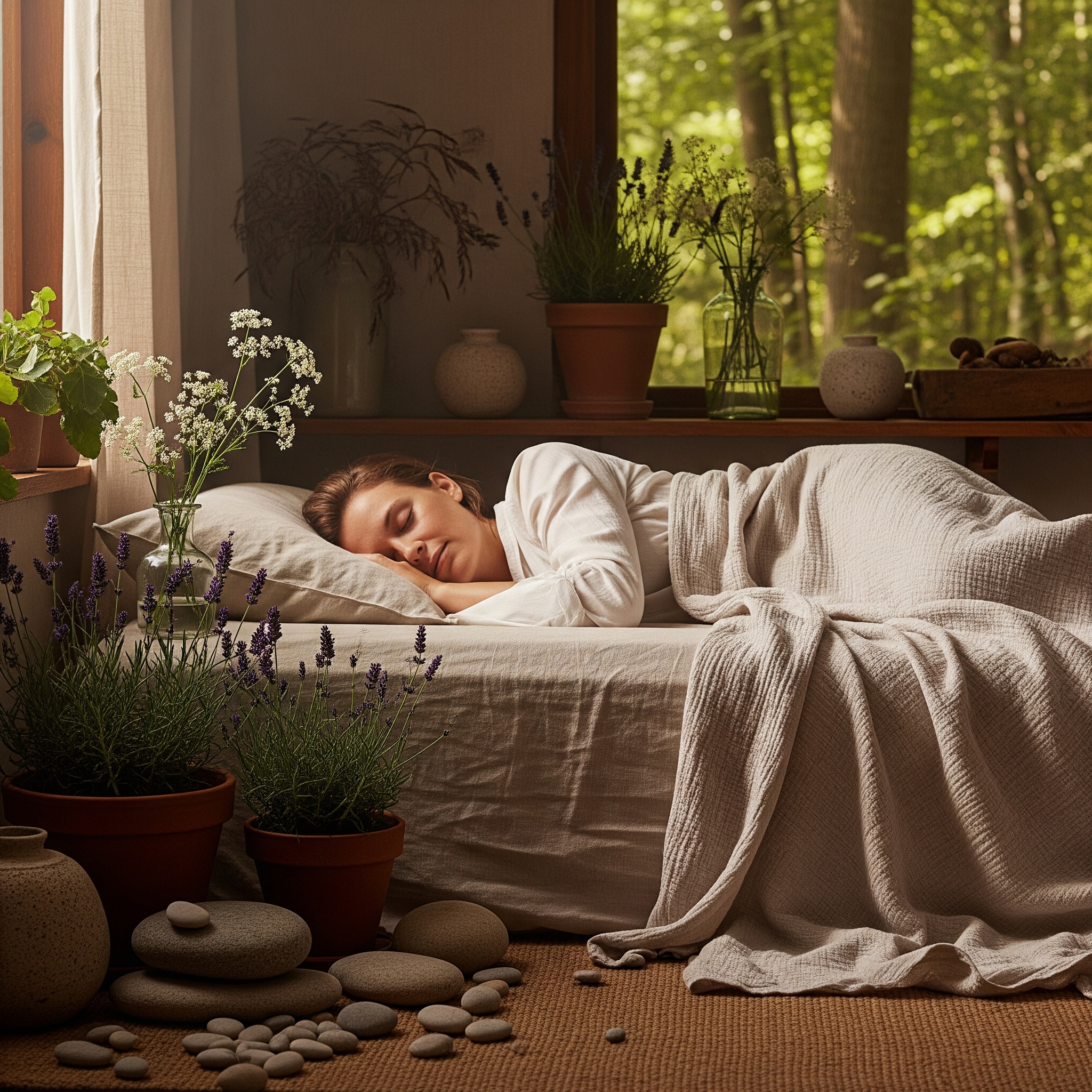
Sleeping poorly is not a fatality. In a world where stress, screens, and frantic rhythms disrupt our nights, there are natural alternatives to regain quality sleep without medication.
Why is sleep so important?
Sleep allows for physical and mental recovery, memory consolidation, hormonal regulation, and brain detoxification. The INSV recommends 7 to 9 hours per night depending on individuals—values that vary according to age and biological profile.
The mechanisms of sleep
Sleep is organized into cycles of about 90 minutes, including:
- Light slow sleep: transition to deep sleep
- Deep slow sleep: physical recovery and immune consolidation
- Paradoxical sleep: dream phase, emotional processing, and memory consolidation
The circadian rhythm, regulated by natural light and body temperature, orchestrates these cycles. Any disruption of this rhythm (artificial light, jet lag, stress) delays or fragments the cycles.
Why avoid medications?
Sleeping pills (benzodiazepines, Z-drugs) can lead to dependence, tolerance, and notable side effects: daytime drowsiness, cognitive disorders, falls in the elderly. Santé Publique France recommends prioritizing behavioral and environmental approaches first. These approaches, when well applied, yield lasting results where medications mask symptoms without addressing the causes.
Natural alternatives for better sleep
1. Lifestyle and bedtime routine
Regularity is the most powerful lever. Stable bedtimes and wake-up times—including on weekends—stabilize the circadian rhythm in less than two weeks.
- Regular bed and wake times (maximum variation: 1 hour)
- Gentle physical activity during the day (walking, swimming, yoga)
- Reduction of stimulants (coffee, alcohol, tobacco) after 2 PM
- Light and digestible dinner, at least 2 hours before bedtime
2. Suitable environment
The quality of your bedroom environment plays a direct role in the ease of falling asleep and the depth of sleep.
- Room that is airy, dark, quiet, between 17 and 20 °C
- Bedding suitable for your morphology : an unsuitable mattress disrupts sleep as much as a noisy environment
- No screens in bed: blue light inhibits melatonin secretion and delays falling asleep by 30 to 60 minutes
A sagging or poorly suited mattress for your morphology causes micro-awakenings that you may not always remember: this is often the first environmental factor to correct.
View on Amazon3. Relaxation techniques
Nervous system regulation techniques are among the most documented for shortening the time it takes to fall asleep. Heart coherence (inhaling for 5 seconds / exhaling for 5 seconds, repeated for 5 minutes) lowers heart rate and reduces circulating cortisol. Mindfulness meditation, practiced for 10 minutes each evening, improves sleep continuity after 4 to 6 weeks of regular practice.
- Abdominal breathing, heart coherence
- Mindfulness meditation (apps Petit Bambou, Insight Timer)
- Self-hypnosis, sophrology: particularly effective in cases of nighttime ruminations
4. Plants and supplements (with medical advice)
These solutions can help occasionally but do not replace good lifestyle habits. Consult a doctor before any prolonged supplementation.
- Melatonin: especially useful in cases of jet lag or circadian rhythm disorders
- Valerian, passionflower, hawthorn: mild sedative effects and well tolerated, with no demonstrated habituation
- Magnesium bisglycinate: promotes muscle relaxation and reduces nighttime tension
Practical tips
- Create a cocoon: no television or tablet in the bedroom, blackout curtains, bedding suited to your morphology
- Don’t force sleep: if you stay awake for more than 20 minutes, get up and do a calm activity (reading, gentle stretching) before returning to bed
- Establish an evening routine : repeating the same actions (warm bath, reading, calming herbal tea) conditions the brain to anticipate sleep
- Keep a sleep diary: noting bedtimes, awakenings, and perceived fatigue helps identify triggers of poor nights
For a model with enveloping comfort and balanced support, often cited among bedding that promotes quick falling asleep, the hybrid mattress (foam + pocket springs) is a safe bet:
Discover the Tediber hybrid mattress – 100-night trial, 10-year warrantyFAQ
Does exercise help with better sleep?
Yes, especially if done during the day. Regular physical activity increases the proportion of deep sleep and shortens the time it takes to fall asleep. Avoid intense sessions in the 3 hours before bedtime, as they raise body temperature and delay falling asleep.
What about naps?
Beneficial if they are short (20 minutes maximum) and taken before 3 PM. A nap that is too long or too late reduces the sleep pressure accumulated during the day and complicates falling asleep at night.
Are sleep apps useful?
Some promote relaxation (sounds, guided meditations) or allow tracking of cycles, but they do not replace good lifestyle habits. The screen light remains an obstacle: if you use an app, activate night mode and turn off the screen once the session starts.
Is it normal to wake up at night?
Yes, micro-awakenings between cycles (about every 90 minutes) are natural and often not remembered. The important thing is to fall back asleep quickly. If awakenings last more than 20 minutes or occur more than 3 times a night regularly, consult a doctor.
Can bedding really influence my sleep?
Yes, significantly. An unsuitable mattress—too soft, too firm, or sagging—misaligns the spine and generates micro-awakenings that you may not always consciously remember. If you sleep better away from home (hotel, at relatives’), your bedding deserves to be evaluated before any other intervention.