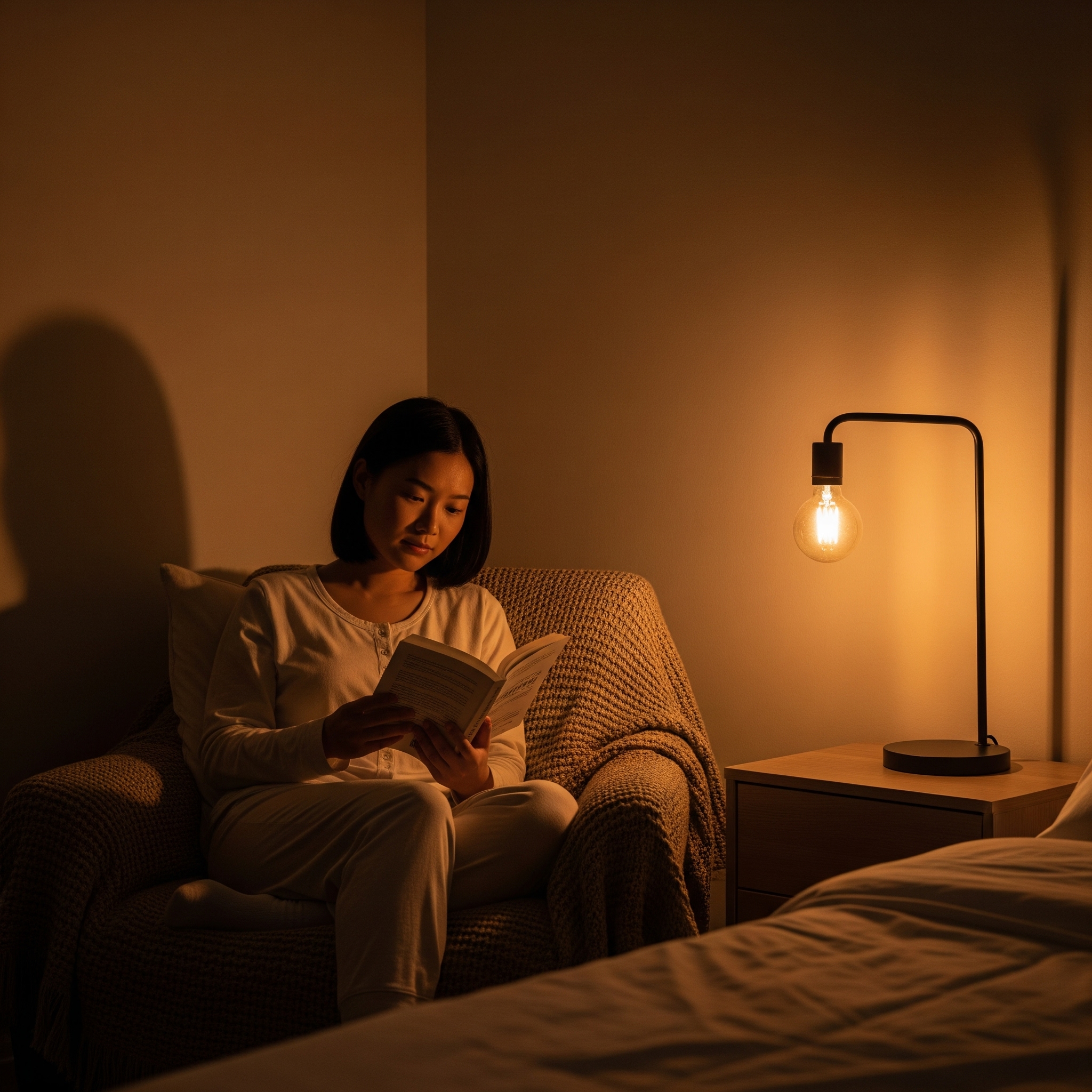
In a world saturated with screens, stress, and irregular rhythms, establishing an evening routine is an essential key to promoting natural falling asleep and restorative sleep.
What is an evening routine?
An evening routine is a sequence of actions repeated each night before bed, allowing the body and mind to gradually transition from wakefulness to a state conducive to sleep. These soothing gestures are validated by cognitive sciences: the brain progressively associates these repetitive signals with the approach of rest.
How does an evening routine work?
The body follows a 24-hour circadian rhythm. The regularity of actions and schedules conditions the brain to anticipate the night.
Key mechanisms
- Conditioning: repetition of the same reassuring gestures
- Body relaxation: gradual decrease in breathing, muscle tension, and temperature
- Reduced light: promotes the secretion of melatonin, the hormone that triggers sleep
For the routine to be effective, the sleep environment must be as well. The ideal room temperature (16–18 °C) plays as important a role as the actions you adopt.
Benefits of a well-structured routine
- Faster falling asleep
- Fewer nighttime awakenings
- Improved sleep quality
- Better mood upon waking
Limitations
- Requires consistency for lasting effects
- Does not replace medical treatment for severe disorders
- Complement to good overall lifestyle hygiene
Alternatives or complements
- Cognitive Behavioral Therapy for Insomnia (CBT-I)
- Sleep hygiene (bedding, temperature, noise)
- Regular physical activity (avoid late-night workouts)
- Appropriate nutrition (avoid stimulants in the evening)
Examples of effective routines
Express routine (20–30 minutes) — ideal for busy evenings
Even short, a structured routine is better than none. Here’s a simple sequence:
- T-30 min: Put down the screen. Prepare for the next day (clothes, bag, to-do list) to clear your mind.
- T-20 min: Dim lights throughout the room. Herbal tea, light reading, or calming podcasts.
- T-10 min: A few gentle stretches (neck, shoulders, lower back) to release accumulated tension.
- T-5 min: Slow breathing (inhale for 4s — hold for 4s — exhale for 6s) to lower heart rate.
- Bedtime: cool room, total darkness or sleep mask.
Complete routine (45–60 minutes) — for deep and restorative sleep
- T-60 min: Warm shower or bath (37–38 °C) — the slight drop in body temperature that follows promotes falling asleep.
- T-45 min: Journaling: write down 3 positive things from the day and 3 intentions for the next day.
- T-30 min: Physical reading (a book, not a tablet) in warm, dim light.
- T-15 min: Guided meditation or heart coherence (apps available for free).
- Bedtime: comfortable bedding, room at 17–18 °C, phone out of the bedroom.
No matter how well-established, a routine does not compensate for a sagging mattress that causes micro-awakenings: bedding remains the final and most determining link in your evening ritual.
View on AmazonPractical tips
- Be consistent, even on weekends — shifting your bedtime by more than an hour disrupts the circadian rhythm
- Disconnect at least 1 hour before bedtime: blue light from screens hinders melatonin secretion
- Favor calm activities; avoid intense sports and stimulating series after 8 PM
- Listen to your internal clock: go to bed at the first signs of fatigue without ignoring them
- If you suffer from chronic sleep deprivation, consult our guide on how to improve your sleep without medication
A duvet with the right warmth (heat index suitable for a room at 17–18 °C) ideally completes the bedtime cocoon:
View on Amazon