A back that aches upon waking, a dip that deepens in the center of the bed… a mattress that wears out too quickly is often the result of an accumulation of small bad habits — not a faulty product at the time of purchase. With proper maintenance, you can easily gain two to three years of longevity on any technology. Without maintenance, even a model costing €1,000 can sag in five years.
The Determining Factors of Durability
The lifespan of a mattress depends on two things: the intrinsic quality of the materials and the conditions of use. Price is merely an imperfect indicator.
The density of foams is the most discriminating factor for polyurethane or high resilience (HR) foam mattresses. Below 35 kg/m³, the risk of premature sagging is real for daily adult use; serious models are typically between 40 and 50 kg/m³. For natural latex, look at the ILD (indentation load deflection) rather than density alone.
The box spring contributes about 30% to the overall durability. An old or unsuitable box spring accelerates the deformation of the padding, even if it’s new. If the slats start to bend, the mattress has to compensate, and it wears out that much faster.
Moisture is the main enemy of foam polymers and natural fibers: it promotes oxidation and softening of the padding, well before mechanical wear becomes noticeable.
1. Protection: the first line of defense
The most effective way to extend the life of your mattress is to prevent sweat and sebum from penetrating the filling. Human sweat is slightly acidic: at a rate of 200 to 500 ml per night, it chemically degrades foam cells over time, much more surely than mechanical pressure.
The use of a mattress protector
A waterproof and breathable mattress protector acts as a physical and chemical barrier against moisture. Its microporous polyurethane membrane allows water vapor to pass through (so no suffocating feeling) while blocking liquids. Choose one that is washable at 60 °C, with sturdy elastic bands so it doesn’t move at night, and wash it every four to six weeks — otherwise, it will become saturated itself. For more information on available options, the hygiene accessories dedicated to mattresses provide a comprehensive overview.
View on Amazon2. Rotation and Flipping: Balancing Pressure Points
Some mattresses are referred to as “single-sided” (one sleeping surface), particularly those that include a layer of memory foam. This does not exempt them from mechanical maintenance.
- Head-to-foot rotation: every 3 months. This prevents the same areas (shoulders and hips) from being stressed in the same spot, where sagging occurs first.
- Flipping summer side / winter side: if your mattress has two sleeping surfaces, flip them with each change of season. The winter side is generally denser to retain heat, while the summer side is more breathable.
- Asymmetrical couple: if you sleep with someone else and there is a weight difference greater than 15-20 kg, change the head-to-foot rotation to every two months to compensate for uneven wear.
For high-end mattresses like “The Incredible Tediber Mattress” , the design aims for optimal durability, but seasonal rotation remains useful to homogenize the feel over time.
3. Technical maintenance and room hygiene
Ventilation and thermal regulation
The humidity accumulated during the night must be released. Open the windows for 15 minutes every morning while leaving the mattress uncovered, without a duvet. Keeping the room around 18 °C also limits the proliferation of dust mites, which reproduce actively above 20 °C in high humidity.
Cleaning with baking soda
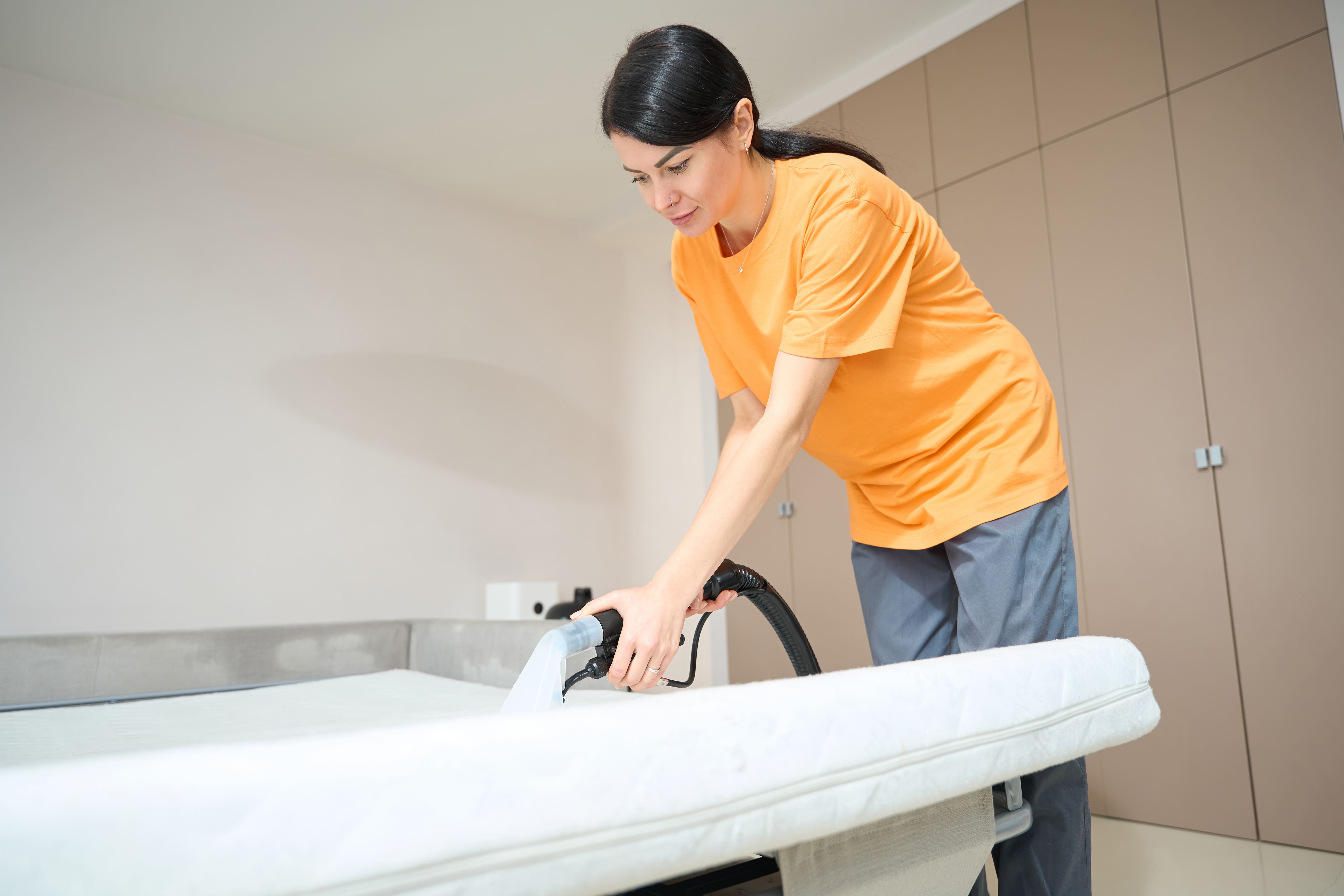
Once or twice a year, sprinkle baking soda over the entire surface of the mattress. Let it sit for several hours — ideally half a day — before vacuuming. This neutralizes odors and absorbs residual moisture that has seeped in despite the protection. Use pure food-grade baking soda (without additives), sold in supermarkets for a few euros per kilo: it’s exactly the same product as household kits, without the price markup. For stains or more complex situations, our complete guide on mattress cleaning details methods according to the nature of the deposits.
Durability Comparison by Technology
The choice of initial technology directly influences longevity. Here are the points of attention according to the types of bedding:
| Technology | Estimated Lifespan | Longevity Strength | Point of Caution |
|---|---|---|---|
| HR Foam (40 kg/m³+) | 8 - 10 years | Resilience | Sensitive to humidity |
| Pocket Springs | 10 - 15 years | Natural ventilation | Quality of the steel in the springs |
| Natural Latex | 12 - 15 years | Durable elasticity | Weight and sensitivity to UV |
| Hybrid (springs + memory foam) | 8 - 10 years | Balanced comfort | Sagging of the foam layer |
4. The mistakes that ruin your mattress
- Sitting systematically on the edge of the bed: the edges are not always reinforced, and repeated pressure in the same spot weakens the side structure faster than the sleeping surface itself.
- Jumping on the bed: pocket spring mattresses are particularly sensitive to sudden shocks, which can dislodge the springs from their individual housing.
- Using a steam cleaner: excessive heat can melt the cells of memory foam or irreversibly degrade the elasticity of latex. Baking soda + vacuuming is more than enough.
- Folding or storing the mattress flat on the floor: if you are moving, fold the mattress for the shortest time possible and absolutely avoid a bare floor, which promotes condensation and mold.
Tips on the Bed Base: The Overlooked Maintenance
Regularly check the condition of your bed base. A slatted bed base with slats that are too far apart (more than 7 cm apart) does not properly support pressure points and forces the mattress to work twice as hard, accelerating sagging at the shoulders and hips. The silicone pads on flexible slats crack over the years: replace them as soon as they start to crack, as they are inexpensive and can extend the life of the entire setup by several years. If you are considering renewing your bed base, our guide to choosing your bed base will help you make the right choice.
If you notice a dip in the center of your bed or morning aches that didn’t exist before, your mattress may have reached its technical limit, regardless of its age. This is a good time to explore models that feature newer filling technologies.
View on AmazonFAQ
Is it essential to change the bed base at the same time as the mattress?
Yes, in the vast majority of cases. A new mattress placed on an old bed base will wear out prematurely — in 4 or 5 years instead of 10 — because the slats that have sagged over the years create irregular pressure points that deform the new padding. It’s comparable to putting new tires on a car with faulty suspension. Check several criteria before deciding: are the slats still well tensioned (without dips when you press on them)? Are the silicone pads of the flexible slats intact or cracked? Does the frame creak with every movement? If any one of these three signs is present, replacing the bed base is necessary. Budget about 30 to 40% of your new mattress budget to equip yourself with a suitable bed base — an investment that will protect your main purchase.
How do I know if my mattress is dead?
Several signs are unmistakable: the appearance of a visible mark where you sleep (sagging of more than 2 cm), the sound of metal springs with the slightest movement, or the feeling of physically sensing the slats of the bed base through the mattress. Other bodily symptoms include morning aches that didn’t exist before, the sensation of being “rolled” towards the center of the bed (hollow), and more frequent awakenings in the second half of the night as comfort degrades when the mattress loses its support points. A simple test: lay a broom handle flat on the surface of the mattress — if it bends instead of staying straight, the padding is deformed. Check our guide on mattress end-of-life management to know what to do next.
Is the sun good for disinfecting a mattress?
Yes, for bacterial disinfection — UV-B rays eliminate a large part of microorganisms in 4 to 6 hours of exposure — but beware of collateral damage: natural latex and certain polyurethane foams are photosensitive. Prolonged exposure to UV rays oxidizes the polymers, accelerates the yellowing of white fabrics, and can cause micro-cracks in latex in less than one summer season. To enjoy the disinfecting effect without damaging the materials, expose the mattress standing on its edge, outside but in the shade (diffused UVs are sufficient), for 2 to 3 hours per side, in dry and windy weather to also eliminate residual moisture. Avoid direct sunlight for more than an hour, regardless of the technology.
Does a removable mattress last longer?
Yes, and the advantage is concrete: in practice, an additional 1 to 2 years of longevity is observed. The main benefit lies in the ability to wash the cover at 60 °C (if the label allows), a temperature that eliminates 99% of dust mites and bacteria, while a non-removable mattress can only be cleaned on the surface. This prevents sweat, dead skin, and particles from penetrating to the core of the padding, where acidic bacteria gradually degrade the fibers. However, the advantage only exists if you actually wash the cover once or twice a year: a cover that is never removed loses all its hygienic interest. Also, ensure that the core of the mattress has sufficient density — some entry-level models have a removable cover but a padding that sags just as quickly due to lack of density.
How often should you flip or rotate your mattress?
The ideal frequency depends on the type of mattress, and neglecting this routine is one of the most common causes of premature sagging. For a single-sided mattress (one sleeping surface, which is the case for most memory foam or molded latex models), a head-to-foot rotation every 3 months is sufficient: this distributes wear across the entire surface and prevents the shoulder and hip areas from sagging irreparably. For a reversible mattress (two sleeping surfaces, often distinguished as “winter side” and “summer side”), add a complete flip with each change of season, or twice a year. If you sleep with a partner with a significant weight difference (more than 15 to 20 kg), change the head-to-foot rotation to every 2 months to compensate for the asymmetrical stress on the padding. A simple reminder in your calendar is enough to never forget this operation, which can extend the life of your mattress by several years.
What is the difference between a mattress protector and a mattress cover, and which one should I choose?
These two terms often refer to the same product, but there is a useful nuance to know before purchasing. The mattress protector is historically a soft, thin protection, sometimes just a plastic sheet, primarily designed for waterproofing — it is well-suited to protect the mattress from accidents, especially for young children. The mattress cover, on the other hand, combines a waterproof side (microporous polyurethane membrane or acrylic coating) with a soft and breathable side that wicks away water vapor, thus preventing condensation under the cover. For an adult looking to prolong the life of their mattress, a breathable mattress cover is clearly preferable: it protects against moisture without trapping body heat, which limits the chemical degradation of foams. Choose one with sufficiently strong elastic bands so it doesn’t slip at night, and check that it is washable at 60 °C to ensure effective hygiene.