Nighttime accident of a child, escape of a pet, or simply an unexpected event upon waking: a urine stain on a mattress is one of the most common and urgent situations in bedding maintenance. The reflex is often to scrub vigorously, which is precisely the worst thing to do. Urine penetrates the layers of foam or latex within minutes, and the characteristic smell of ammonia settles in permanently if the area is not treated properly and quickly.
Good news: no need for expensive products. Most households already have the key ingredients — baking soda, white vinegar, hydrogen peroxide, dish soap. This guide details the steps to follow depending on whether the stain is still fresh or already dry, whether the culprit is a child or a pet, and how to prevent the problem in the long term.
Understanding Why Urine Is So Stubborn on a Mattress
Urine is composed of water, urea, uric acid, ammonia, and various mineral salts. When it soaks into a mattress, two phenomena combine: the acids penetrate deeply into the foam or fibers, and then as it dries, the uric acid crystals settle and become increasingly difficult to dissolve. This is why an old stain often emits a more pronounced odor than a fresh stain: the crystals reactivate with each increase in ambient humidity.
For pocket spring mattresses, an excess of liquid can also reach the spring layer and promote rust or mold. Acting quickly is therefore doubly beneficial: for hygiene and for the longevity of the mattress.
Fresh stain: act within the first 10 minutes
Speed is your first ally. The sooner you intervene, the less time the liquid has to migrate to the core of the mattress.
Absorb, do not rub. Immediately place several sheets of absorbent paper or a large clean cloth on the stain. Press firmly with the palm of your hand to draw the liquid up by capillarity. Repeat the process with dry paper until it absorbs nothing more. The golden rule: blot, never rub — rubbing spreads the stain and makes it penetrate deeper.
Prepare the cleaning solution. Mix in a spray bottle 1 part white vinegar to 3 parts warm water. The vinegar helps neutralize the compounds responsible for the odor while breaking down the mineral salts in the urine. Spray generously on the affected area without soaking the mattress.
Apply baking soda. After blotting, generously sprinkle baking soda on the treated area. Baking soda absorbs residual moisture while neutralizing acidic odors. Let it sit for at least 2 to 3 hours — a whole day if possible.
Vacuum and air out. Vacuum to completely remove the baking soda, then place the mattress upright near a window or outside to dry completely in the open air. Never put a cover back on a still damp mattress: you would create an ideal environment for mold.
See waterproof mattress protectors on Amazon.fr to prevent future stainsOld or Dried Stain: The Intensive Treatment
A stain that has had time to dry requires a more intensive protocol, as uric acid crystals have solidified in the fibers. The vinegar + water solution is generally no longer sufficient.
The Baking Soda-Vinegar Paste. Mix baking soda and white vinegar to form a thick paste. Apply it directly to the stain and let it sit for several hours. The chemical reaction between the vinegar (acid) and the baking soda (base) produces a release of CO₂ that helps lift the embedded deposits. Then, remove the dry paste with a vacuum cleaner.
The Hydrogen Peroxide + Baking Soda Solution. For particularly stubborn or colored stains, a more powerful formula: mix 1.5 liters of hydrogen peroxide with 4 tablespoons of baking soda, then add a drop of dish soap before spraying the solution on the stain and gently scrubbing with a sponge. Hydrogen peroxide (3% hydrogen peroxide, the one sold in pharmacies) has a mild bleaching effect and effectively breaks down odor-causing molecules. Always test on a discreet corner before applying it to the entire area, as peroxide can bleach certain dark fabrics.
After treatment, sprinkle dry baking soda again, let it sit for several hours, then vacuum thoroughly and air dry.
Special Case: Pet Urine
Cat urine contains a significantly higher concentration of urea and uric acid than human urine, and its smell is known to be more persistent. The previous steps apply, but a few adjustments are helpful.
In this case, a special enzymatic cleaner for pet odors is clearly more effective than traditional methods. Unlike vinegar, it does not mask the odor: its enzymes biologically break down uric acid molecules where chemicals struggle to penetrate deeply. These products are available at pet stores, pharmacies, or supermarkets; spray generously, let it sit for several hours (or even overnight for an old stain), and then allow to air dry.
For dog or rabbit urine, the same logic applies: white vinegar as the first pass to neutralize ammonia, followed by an enzymatic cleaner to permanently eliminate the source of the odor. Absolutely avoid ammonia-based products, which remind the animal of the scent of its territorial marking and may encourage it to repeat the behavior in the same spot.
What Not to Do
Some recurring mistakes deserve to be highlighted:
- Scrubbing: this spreads the stain horizontally and pushes it vertically into the foam layers.
- Using boiling water: heat sets the proteins from urine into the fibers, just like with a blood stain.
- Covering the water mattress: excess moisture takes days to dry and promotes mold and dust mites.
- Using a dryer or steam iron without eliminating the odor: heat permanently fixes the odor molecules.
- Putting the sheets back on before complete drying: a damp mattress in a cover is a breeding ground.
Prevention is better than cure: the waterproof mattress protector
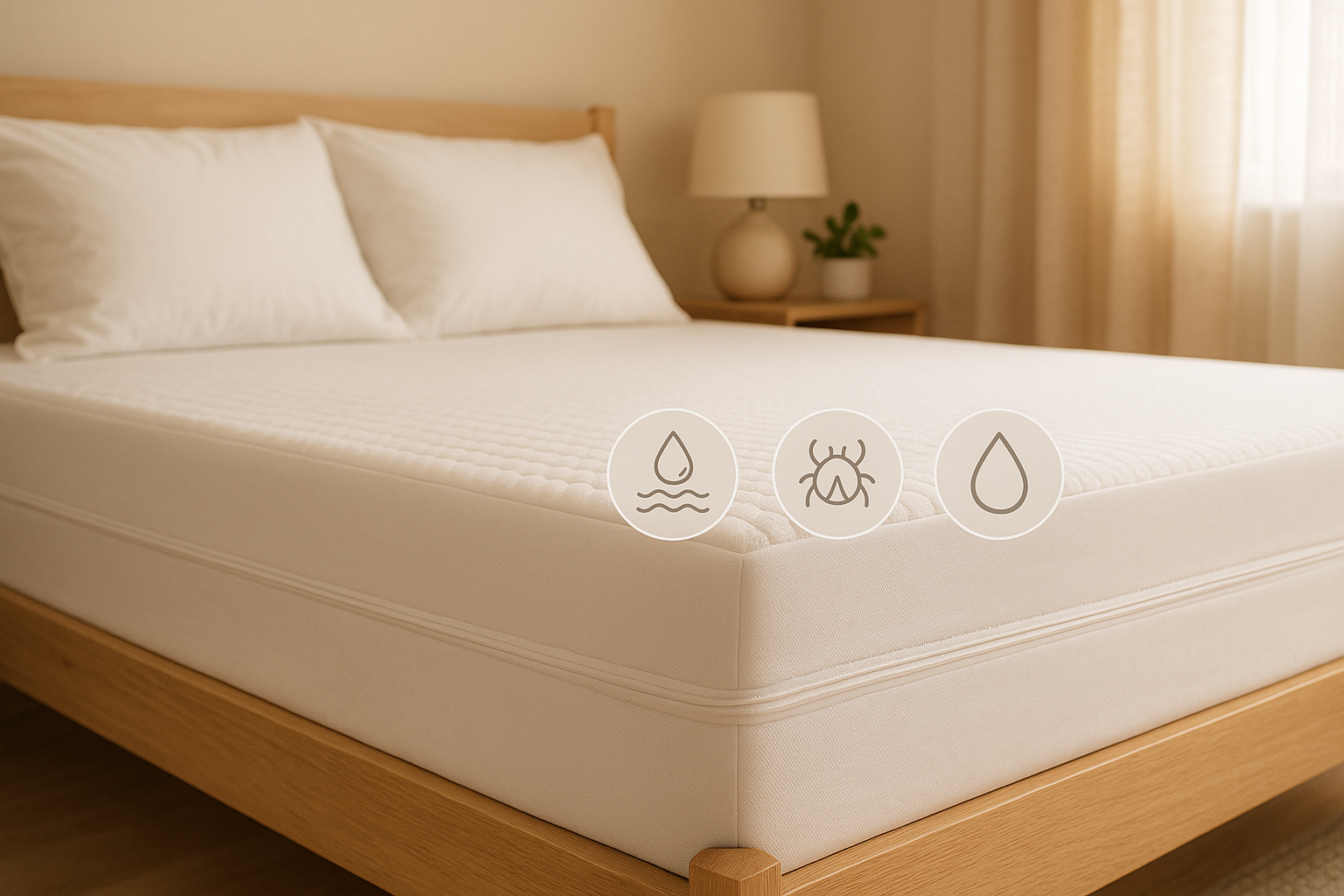
The best cleaning method is the one you will never have to use. A waterproof mattress protector is the smartest investment for any bedding that may be exposed to liquids: a child’s bed during potty training, a bed shared with pets, or simply for a peaceful night’s sleep.
Modern models made of polyurethane (PU) membrane are waterproof to liquids while remaining breathable and silent, far from the old plastic protectors that crackled and sweat. They can be machine washed at 60 °C, which also helps eliminate dust mites. In terms of budget, expect to spend around twenty euros for an entry-level model, and between €50 and €100 for a more breathable terry cotton model with a PU membrane. For children, some brands offer full covers (five sides) that completely envelop the mattress, including the sides.
View on AmazonIf your mattress has suffered repeated accidents and the odor persists despite several treatments, it is often a sign that it is time to replace it. Memory foam and latex mattresses, in particular, are difficult to dry completely once deeply soaked.
To extend the life of your mattress on a daily basis and master all maintenance gestures, find all our tips on bedding maintenance .
Summary: which method to choose?
| Situation | Recommended products | Duration of action |
|---|---|---|
| Fresh stain (< 1 h) | White vinegar + baking soda | 2 to 8 hours |
| Recent dry stain | Vinegar paste + baking soda | 4 to 12 hours |
| Old stubborn stain | Hydrogen peroxide + baking soda + dish soap | 6 to 24 hours |
| Animal urine | White vinegar then enzymatic cleaner | According to product |
Can I use Marseille soap or dish soap alone to clean a urine stain?
Marseille soap and dish soap can help lift surface residues and slightly reduce the odor, but they do not target the uric acid molecules responsible for the persistent bad smell. Used alone, they often leave the stain visually diminished but olfactorily present. They are useful as a complement, particularly a drop of dish soap in the hydrogen peroxide + baking soda solution, for their surfactant action that helps lift residues. However, avoid using too much: an excess of soap is difficult to rinse out of a mattress and leaves sticky residues that attract dust.
The stain has dried for several days, is it still recoverable?
Yes, in the vast majority of cases. Old stains are more difficult to treat but rarely irretrievable. The key is to rehydrate the area (with the vinegar or hydrogen peroxide solution) to rehydrate and dissolve the uric acid crystals, then apply an absorbent product like baking soda. If home treatments do not yield satisfactory results after two or three attempts, an enzymatic cleaner, available at pet stores, pharmacies, or supermarkets, is generally more effective than conventional chemical methods, as it biologically breaks down the molecules responsible for the odor. For a truly old and deeply embedded stain, repeating the treatment over two or three consecutive days will be more effective than a single intensive attempt.
Is steam cleaning effective on a urine stain?
The steam cleaner can help disinfect the surface of a mattress and eliminate dust mites, but its effectiveness on urine stains is limited, and it can even be counterproductive if the stain has not been chemically treated beforehand. The heat from the steam can indeed set the proteins and pigments of the urine into the fibers, making the stain more difficult to remove later. If you wish to use a steam cleaner, do so only after applying and removing the cleaning solutions described above, and after the area is visually clean. Also, be careful not to overly saturate the mattress with steam: allow it to dry completely between each pass.
How can I prevent the odor from returning after cleaning?
The returning odor is almost always a sign that uric acid crystals remain in the deep layers of the mattress, and that ambient moisture (nighttime sweating, climate variations) reactivates them. To avoid this phenomenon, ensure that the treatment has penetrated deeply and not just on the surface. If the odor persists after several cycles of baking soda + vinegar, use a specific enzymatic cleaner left in contact for a long time (several hours, or even overnight). In case of recurrence, a waterproof mattress protector is the only lasting guarantee: it blocks liquid before it reaches the mattress, making any further treatment unnecessary.
How long does it take for a treated mattress to be completely dry?
Drying time varies depending on the type of mattress, the amount of liquid absorbed, and ambient conditions. Under normal conditions (indoor temperature, proper ventilation), expect between 6 and 12 hours for a superficial treatment, and up to 24 hours for a memory foam or latex mattress that has absorbed more liquid. To speed up drying, position the mattress upright near an open window or a fan, and if possible in sunlight: UV rays also have a natural disinfecting action. Never put the sheets and cover back on before checking that the core of the mattress is perfectly dry by pressing firmly with your hand on the treated area.
Should a memory foam, latex, or spring mattress be treated differently?
The cleaning principles remain the same for all types of mattresses, but moisture management differs according to the technology. Memory foam easily absorbs liquids and retains them for a long time: be particularly careful not to oversaturate the area and ensure complete drying before re-dressing the mattress. Natural latex is naturally antibacterial and resistant to dust mites, but it is sensitive to prolonged moisture that can alter its cellular structure: treat quickly and dry thoroughly. Spring mattresses are the most difficult to treat if the liquid has reached the spring layer, as it can then promote rust; air drying for as long as possible is strongly recommended. In any case, never use a washing machine or dryer on a whole mattress: these methods are reserved for covers and mattress protectors.