Bed bugs are among the most feared pests in a home. Silent, nocturnal, and remarkably resilient, they readily settle in the seams of a mattress, at the heart of the box spring, or along the bed slats — exactly where you spend seven to nine hours each night. Their presence has nothing to do with a lack of cleanliness: anyone can find their home infested, and bed bugs can be transported from one place to another when moving an object in which they reside — bedding, suitcase, bag, clothing. This guide explains step by step how to identify them, treat your bedding, and avoid a recurrence.
What is a bed bug?
The bed bug (Cimex lectularius) is a blood-sucking parasitic insect — it feeds exclusively on human blood. As an adult, it measures about 4 to 7 mm, is reddish-brown in color, and has a flattened body that allows it to slip into the smallest cracks. These insects cannot fly and only move by walking a distance of a few meters.
Bed bugs are attracted by vibrations, heat, odors, and carbon dioxide (CO₂) emitted by individuals — which explains why the mattress is their preferred refuge. They never live on humans themselves; they only approach to feed at night and then return to their hiding place.
Signs of an infestation: how to know if you have one?
Detecting an infestation early is crucial. The sooner it is addressed, the more effective the treatments are. Several clues can suggest their presence.
Characteristic bites on the skin
The bumps related to bed bug bites are often red and flat, except in cases of allergic reactions where they swell. They usually appear in lines or small groups on areas of skin exposed during sleep: arms, shoulders, neck, legs. One of the most well-known characteristics is the “breakfast, lunch, and dinner” pattern: several bites aligned along the same contact area with the sheet or pillow.
Often, at the beginning of the infestation, the bugs bite only one person in the household, which can skew the diagnosis: the other occupant of the bed shows no marks, and the infestation is underestimated or wrongly attributed to other causes (allergies, mosquitoes, dust mites).
Marks on bedding and surfaces
Examine your bedding — mattress, sheets, pillows — for signs of activity: carefully check the seams and folds of the mattress, favored hiding spots for these pests. Specifically, you may observe:
- Small dark brown or black spots on the seams and fabric: these are bed bug droppings, composed of digested blood. They resemble fine marker stains and permanently stain light fabrics.
- Moults (exuviae) that are translucent and yellowish: bed bugs molt five times before reaching adulthood, leaving behind empty skins.
- Whitish and tiny eggs (about 1 mm), often laid in clusters in corners.
- Live or dead insects, especially visible if you flip the mattress and inspect the seams in bright light.
A sweet and musty odor
An advanced infestation emits a characteristic odor, often described as sweet and slightly musty. If you enter a room and perceive an unusual scent reminiscent of coriander or a sweet fermentation, this may be an additional warning signal.
Sleep disturbances
Infestation by bed bugs alters sleep quality (insomnia) and has psychological and relational repercussions. Some people describe increasing anxiety about going to bed, unexplained nighttime awakenings, or chronic fatigue. These symptoms should prompt a thorough inspection of the bedding.
How to inspect your mattress and room
A thorough inspection is the first step before any treatment. Equip yourself with a powerful flashlight and a pocket mirror to reach hard-to-access areas.
- Remove all sheets and covers and place them directly in a sealed plastic bag for washing.
- Flip the mattress and examine every seam, every flap, every tufted area, paying particular attention to the corners.
- Inspect the box spring: slats, wooden supports, bed legs, and spaces between the boards are common hiding spots.
- Expand the inspection to the entire room: continue by scrutinizing surrounding furniture, paying particular attention to crevices and cracks, without neglecting baseboards and electrical outlets, where these insects can also slip in skillfully.
Treatments to eliminate bed bugs
Once the infestation is confirmed, it is essential to act methodically and simultaneously on the entire environment — not just the mattress. A rigorous cleaning, including vacuuming, washing at high temperatures, and heat treatment, is essential.
1. Deep vacuuming
Thoroughly vacuum the entire mattress, box spring, and bed frame. Pay special attention to seams, folds, and corners. Vacuuming a mattress is the best way to capture bed bug eggs and adult insects. Immediately empty the vacuum bag or canister into a tightly sealed plastic bag, taken out of the home.
2. Washing at high temperatures
All bedding — sheets, duvet covers, pillowcases, mattress protectors — must be washed at a minimum of 60 °C, a lethal temperature for bed bugs at all stages of development. If some textiles cannot withstand this temperature, put them in the dryer on maximum power for at least 30 minutes. Store the treated laundry in airtight plastic bags until the home is declared safe.
3. Heat treatment (dry steam)
Heat is one of the most effective treatments against bed bugs. A professional steam cleaner delivering a surface temperature above 120 °C destroys insects and their eggs on direct contact. Slowly pass the nozzle over all surfaces of the mattress, focusing on the seams. Caution: a simple household steam cleaner with low pressure may lack power — check the actual temperature delivered at the treatment surface.
4. Insecticides and treatment products
Several insecticides are authorized for domestic use against bed bugs in France. Formulations based on synthetic pyrethroids or diatomaceous earth (diatomaceous powder) are the most common. Diatomaceous earth acts mechanically — it damages the insects’ cuticle — and does not develop resistance. It should be applied in a thin layer in corners, cracks, and under the bed frame, and left in place for several days.
Caution: bed bugs have developed resistance to certain families of insecticides in many regions of the world. A single product is generally not enough to eradicate an infestation: it must be combined with other mechanical and thermal methods.
5. Consulting a professional
A professional exterminator is your best bet for eliminating bed bugs in the case of an established infestation. Specialized companies have powerful heat treatment equipment (heating an entire room to over 50 °C for several hours) and can use professional biocides that are more effective than consumer products. In France, these interventions typically cost between a few hundred and a thousand euros depending on the treated area and the chosen protocol — request multiple quotes.
View on AmazonShould I throw away my mattress?
This is often the first reaction, but it is not always necessary or sufficient. A new mattress can be infested within a few days if the room and furniture have not been thoroughly treated. However, if the mattress is old, very worn, or if the seams are irreparable, replacement may be considered — taking care to place it in a sealed cover before removing it from the home to avoid contaminating common areas.
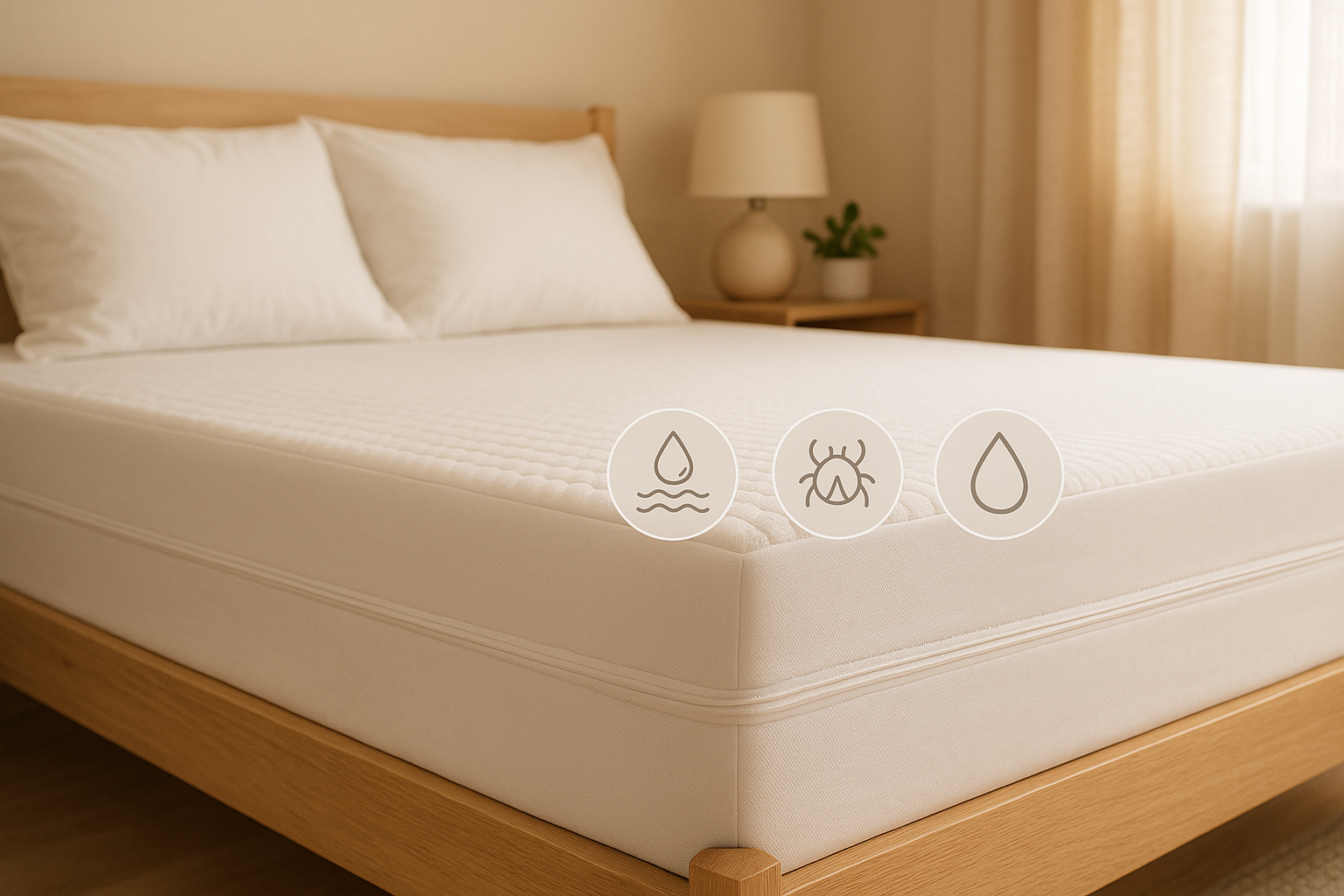
If you keep your mattress, investing in a full bed bug-proof cover (called “encasement”) is highly recommended after treatment. These covers completely encase the mattress, including the seams, trapping any potential survivors who will starve to death in a few months, and preventing any new colonization. They also serve as an excellent monitoring tool: being smooth and clear, signs of bed bugs are immediately visible.
Preventing reinfestation
To avoid a new infestation, the entire environment must be treated: bedding, box spring, and room included. A few habits can help reduce the long-term risk:
- When traveling, avoid placing your luggage on the bed or directly on the floor of the hotel room. Quickly inspect the mattress and headboard upon arrival.
- When purchasing second-hand furniture (mattress, bed frame, sofa, chair), carefully inspect the seams and corners before bringing the furniture into your home.
- If you live in an apartment building, be vigilant during moves within the building or if neighbors have reported an infestation: bed bugs travel through electrical outlets, baseboards, and common conduits.
- Place traps under the bed legs: smooth plastic devices prevent bed bugs from climbing up the legs, and allow for monitoring of any movements.
To find all the maintenance tips for your bedding and extend the lifespan of your mattress, check out our dedicated section: Maintaining your bedding — all our tips .
Find bed bug traps for bed legs on AmazonFrequently asked questions about bed bugs
Are bed bugs dangerous to health?
Bed bugs are not vectors of serious infectious diseases, unlike some other parasites. Their bites cause skin reactions — redness, itching, sometimes swelling in cases of sensitivity — but remain non-life-threatening for the vast majority of people. However, the impact on health should not be minimized: chronic sleep disturbances caused by the infestation can lead to significant fatigue, irritability, and, in some cases, anxious or depressive states. Allergic individuals may develop more pronounced skin reactions requiring medical consultation. If bites become infected due to repeated scratching, local antibiotic treatment may be necessary. In case of doubt, consult a doctor or dermatologist.
How long does it take to completely eliminate an infestation?
The duration varies greatly depending on the extent of the infestation and the method used. A professional heat treatment (hyperthermia) can be very effective in a single intervention but often requires a follow-up treatment a few weeks later to ensure that no survivors have taken back the premises. Consumer chemical treatments may require several applications over four to six weeks. Monitoring should continue for at least two to three months after the last treatment, relying on detection traps and regular inspection of the bedding. A full bed bug-proof cover on the mattress and box spring effectively complements the setup by permanently isolating treated areas.
Can bed bugs return after treatment?
Yes, recurrence is one of the main challenges. It usually occurs for one of these reasons: areas were not treated (a forgotten piece of furniture, a cracked baseboard, an adjacent closet), eggs survived the treatment and hatched several weeks later, or reintroduction occurred through a visitor, luggage, or a second-hand item. To minimize this risk, always combine mechanical, thermal, and chemical methods rather than relying on a single one. Set up monitoring traps as soon as the treatment ends and keep the full cover on the mattress for at least a year. If in doubt, do not hesitate to consult a professional before considering the matter resolved.
Does the presence of bed bugs mean my home is dirty?
No, absolutely not. This is one of the most persistent myths about bed bugs. These parasites feed only on blood and have no interest in food residues or dirt. They can colonize both the cleanest and best-maintained homes, from Haussmannian apartments to five-star hotels. The vector of introduction is almost always an involuntary transport: a suitcase brought back from a trip, a second-hand piece of furniture, a visit from someone whose home is infested, or a move into a building where bed bugs circulate between apartments. Informing your surroundings or landlord should therefore never be a source of shame — on the contrary, it is a responsible act to prevent the spread.
What is the difference between bed bug bites and those from mites or mosquitoes?
Bed bug bites differ from mosquito bites by their arrangement: they often appear in lines or small groups of two to four aligned bumps on the same area, corresponding to the insect’s successive passes. They occur almost exclusively at night and on exposed areas. Mosquito bites are generally isolated and can appear during the day as well. As for mites, they do not bite per se: the skin reactions they cause are allergic responses to their droppings, manifesting mainly as eczema, rhinitis, or asthma rather than localized bumps. If you suffer from respiratory allergies in addition to skin reactions, the mite route deserves to be explored as a complement — consult our guide on allergen-free bedding maintenance.