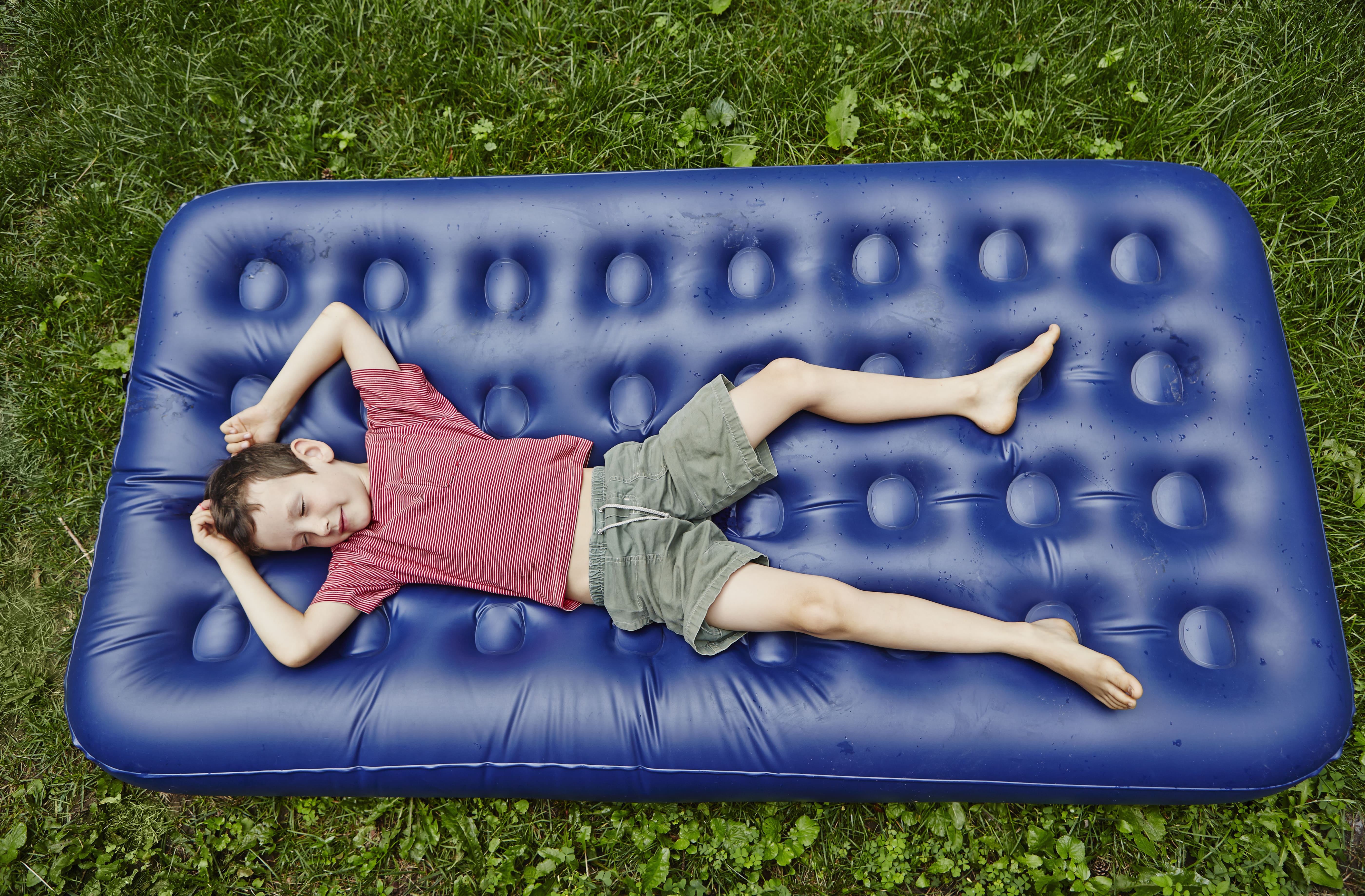
The inflatable mattress attracts many consumers in search of a practical guest bed, whether to accommodate guests, go camping, or furnish a small space. But can it really compete with a traditional folding or futon mattress? Here is our analysis.
Quick Comparison
| Criteria | Inflatable Mattress (air) | Traditional Guest Mattress |
|---|---|---|
| Comfort | Adjustable, less homogeneous | Stable, close to a real mattress |
| Firmness / support | Adjustable (air) | Often firm, constant |
| Morphology | Good (air chambers) | Variable depending on materials |
| Thermal regulation | Average, limited insulation | Often better (foam, cotton) |
| Durability | Vulnerable to punctures | More robust, longer lifespan |
| Maintenance | Quick cleaning | Washable cover |
| Ecology | PVC/plastic, low recyclability | Sometimes eco-friendly |
| Budget | Affordable, very accessible | Variable, often more expensive |
| Bed base | To be placed on the floor | Compatible with bed base (foldable, futon) |
Quick Overview of Options
Inflatable Mattress
- Functioning: one or more air chambers, inflated with a manual or electric pump.
- Uses: camping, guests, emergency.
- Variants: classic models, high-end with built-in pump or separate zones, medical mattresses.
Traditional Guest Mattress
- Types: foldable, futon, rollable.
- Materials: foam, cotton, latex.
- Use: temporary solution but more stable, can be placed on the floor or on a bed base.
If you are considering a futon as a sustainable alternative, our complete guide on the Japanese futon will provide you with all the keys to choose.
Detailed Comparison
Comfort
- Inflatable: adjustable, but unstable on some models. Premium models mimic traditional mattresses.
- Traditional: stable comfort, quality varies depending on foam/density.
Firmness and Support
- Inflatable: adjustable, but not always ideal for back pain.
- Traditional: more homogeneous and durable support.
Thermal Regulation
- Inflatable: low thermal insulation (air captures the cold from the ground).
- Traditional: better insulation, depending on thickness and materials.
Durability and Maintenance
- Inflatable: sensitive to punctures but easy to maintain.
- Traditional: more robust, washable (cover or ticking).
Environmental Impact
- Inflatable: made from plastic or PVC, difficult to recycle.
- Traditional: possible use of natural fibers, organic cotton, certified latex.
Budget
- Inflatable: unbeatable in the short term (€15 to €100).
- Traditional: more expensive for equal comfort, but cost-effective in the long term.
Choosing Tips
- Occasional use (guests, camping): the inflatable mattress is ideal.
- Regular or daily use: prefer a traditional guest mattress or a futon.
- Thermal comfort: add an insulating mattress topper for the inflatable.
- Durability:
- Choose an inflatable at least 30 cm thick.
- Protect it with a fitted sheet.
- Store it in a dry and cool place.
If you are looking to switch to a more durable and higher quality sleeping option, the Someo range offers mattresses designed for daily use, with certified materials and French manufacturing:
Discover Someo mattresses – for sustainable sleeping every dayFor a complete overview before investing in a real mattress, check out our guide on how to choose your mattress .
FAQ
What is the lifespan of an inflatable mattress?
For daily use: 1 to 2 years. For occasional use: up to 4–5 years if well maintained.
Can an inflatable mattress be placed on a bed base?
No. It is designed to be used on the floor. The slats can damage the base.
How to maintain an inflatable mattress?
Clean with a damp sponge, dry well before storage. Avoid sharp objects.
Is it suitable for children?
Yes, for occasional use under supervision. Avoid models that are too high to limit the risk of falls.
Does the inflatable mattress make noise?
Yes, especially if placed directly on the floor. Use a non-slip base or a rug to limit friction.