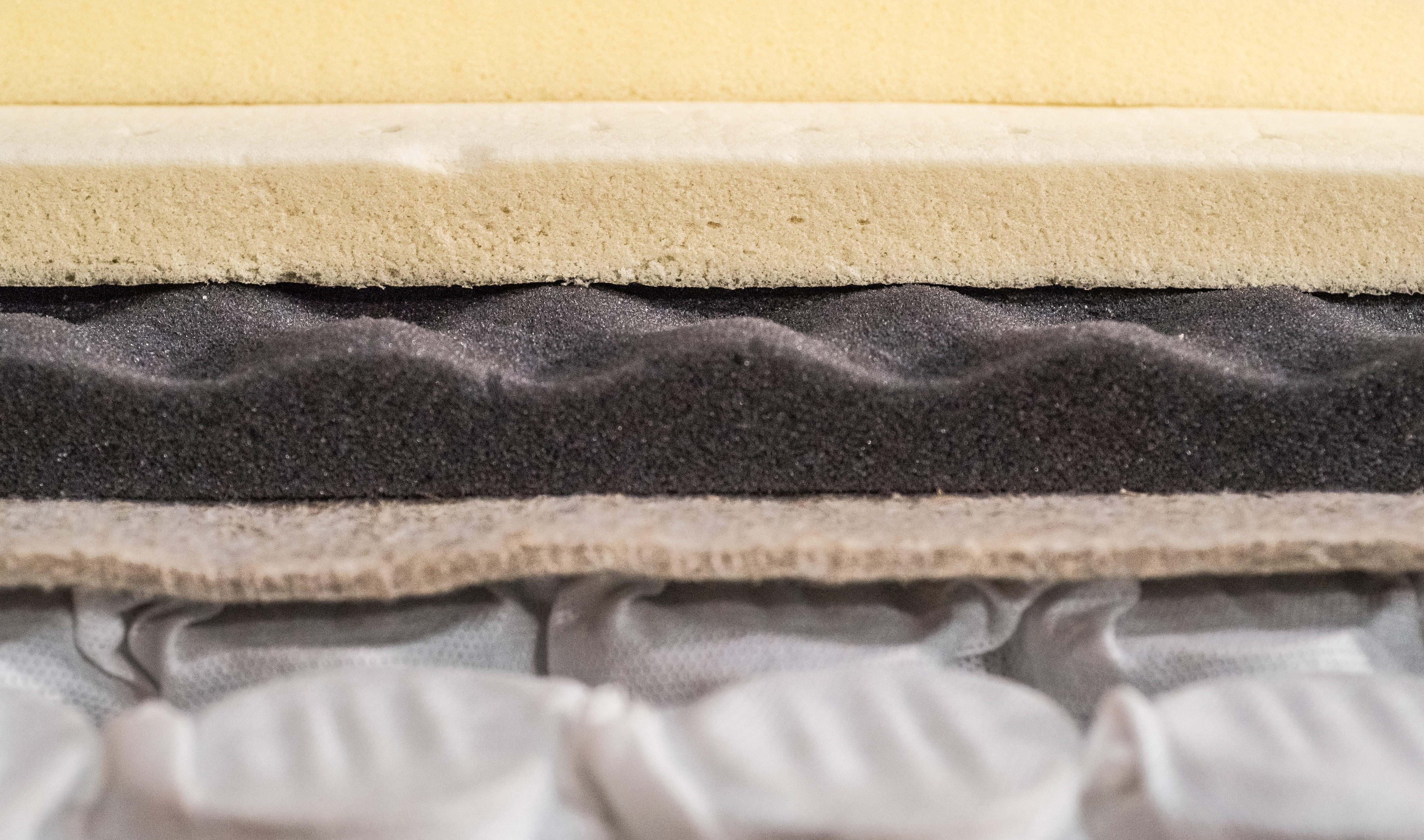
Choosing between a foam mattress or a latex mattress involves understanding the differences in comfort, composition, durability, and price. Here is a structured and factual comparison to guide you toward the solution that best suits your profile.
Why is this comparison relevant?
With the rapid evolution of technologies (high-density foams, 100% natural latex, hybrids), it becomes difficult to navigate. The right choice directly impacts sleep quality, back support, and muscle recovery.
The stakes for the buyer
An unsuitable mattress can cause back pain, nighttime awakenings, or non-restorative sleep. This guide helps identify the essential criteria for your comfort and health.
Foam vs latex: detailed comparison
1. Comfort
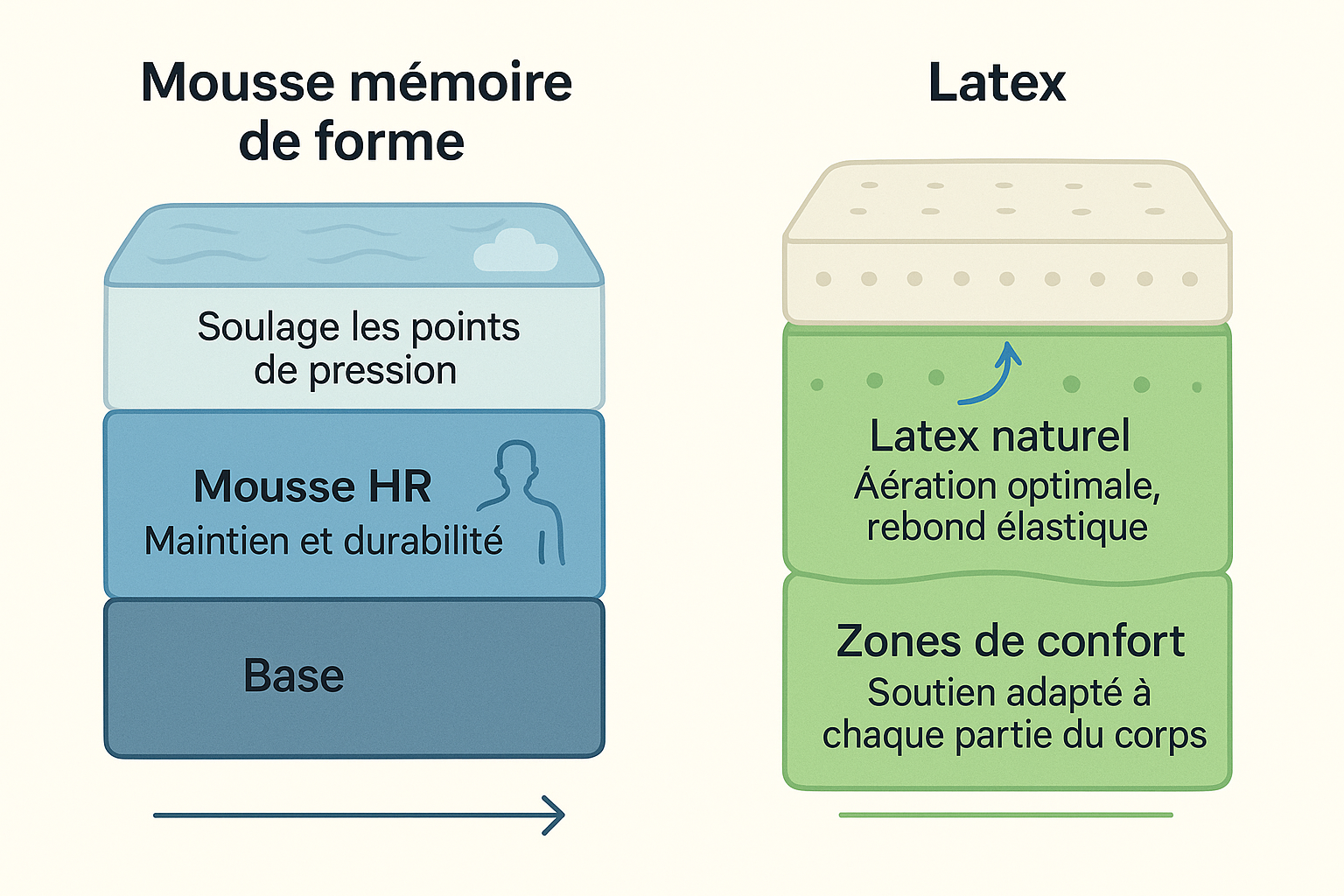
Foam mattress
- Soft or memory foam feel
- Progressive support based on density
- Good motion isolation
Latex mattress
- Bouncy feel, less enveloping
- Firm support with differentiated zones
- Very good motion isolation
2. Composition & certifications
- Foam: polyether (entry-level), polyurethane, viscoelastic (memory)
- Latex: synthetic or 100% natural (plant-based)
- Certifications to look for: OEKO-TEX, GOLS, GOTS, Eurolatex
- Lifespan: foam (7–10 years), latex (10–15 years)
3. Breathability
- Foam: retains heat, unless perforated or infused with gel
- Latex: naturally ventilated structure, excellent for heat-sensitive sleepers
4. Services
Most online brands offer:
- Free delivery
- 100 to 120-night trial
- Free returns
- Minimum 10-year warranty
5. Value for money
- Foam: accessible, good value for money in the mid-range
- Latex: more expensive upfront, but very cost-effective in the long term
6. Reputation & customer reviews
- Foam: very popular online (e.g., Emma, Slome (formerly Hypnia))
- Latex: excellent ratings for Kipli, LatexBio, particularly for durability and eco-design
Comparison of representative models
Discover the Emma Original mattress on Amazon See the Slome (formerly Hypnia) Well-Being Supreme mattress — premium hybrid Explore the 100% natural latex Kipli mattress (GOLS certified) See the GOLS and GOTS certified LatexBio mattressSynthetic comparison table
| Criterion | Foam (Emma, Slome (formerly Hypnia)) | Latex (Kipli, LatexBio) |
|---|---|---|
| Comfort | Soft to balanced | Firm, bouncy |
| Support | Progressive | Differentiated zones |
| Couple sleeping | Very good | Excellent |
| Ventilation | Average to good | Excellent |
| Lifespan | 7–10 years | 10–15 years |
| Labels | OEKO-TEX | GOLS, GOTS, Eurolatex |
| Price (140x190) | €400–800 | €900–1,400 |
Who is each technology for?
- Foam mattress: tight budgets, guest rooms, enveloping feel
- Latex mattress: heavy sweating, allergies, couples, longevity
To avoid
- Too soft mattress if you have back pain
- Poorly ventilated model if you sweat a lot
- Buying without a trial period
Comfort preferences
- Soft / enveloping → memory foam
- Firm / bouncy → natural latex
- Mixed / balanced → hybrids (foam + springs or latex + springs)
To deepen your choice on natural latex, check our natural latex mattress buying guide . And to compare with hybrid technology, find our hybrid mattress guide .
View on AmazonFAQ: your questions, our answers
What is the lifespan of a foam or latex mattress?
Memory foam lasts on average 7 to 9 years depending on its density — aim for a minimum of 50 kg/m³ for longevity. Quality HR polyurethane foam lasts 8 to 10 years. Natural latex (GOLS certified) is significantly more durable: it can last 12 to 15 years without significant sagging, which offsets its higher purchase price. In any case, a suitable foundation (slats spaced a maximum of 6 cm) and a mattress protector extend the lifespan.
Is latex suitable for allergy sufferers?
Yes, 100% natural latex is naturally hypoallergenic, antibacterial, and dust mite resistant due to its dense structure that prevents allergens from settling. The GOLS and Eurolatex certifications guarantee the absence of harmful substances. However, caution: individuals with a specific latex allergy (Hev b proteins) should avoid this material and opt for HR foam or pocket springs with a hypoallergenic cover.
Is the foam mattress too hot?
Classic memory foam can indeed retain body heat, which can be bothersome for temperature-sensitive sleepers. However, several technologies mitigate this flaw: perforated foams (vertical ventilation channels), gel-infused foams (e.g., Emma's Airgocell), or thermoregulating covers. If you sweat a lot at night, prefer a latex mattress (naturally breathable honeycomb structure) or a hybrid mattress with pocket springs, which offer significantly better air circulation.
Can foam and latex be combined in the same mattress?
Yes, this is what many premium hybrid mattresses do. A layer of natural latex on the surface offers good breathability and a bouncy feel, while the HR foam base provides durable support. These mattresses combine the best of both technologies.
Which mattress should a couple with different body types choose?
Opt for a mattress with good motion isolation: pocket springs + foam or springs + latex. If the body types are very different, a dual comfort mattress (2 halves with distinct firmness levels) is the best solution.