Epeda is one of the most iconic brands in the French mattress landscape. Founded in 1929 in Hénin-Beaumont (Pas-de-Calais), it has accompanied several generations of French sleepers with its proprietary technology that has built its reputation: Multispires pocket springs. Nearly a century later, the brand belongs to the Pikolin France group (since 2010) but maintains a strong identity and a premium positioning. What is Epeda worth in 2026, in the face of the onslaught of online bed-in-a-box brands? What is its range, where to buy it, and at what price? Our complete analysis.
Who is Epeda?
Epeda was born in 1929 under the impetus of bedding industrialists from Northern France. The brand quickly established itself as one of the three major French manufacturers of spring mattresses, alongside Mérinos and Simmons. It was notably a pioneer in the patent for individually pocketed springs in France — an approach that long represented a qualitative leap compared to traditional biconical springs.
Some milestones:
- 1929: Creation in Hénin-Beaumont, in a France where bedding was still largely artisanal.
- 1980-2000s: Epeda becomes a reference in the mid/high-end segment, primarily distributed through specialized stores (Conforama, But, independent bedding stores).
- 2010: Acquisition by the Spanish group Pikolin France (which buys the entire historical Cofel-Epeda group including Mérinos, Bultex, and Pikolin France).
- Today: Epeda continues to be produced in France, at the Pikolin France factory in Hénin-Beaumont, with a range structured around three collections: Comfort, Privilege, and Excellence.
Belonging to the Pikolin group (the leading European bedding group, with over €500 million in revenue) has allowed Epeda to maintain local production while benefiting from the group’s R&D — particularly in the evolution of pocket springs and high-density polyurethane foam technologies.
Epeda technology: Multispires pocket springs
Epeda’s technical signature is the Multispires system: individually pocketed springs in textile pockets, organized into several comfort zones. Each spring works independently, providing two major benefits:
- Sleeping independence: the movement of one sleeper does not transfer to the other, a crucial advantage for couples — especially those with staggered schedules.
- Zoned support: Epeda sizes its springs differently according to the zones of the mattress (shoulders, lumbar, hips, legs) to conform to the natural morphology of the back.
High-end Epeda mattresses incorporate up to 1,200 pocket springs in queen size (160×200 cm), making it one of the highest densities on the market. This density of springs contributes to the mattress’s durability: mechanical stresses are better distributed, delaying the appearance of dips in the most used areas.
Other structural features specific to Epeda:
- Morpho-zones (on the Privilege and Excellence ranges): 7 zones of differentiated support, compared to 3 or 5 zones on mid-range competitors.
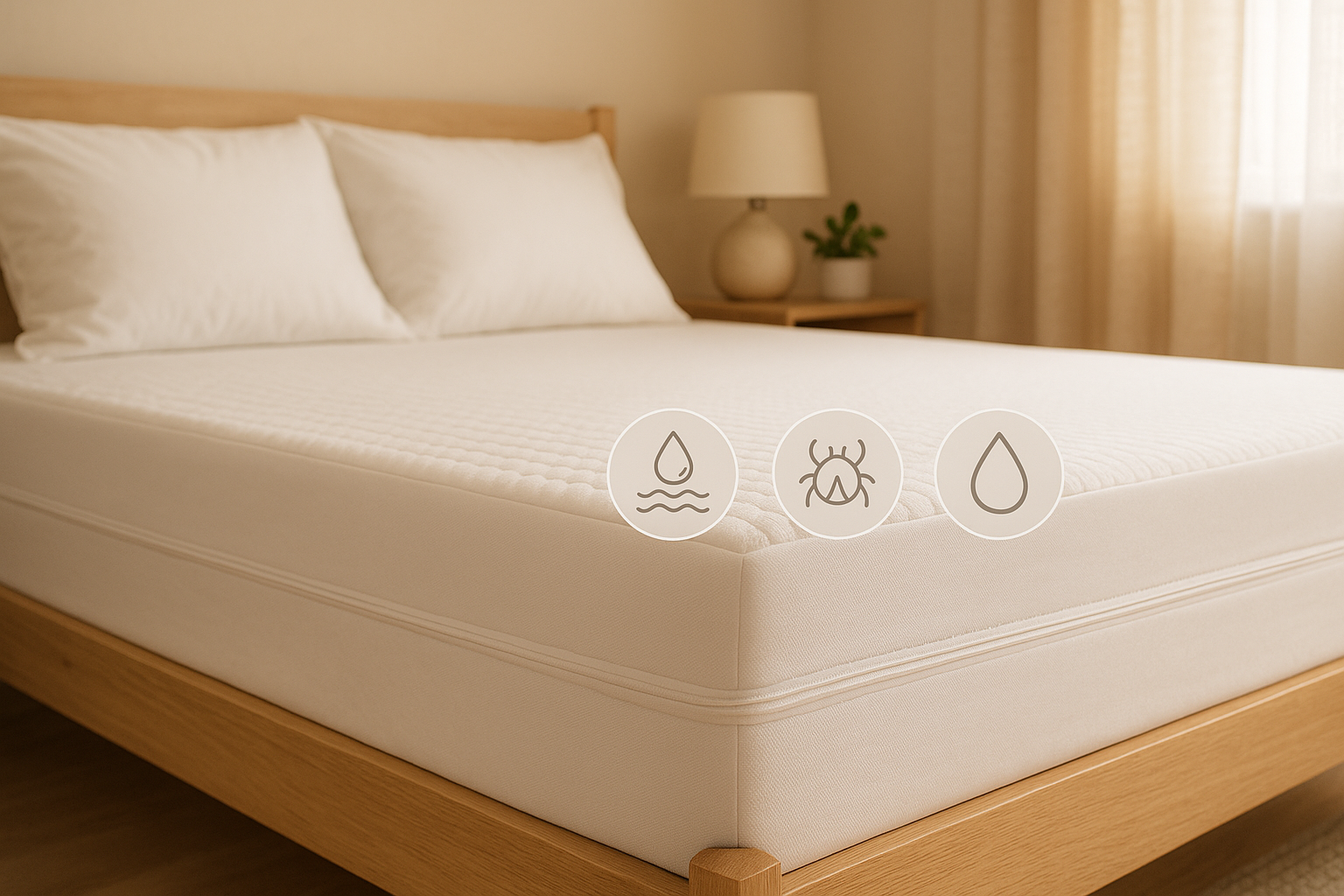
- Technical fabrics: breathable fabrics woven in France for the high-end range, antibacterial and anti-dust mite treatments.
- High-density polyurethane platform under the spring block to increase stability and limit thermal transfers to the box spring.
On the downside:
- Epeda does not offer a 100% memory foam range comparable to bed-in-a-box (like Emma Original or Tediber Hybrid with a dominant foam). The positioning remains focused on more traditional pocket springs.
- The mattresses are thick and heavy (25 to 30 cm thick, 35 to 50 kg for a 160×200), making them more difficult to handle or flip.
- No 100-night home trial like online pure-players — Epeda operates through physical distributors.
The Epeda range in 2026
Epeda structures its catalog around three main collections, from the most accessible to the most premium:
| Collection | Construction | Zones | Price positioning (160×200) |
|---|---|---|---|
| Comfort | Multispires pocket springs (~600 springs) + polyurethane foam platform | 3 to 5 zones | Starting from ~€700 |
| Privilege | High-density Multispires (~900 springs) + Morpho-zones + technical fabric | 7 zones | Starting from ~€1,100 |
| Excellence | Premium Multispires (~1,200 springs) + cashmere/wool + double-sided summer/winter | 7 zones + personalized comfort | Starting from ~€1,600 |
The most well-known models in the catalog are L’Originel, L’Élégant, Médaillon, Multispires (the name sometimes also becomes the model), as well as the limited editions Heritage that highlight French manufacturing and noble materials (virgin wool, cashmere, silk).
Note that Epeda regularly renews the commercial names of its models — the same mattress may be called differently depending on the distributor. It is better to focus on the technical characteristics (number of springs, height, comfort density) rather than the marketing name for comparison.
Discover the official Epeda rangeWhere to buy Epeda?
This is where the main difference with bed-in-a-box brands lies: Epeda does not have its own direct online store. The brand relies exclusively on its physical distribution network:
- Major bedding retailers: But, Conforama, Maisons du Monde Lit, specialized independent stores (CDB, Lebrun, etc.).
- Multi-brand online platforms: lematelas.fr, Mathon, Cdiscount Literie.
- Some supermarket sections for entry-level Comfort models.
The advantage of this model: you can try the mattress in-store before purchasing, an experience that online brands do not offer (except for rare pop-ups). The downside: no extended home trial period, and a more fragmented purchasing journey among various distributors with varied commercial practices.
View on AmazonPrice and positioning
Epeda positions itself in the mid/high-end of the French mattress market. Here are some indicative price ranges for 160×200:
- Entry-level Comfort: ~€700–900
- Mid-range Privilege: ~€1,100–1,400
- High-end Excellence: ~€1,600–2,500
- Limited edition Heritage: starting from ~€2,800
Catalog prices may seem high, but distribution multiplies promotional campaigns: an Epeda mattress in-store is often found with a discount of 20 to 40% compared to the recommended price, especially during sales, Black Friday, or major events like the “Mattress Fair.” This commercial habit makes price comparison with online brands (with fixed prices or permanent promotions) less straightforward — one must compare actual promotional prices against actual promotional prices, not catalog prices against DTC prices.
Comparison with its historical French competitors
Epeda shares a market segment with two other historical references: Bultex and Mérinos. Here’s how they position themselves:
| Criterion | Epeda | Bultex | Mérinos |
|---|---|---|---|
| Origin | France (1929) | France (1986) | France (1946) |
| Specialty | Multispires pocket springs | High-density polyurethane foam | Pocket springs + foam |
| Parent group | Pikolin France | Pikolin France (Cofel) | Pikolin France (acquired 2010) |
| Manufacturing | France (Hénin-Beaumont) | France | France |
| Distribution | Physical retailers | Retailers + GMS | Physical retailers |
| Mid-range price (160×200) | €1,100–1,400 | €600–900 | €900–1,200 |
| Home trial period | No | No | No |
| Warranty | 5 to 7 years | 5 years | 5 to 7 years |
The three brands are now in the same group (Pikolin France) but positioned in complementary segments: Bultex on accessibility with polyurethane foam, Mérinos on versatile mid-range, Epeda on high-end traditional springs. For a detailed overview, check our Bultex / Epeda / Mérinos comparison .
Who is Epeda for?
Epeda remains an excellent option for the following profiles:
- Sleepers accustomed to pocket springs who seek the firm and bouncy feel typical of high-end traditional mattresses, rather than the enveloping nature of memory foam.
- Couples with marked morphological differences: the sleeping independence of the Multispires is one of the best selling points on the market.
- Buyers who want to try in-store before committing — a psychological comfort that online pure-players cannot replicate.
- Sensitivity to “made in France”: Epeda continues to produce in Northern France, which remains a selling point for a significant portion of consumers.
- Budget over €1,000 without a strict ceiling: Epeda fully deploys its technology starting from the Privilege range.
The mattress will be less relevant if you are looking for lightness (prefer foam), an extended home trial (prefer Emma, Tediber, Slome), or an all-inclusive price without the complexity of a multi-distributor journey.
Our final opinion on Epeda in 2026
Epeda remains in 2026 a solid reference for high-end French pocket spring mattresses. Nearly a century of existence, local production still active, R&D driven by the Pikolin group, and a Multispires technology that has proven itself for sleeping independence and durability. On these criteria, few competitors can rival without moving significantly higher in range.
Its weaknesses are structural rather than technical: absence of a direct channel, fragmented distribution, high catalog prices that require hunting for promotions, and total absence of home trial. On these points, bed-in-a-box brands (Emma, Tediber, Slome, Hypnia) maintain the advantage of commercial simplicity and purchase security.
Our recommendation: if you are a fan of springs and can try a Privilege or Excellence model in a specialized store, Epeda deserves to be at the top of your list. If you prefer to buy online with an extended trial, look towards 100% online alternatives (Tediber Hybrid, Emma Hybrid Premium II, Slome Bien-Être Suprême) that offer comparable constructions with a simpler purchasing journey.
See the Emma Hybrid Premium II on Amazon (online alternative)FAQ
Is Epeda a French manufacturer or just a French brand?
Epeda is both a historic French brand (founded in Hénin-Beaumont in 1929) and a manufacturer: Epeda mattresses are assembled in France, at the industrial site in the North. Since 2010, the brand has belonged to the Spanish group Pikolin France, which acquired the entire Cofel-Epeda group. Production remains in France, but some components (notably certain spring wires and technical fabrics) may be imported — as is the case with all high-end manufacturers in the market.
What is the difference between Epeda Multispires pocket springs and generic pocket springs?
The Multispires technology is Epeda’s commercial name for its system of individually pocketed springs. In principle, it is comparable to other pocket spring systems found at Simmons, Mérinos, or online brands (Tediber Hybrid, Emma Hybrid). The differentiators for Epeda are the density (up to 1,200 springs in 160×200 in the high-end range compared to 800–1,000 on average elsewhere), the zoning (up to 7 zones of differentiated firmness), and the quality of the textile envelope of the pockets. With equivalent configuration, an Epeda Excellence mattress offers superior sleeping independence and longevity compared to a standard spring mattress at the same price.
How long does an Epeda mattress last?
With normal use (rotation head-to-foot every 3 months, suitable box spring, regular cleaning), an Epeda Comfort mattress lasts on average 8 to 10 years, a Privilege 10 to 12 years, and an Excellence 12 to 15 years. The standard commercial warranty is 5 years, extended to 7 years on Excellence models — this is less than the 10 years offered by online brands, but consistent with the standards of traditional French manufacturers. Actual longevity mainly depends on the box spring (a tired slatted base accelerates mattress wear) and the combined weight of the sleepers.
Can you try an Epeda mattress at home before buying it?
No, Epeda does not offer a home trial period like online mattress brands. The brand relies on its network of physical distributors where you can lie on the mattress in-store before deciding — this is the main selling point of the traditional model. If an extended home trial is a decisive criterion for you, it is better to turn to bed-in-a-box brands (Tediber, Emma, Slome) that offer 100 to 120 nights of trial with free return. Note: some distributors (notably But and Conforama) offer their own satisfaction or exchange policy for 30 days, but this is not a guarantee specific to Epeda.
What box spring should I choose for an Epeda mattress?
An Epeda mattress with Multispires pocket springs should rest on a compatible spring box, ideally a box spring with visible slats or a platform box. Avoid slatted bases with very wide spacing (more than 4 cm apart) that put the springs in leverage and accelerate their wear. For the high-end Excellence range, Epeda recommends its own matching box spring, which optimizes the mattress’s performance. For a complete guide, check our box spring buying guide 160×200 which details the technical criteria and compatibilities according to the type of mattress.