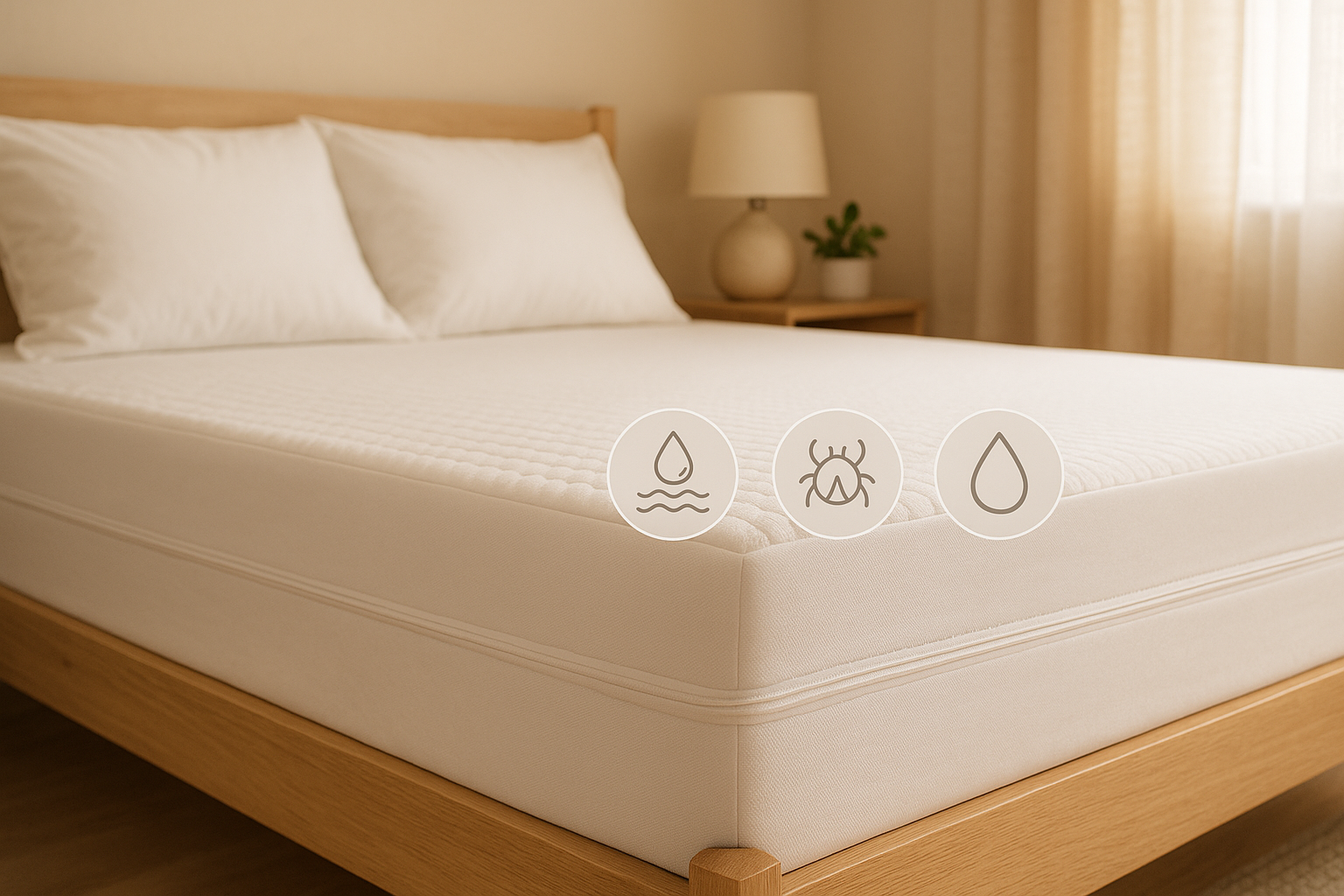
In a mattress market increasingly crowded with international brands shipping to Canada, Polysleep stands out for a very specific reason: it is genuinely, proudly, and entirely made in Canada. Founded in 2016 and headquartered in Montreal, Polysleep designs and manufactures all of its mattresses locally, using proprietary open-cell foam technology certified to the ISO 20743 antimicrobial standard — a distinction few competitors can claim. Whether you are a hot sleeper searching for breathable foam, a couple prioritising motion isolation, or simply someone who wants to buy Canadian and sleep soundly, Polysleep has built a credible case for itself over nearly a decade in the market.
This review covers the three main models in the current Polysleep lineup — the Origin, the Zephyr, and the Hybrid — along with everything you need to know about certifications, trial periods, warranty, and shipping across Canada before making your decision in 2026.
Who Is Polysleep?
Polysleep was launched in Montreal in 2016 with a direct-to-consumer model: cut out the middlemen, sell online, deliver to your door, and let the product speak for itself. The brand’s founding philosophy centred on one key innovation — a proprietary viscoelastic hybrid foam developed in-house, engineered to be both breathable and antimicrobial. This foam is at the core of every Polysleep mattress sold today.
What sets Polysleep apart from most mattress-in-a-box brands is that manufacturing happens in Montreal. This is not simply an assembly operation: the foam is cut, layered, finished, and quality-controlled locally, which the brand argues gives it tighter control over consistency and durability. For Canadian consumers who prioritise supporting local industry, this is a meaningful differentiator.
By 2026, Polysleep ships across Canada — from British Columbia to Nova Scotia — and has built a loyal customer base through word of mouth, a generous trial policy, and a product that has held up well in third-party evaluations.
Discover all Polysleep mattress models on the official Canadian websitePolysleep’s Key Technology: ISO 20743-Certified Antimicrobial Foam
Before diving into individual models, it is worth understanding what makes Polysleep’s foam genuinely different. The comfort layer used across the Polysleep lineup is described as an open-cell viscoelastic hybrid foam, certified to the ISO 20743 standard. This international standard specifically tests for antimicrobial activity in textiles and materials — meaning Polysleep’s foam has been independently verified to reduce the growth of bacteria on its surface.
For most sleepers, this matters more than it might seem. Over the course of years, a mattress accumulates sweat, skin cells, and the microbial activity that follows. An antimicrobial comfort layer does not replace good hygiene practices, but it does add a meaningful layer of protection — particularly relevant for allergy-sensitive sleepers or those who share a bed.
Beyond antimicrobial properties, the open-cell structure of the foam allows air to circulate more freely than traditional memory foam. Rather than trapping heat within a dense, sealed structure, the open-cell design creates small channels for airflow — helping regulate temperature throughout the night. This is a significant advantage over conventional viscoelastic foams, which have long been criticised for sleeping hot.
All foam layers across the Polysleep range are also CertiPUR-US certified, confirming they are made without ozone-depleting chemicals, heavy metals, formaldehyde, or PBDE flame retardants, and that VOC emissions remain within safe thresholds for indoor air quality.
The Polysleep Lineup: Origin, Zephyr, and Hybrid
The Origin 2.0 — The Flagship Entry Point
The Origin 2.0 is Polysleep’s best-selling model and the mattress most often associated with the brand. It is a 10-inch all-foam mattress built on three distinct layers:
- Comfort layer: ISO 20743-certified open-cell viscoelastic hybrid foam at a density of 3.0 lb/ft³
- Transition layer: Polysleep intermediate foam providing progressive support
- Support base: High-density Polysleep foam ensuring long-term structural integrity
The cover is a breathable fabric blend designed to complement the open-cell foam beneath it. The mattress is latex-free, which is relevant for those with latex sensitivities. The Origin 2.0 sits in a medium firmness range — broadly suitable for back sleepers and side sleepers of average build — and delivers the motion isolation that all-foam constructions are known for.
The 10-year warranty covers manufacturing defects, foam durability, and issues with the fabric or zipper, provided the mattress is kept clean and properly supported. Normal wear, stains, or damage from misuse fall outside its scope — standard terms for this category.
Price-wise, the Origin 2.0 is Polysleep’s most accessible model. Exact pricing varies by size and any active promotions, so it is worth checking the current figure directly on the official site.
Check current pricing and promotions for the Polysleep Origin 2.0The Zephyr — Premium All-Foam Performance
The Zephyr is Polysleep’s premium all-foam offering, positioned above the Origin in both price and specification. It is a mattress designed for sleepers who want the feel and motion-isolating qualities of foam but with additional sophistication in the layering and feel profile.
Third-party evaluations of the Zephyr have been positive overall, placing it among the better-performing foam mattresses in the Canadian market for pressure relief and motion isolation. It carries a medium-soft feel, which makes it particularly well-suited for side sleepers and lighter-framed back sleepers who benefit from contouring support around the shoulders and hips.
One area where third-party testers have noted a trade-off is bounce: the Zephyr, like most foam mattresses, has relatively low rebound compared to hybrid or innerspring models. Sleepers transitioning from a coil mattress may notice this difference initially. However, for those who prioritise stillness — couples where one partner moves frequently at night, for instance — the low bounce is more feature than bug.
At a premium price point (from approximately CAD 2,000+ depending on size, though prices fluctuate with promotions), the Zephyr targets buyers who want a high-specification Canadian-made foam mattress without moving to an innerspring or hybrid construction.
The Hybrid — Foam Meet Responsive Coils
For sleepers who want the antimicrobial foam technology Polysleep is known for but prefer the responsiveness and support of a coil system underneath, the Hybrid offers the best of both worlds. It pairs the brand’s open-cell viscoelastic comfort layer with a pocketed coil support core, delivering stronger edge support, higher bounce, and better weight distribution for heavier sleepers.
The Hybrid tends to suit combination sleepers who shift positions during the night, as the coil layer makes it easier to move across the mattress surface without feeling “stuck.” It also performs well for couples with significantly different body weights, since the coil system can handle load variation more effectively than foam-only constructions.
Like the rest of the lineup, the Hybrid is made in Montreal and carries the same CertiPUR-US certifications on its foam components.
Browse Polysleep mattresses available on Amazon CanadaTrial Period, Warranty, and Shipping
Polysleep offers a 100-night sleep trial on its mattresses. This is a well-established standard in the direct-to-consumer mattress industry, giving buyers roughly three months to sleep on the mattress in their own home before committing. If the mattress does not work out within the trial window, Polysleep arranges a return and refund — a process that does not require the buyer to repackage the mattress themselves.
The 10-year warranty is competitive for this category. It covers structural defects in the foam and fabric construction under normal use conditions. As is common across the industry, the warranty requires that the mattress be used on an appropriate, supportive base — slatted frames should have slats no more than a few inches apart to prevent premature sagging.
Shipping is free across Canada, delivered directly to the customer’s door. Polysleep does not currently operate physical showrooms in the traditional sense, though it is worth checking the official site for any pop-up or partner locations.
Who Should Buy a Polysleep Mattress?
Polysleep’s lineup is particularly well-suited to several buyer profiles:
Hot sleepers frustrated by conventional memory foam. The open-cell foam structure genuinely improves airflow compared to standard viscoelastic foam, making Polysleep a credible option for those who have been disappointed by the heat retention of traditional memory foam mattresses.
Allergy-sensitive sleepers. The ISO 20743 antimicrobial certification on the comfort layer, combined with CertiPUR-US certification on all foam layers, makes Polysleep one of the more rigorously certified mattress options available in Canada. The latex-free construction also means it is accessible to those with latex allergies.
Couples prioritising motion isolation. All-foam mattresses absorb movement well, and Polysleep’s design amplifies this. Partners with different sleep schedules or movement patterns will benefit from the stillness the Origin and Zephyr provide.
Buyers committed to Canadian manufacturing. If supporting local industry and reducing the carbon footprint of your purchase matters to you, Polysleep’s Montreal manufacturing is a genuine differentiator — not a marketing claim dressed up as one.
Where Polysleep may not be the first choice: Very heavy sleepers (above approximately 250 lbs) may find the all-foam models (Origin and Zephyr) less supportive over time and would likely be better served by the Hybrid. Similarly, sleepers who strongly prefer the springy, bouncy feel of an innerspring or latex mattress may find all-foam models too slow-responding for their taste.
How Polysleep Compares in the Canadian Market
The Canadian bed-in-a-box market has matured considerably since 2016, and Polysleep now competes alongside brands such as Endy, Douglas, Silk & Snow, and Casper — as well as several US-based brands that ship north of the border. Among Canadian-made options, Polysleep’s antimicrobial foam certification is a distinguishing feature that few local competitors match.
Where Polysleep asks a premium, it justifies it through material specification, local manufacturing quality control, and the proprietary foam technology developed over nearly a decade. Whether that premium is the right call for your budget depends on which model you are comparing, your sleep profile, and how much weight you place on the “made in Canada” provenance.
For a broader look at how Polysleep compares to other reviewed brands, see our full brand directory and our complete mattress test and review section .
Final Verdict
Polysleep has earned its place as one of Canada’s most credible mattress brands through consistent product quality, genuine innovation in antimicrobial foam technology, and a manufacturing ethos that is rare in the direct-to-consumer space. The Origin 2.0 remains the brand’s sweet spot — a well-specified, reasonably priced foam mattress that will suit a wide range of sleepers. The Zephyr steps up the specification for those willing to invest more in a premium all-foam feel, while the Hybrid broadens the brand’s appeal to those who need the responsiveness of a coil system.
With a 100-night trial, a 10-year warranty, free shipping across Canada, and foam certified to both ISO 20743 and CertiPUR-US standards, Polysleep offers a compelling package in 2026 — particularly for buyers who value local manufacturing and take sleep hygiene seriously.
Frequently Asked Questions
What makes Polysleep foam antimicrobial, and why does it matter for sleep?
Polysleep’s comfort layer is certified to the ISO 20743 standard, an international norm that specifically tests and verifies the antimicrobial efficacy of materials. In practical terms, this means the foam has been shown to reduce the growth of bacteria on its surface compared to untreated foam. Over the lifetime of a mattress — which can span a decade or more — this becomes genuinely relevant: sweat, skin cells, and humidity create conditions where microbial populations can grow within foam layers. An ISO 20743-certified comfort layer introduces a meaningful level of resistance to this process. This is particularly important for allergy-prone sleepers, those with sensitive skin, or anyone sharing a bed who wants an additional hygiene buffer. It does not eliminate the need for a mattress protector or regular airing, but it does add a certified layer of protection that most competitors in the Canadian market do not offer. If you are comparing mattresses and antimicrobial properties are a priority, asking whether the brand carries an ISO 20743 certification — rather than simply claiming “antimicrobial” in marketing language — is the right question to ask.
Is Polysleep actually made in Canada, or is that a marketing claim?
Polysleep mattresses are genuinely manufactured in Montreal, Quebec. This is not a case of foam components being made abroad and assembled locally — Polysleep designs and produces its mattresses in a local Montreal facility, employing Canadian workers. This distinguishes it from many mattress brands that market themselves as “Canadian” while outsourcing manufacturing to Asia or the US. For consumers who prioritise domestic manufacturing — whether for economic, environmental, or quality-control reasons — Polysleep’s provenance is a verifiable, meaningful claim rather than a branding exercise.
How does the 100-night trial work at Polysleep?
Polysleep offers a 100-night sleep trial on its mattresses, beginning from the date of delivery. If at any point within those 100 nights you decide the mattress is not right for you, you can initiate a return through Polysleep’s customer service. The brand arranges pickup — you do not need to repackage the mattress or find your own courier. A full refund is then processed. It is worth noting that most sleep experts recommend giving any new mattress at least 30 nights before making a final judgement, as the body typically needs time to adjust to a different sleep surface and firmness level. The 100-night window is generous enough to allow for this adjustment period while still leaving ample time to return the mattress if it genuinely does not suit your needs.
Which Polysleep model is best for couples?
For couples, the Origin 2.0 and the Zephyr both perform well thanks to the motion isolation inherent in all-foam constructions. If one partner moves frequently at night or keeps different hours, the foam absorbs and contains movement effectively so the other sleeper is not disturbed. The Hybrid offers slightly more bounce due to its pocketed coil layer, which can translate to marginally more motion transfer — though modern pocketed coils are designed to minimise this. Couples where both partners are of similar weight and sleep position tend to do well on any Polysleep model; those with significant differences in body weight may find the Hybrid’s coil support system better at accommodating both simultaneously.
Does Polysleep ship to all Canadian provinces and territories?
Polysleep ships across Canada, covering all major provinces. Free shipping is included on mattress orders. For remote areas or territories, it is worth confirming delivery terms directly on the Polysleep website, as logistics to certain addresses may involve longer lead times or specific delivery arrangements. Urban centres across British Columbia, Alberta, Ontario, Quebec, and the Maritime provinces are typically well-served with standard delivery timelines.
What base or foundation does a Polysleep mattress require?
Polysleep mattresses are compatible with most standard bed bases, including platform frames, slatted frames, box springs, and adjustable bases (check model compatibility on the official site for adjustable base support). For slatted frames, the brand recommends that slats be no more than a few inches apart to ensure adequate, even support across the mattress surface. Using a mattress directly on the floor is generally not recommended, as it restricts airflow beneath the mattress and can void the warranty. Proper support is also a condition of the 10-year warranty, so it is worth confirming your base meets the specifications before purchase.