A Major Environmental and Domestic Issue
Every year, more than 5 million mattresses are thrown away in France. A mattress weighs between 15 and 40 kg, made up of foams, springs, textiles, or latex, which are rarely biodegradable. Two major issues arise: the management of bulky waste and the end-of-life treatment of these products. Mattress recycling is becoming an ecological solution, although it is little known. To optimize the lifespan of your mattress before reaching that point, also check our tips for extending the lifespan of your mattress .
Lifespan, Legislative Framework, and Waste Management
A mattress has an average lifespan of 8 to 10 years, depending on its quality and maintenance. In France, their recycling is governed by the European directive aimed at reducing landfill. Since 2011, the sector has been organized around the eco-organization Écomaison, funded by an eco-tax displayed at the time of purchase.
What is a Recyclable Mattress?
Recyclable Components
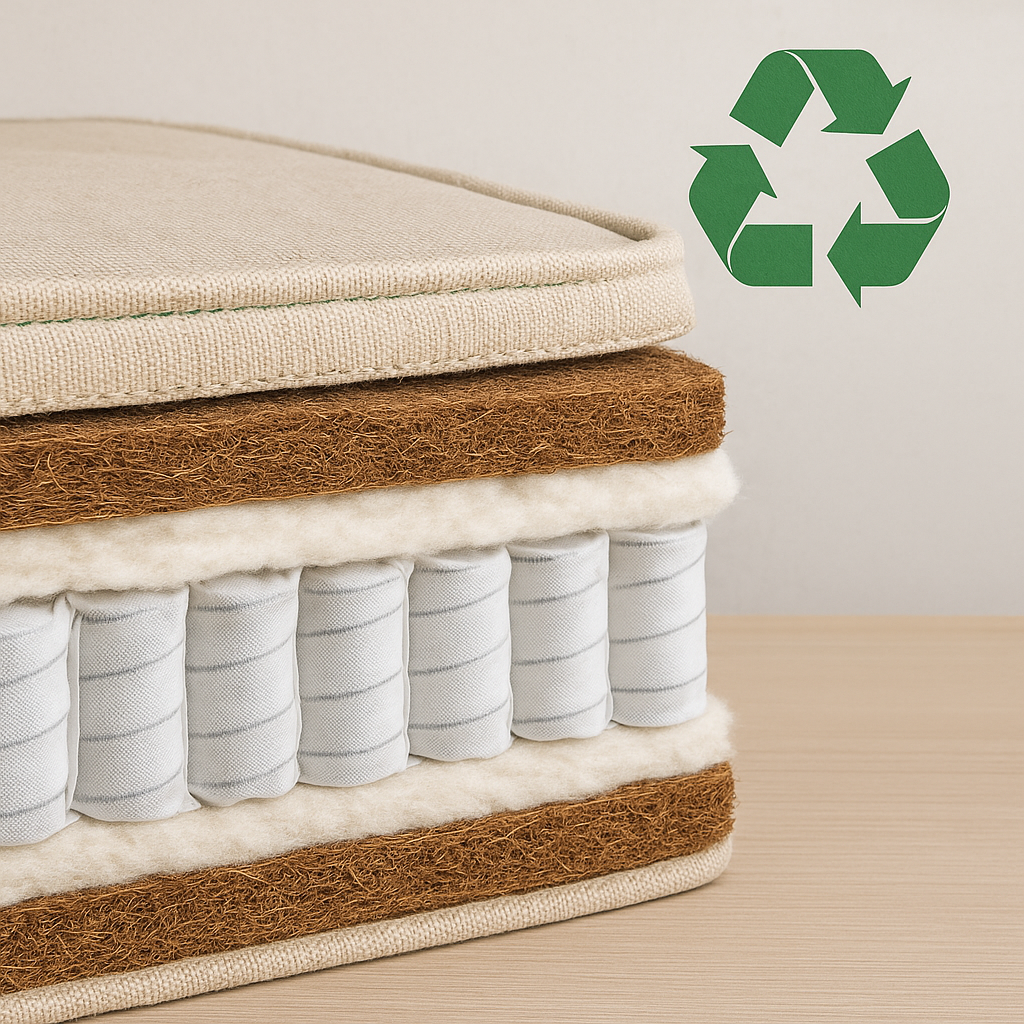
A mattress is a composite product, of which several parts can be valorized:
- Polyurethane foams: transformed into insulation.
- Metal springs: melted down for new objects.
- Textile or natural fibers: recycled into felts or padding.
- Natural or synthetic latex: valorized according to its composition.
Reuse vs Recycling
- Reuse: giving away or reselling a mattress in good condition.
- Recycling: processing a worn mattress to reuse its materials.
Why Recycle Your Mattress?
Benefits
- Reduction of the volume of waste incinerated or landfilled.
- Valorization of materials in other industrial sectors.
- Lower CO₂ emissions related to incineration.
Limitations
- Not all mattresses are recyclable (if they are soiled or infested).
- Few specialized centers.
- Logistics can sometimes be cumbersome.
What Alternatives to Recycling?
| Solution | Advantages | Disadvantages |
|---|---|---|
| Recycling via an eco-organization | Traceability, regulatory framework | Limited network depending on regions |
| Donating to an association | Solidarity gesture, useful | Must be in good condition |
| Collection at the store | Convenient, often free | Only during a replacement |
| Municipal waste disposal | Accessible to all | Transport is the responsibility of the individual |
Examples of Local Initiatives
- IKEA: free take-back when purchasing a mattress.
- Emma, Tediber: included take-back services.
- Emmaüs, Recycl’Matelas: reuse or recycling.
- Lematelas.fr: take-back and referral to partner associations.
Practical Tips for Managing the End of Your Mattress’s Life
- Anticipate the replacement: organize the take-back before the delivery of the new one.
- Check the condition: if it is clean and dry, it can be given away.
- Locate collection points: via Écomaison or your town hall.
- Choose eco-friendly mattresses: natural latex, organic cotton, removable products.
When the time comes to replace your mattress, our complete guide to choosing your mattress will help you find a durable and easy-to-recycle model.
Need a new mattress? → See the selection on lematelas.fr