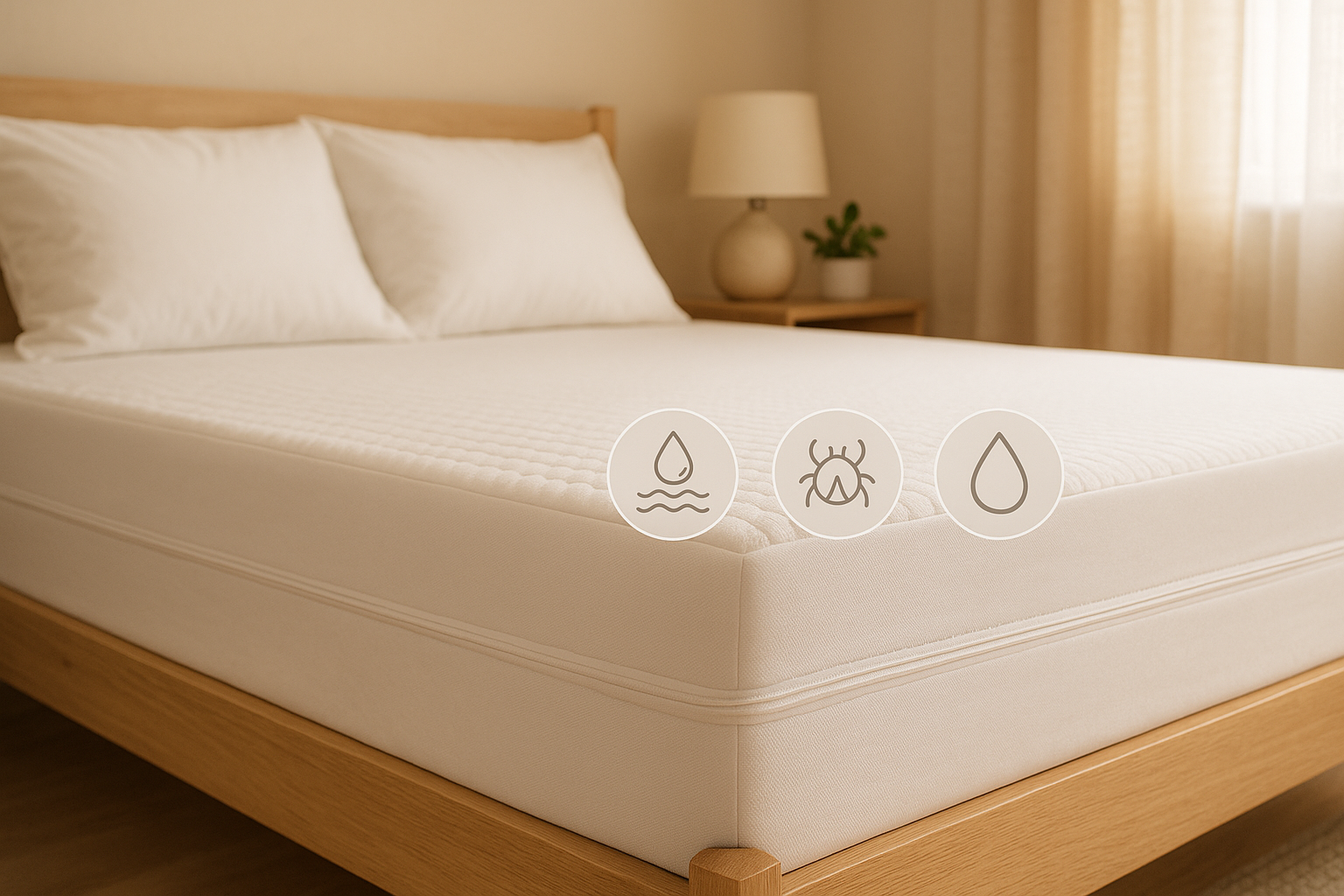
A mattress is a major investment for your health. A guarantor of our physical and mental recovery, it is nevertheless subjected to harsh conditions every night. Between sweat (about 40 cl per night for an adult), dead skin that feeds dust mites, and ambient humidity, the filling can degrade quickly. Without appropriate protection, a mattress loses its supportive properties and hygiene in just a few years.
Why is mattress protection imperative?
Protection is not just a matter of visual cleanliness. It plays a structural and health role:
- Fighting foam oxidation: The acidic moisture from sweat penetrates the pores of foams (polyurethane, memory foam) and eventually breaks their cells, causing sagging.
- Barrier against allergens: Dust mites thrive in warm and humid environments. Effective protection limits their establishment within the mattress.
- Preservation of warranty: Most bedding manufacturers void the warranty in case of stains on the fabric. Effective protection secures your purchase.
- Thermal regulation: Modern protections using natural materials like Tencel or cotton promote air circulation.
According to the National Institute of Sleep and Vigilance (INSV), bedding hygiene is a determining factor in limiting micro-awakenings related to respiratory irritations. For an overview of all good maintenance practices, check out our complete guide to extending the life of your mattress .
The different types of protective accessories
1. The mattress protector (or mattress cover)
This is the most common accessory. It is installed like a fitted sheet and serves as the first line of defense against moisture. For optimal protection, we recommend hybrid models that combine comfort and waterproofing. Our complete guide to choosing your mattress protector helps you identify the model suited to your profile.
Discover the range of Someo mattress protectors2. The full zip cover
Unlike the mattress protector, the cover envelops all six sides of the mattress. It is the ultimate solution for people suffering from severe allergies or to protect a mattress in a secondary residence prone to humidity.
3. The mattress renovator
If your fabric is already slightly worn or stained, the mattress renovator can restore a like-new appearance to your bedding while adding an extra layer of protection.
Comparison of protective materials
The choice of material affects noise, warmth, and effectiveness.
| Material | Type of protection | Advantages | Disadvantages |
|---|---|---|---|
| Cotton Terry | Absorbent | Very soft, natural, silent | Does not block liquids |
| Polyurethane (PU) | Waterproof | Breathable, flexible, noiseless | More expensive than PVC |
| Tencel (Eucalyptus) | Thermoregulating | Eco-friendly, ultra-soft, cool | Requires delicate maintenance |
| PVC | Waterproof | Completely waterproof, inexpensive | Noisy, promotes sweating |
Focus on breathable technologies
One of the biggest fears when purchasing a waterproof protection is the “sauna” effect. Today, micro-perforated polyurethane membranes allow air molecules (for ventilation) to pass through but block water molecules (which are too large). This is known as active breathability.
For those seeking the ultimate in comfort and hygiene, brands like Tediber offer accessories designed not to alter the properties of “The Incredible Tediber Mattress.”
See the Tediber mattress protectorHow to properly maintain your protective accessories?
A protection saturated with dust loses its effectiveness. Here are the golden rules from the expert matelas.com:
- Washing frequency: Wash your mattress protector every two weeks in summer, and once a month in winter.
- Temperature: To eradicate dust mites, a wash at 60 °C is necessary. Always check the label, as some waterproof membranes cannot withstand more than 40 °C.
- Drying: Avoid high-temperature tumble drying, which could melt or crack the waterproof layer. Prefer air drying.
- Ventilation: Every morning, leave your bed “undone” for 15 minutes with the windows open before making it again. This allows moisture to evaporate.
Complement these actions with a regular cleaning of the mattress itself for optimal hygiene.
Buy bedding accessories on lematelas.frSpecial cases: children and pets
- For children: Prefer materials certified OEKO-TEX Standard 100, ensuring the absence of harmful substances for the skin. A double protection (two mattress covers one on top of the other) can be an effective trick for nighttime accidents.
- For pet owners: The full cover is preferable to prevent hair and parasites from getting into the side seams of the mattress.
FAQ: Your questions about protection
Is a fitted sheet enough to protect my mattress?
No. A fitted sheet is too thin to block sweat or dead skin. It must always be complemented by a technical waterproof or absorbent mattress protector according to your needs.
Is a waterproof mattress protector noisy?
Older PVC models produced a plastic noise. Modern models made of polyurethane or Tencel are completely silent and invisible under the sheets.
Does protection cancel the effect of memory foam?
If the protection is too thick or too rigid, it may slightly reduce the enveloping sensation. Choose a stretchy model (jersey) to preserve the mattress’s flexibility.
When should I change my mattress protector?
On average every 2 to 3 years. With repeated washes, the waterproof membrane eventually wears out or becomes less effective. A sign to watch for: stains appear on the mattress despite the protection.
Can a mattress protector be used on a memory foam mattress?
Yes, provided you choose a very thin and stretchy model (4-sided jersey). A protection that is too rigid or too thick diminishes the characteristic enveloping effect of memory foam. Micro-perforated polyurethane membranes are the most compatible with this type of mattress.