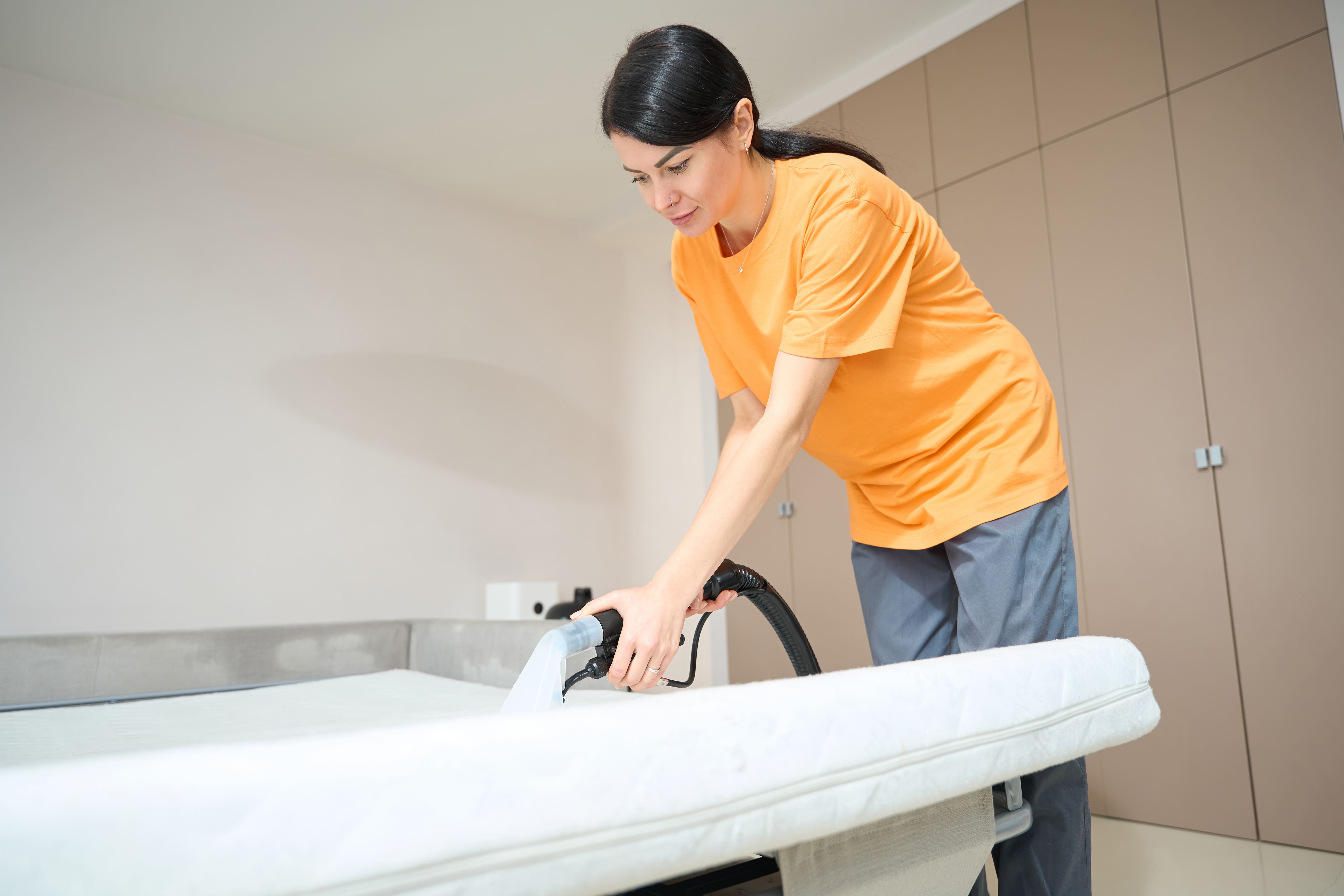
The mattress represents the main investment in your bedroom. Ensuring restorative sleep and the health of your spine, it nevertheless endures daily aggressions: humidity, mechanical pressure, and dust accumulation. If not properly maintained, a mattress can lose its supportive properties in just a few years. Conversely, rigorous maintenance can extend its longevity up to 12 years.
Determining Factors of Durability
The lifespan of a mattress is not solely linked to its price but to the combination of its technology and environment.
- Material Density: For polyurethane or high resilience (HR) foams, density is the indicator of resistance to sagging. A quality mattress should have a minimum density of 30 to 35 kg/m³.
- Quality of the Base: The base is often considered to provide 30% of the comfort and durability of the whole. An unsuitable or too old base accelerates the deformation of the mattress.
- Thermal Hygiene: Heat and humidity are the enemies of foam polymers and natural fibers, as they promote oxidation and softening of components.
1. Protection: The First Line of Defense
The most effective way to prolong the life of your mattress is to prevent bodily fluids (sweat, sebum) from penetrating the filling.
The Use of a Mattress Protector
A waterproof and breathable mattress protector acts as a barrier against moisture. Human sweat is acidic and chemically degrades the foam cells over time. By using a washable protection, you preserve the integrity of the internal materials.
To complement this protection, hygiene accessories dedicated to the mattress target each vulnerable point of your bedding.
Discover Someo mattress protectors2. Rotation and Flipping: Balancing Pressure Areas
Some mattresses are referred to as “one-sided” (one sleeping surface), particularly those with a layer of memory foam. However, this does not exempt them from mechanical maintenance.
- Head-to-Foot Rotation: To be done every 3 months. This prevents the same areas (shoulders and hips) from being stressed in the same spot on the mattress.
- Flipping Summer/Winter Side: If your mattress has two sleeping surfaces, flip them with each change of season. The winter side is generally denser to retain heat, while the summer side prioritizes ventilation.
For high-end mattresses like “The Incredible Tediber Mattress” , the design is intended for optimal durability, but seasonal rotation is still recommended to homogenize the feel.
See “The Incredible Tediber Mattress”3. Technical Maintenance and Room Hygiene
Ventilation and Thermal Regulation
Humidity accumulated during the night must be expelled. It is recommended to open the bedroom windows for 15 minutes every morning, leaving the mattress uncovered (without a duvet). Maintaining a room temperature around 18 °C also limits the proliferation of dust mites.
Cleaning with Baking Soda
Once or twice a year, sprinkle baking soda over the entire surface of the mattress. Let it sit for several hours before vacuuming. This neutralizes odors and absorbs any residual moisture that may have seeped in despite the protection. For more information, check our complete guide on mattress cleaning .
Find maintenance accessories on lematelas.frDurability Comparison by Technology
The choice of initial technology greatly influences resistance over time. Here are the points of vigilance according to the types of bedding:
| Technology | Estimated Lifespan | Longevity Strength | Vigilance Point |
|---|---|---|---|
| HR Foam (35 kg/m³) | 8 - 10 years | Resilience | Sensitive to humidity |
| Pocket Springs | 10 - 12 years | Natural ventilation | Quality of springs |
| Natural Latex | 12 - 15 years | Durable elasticity | Weight of the mattress |
| Hybrid (Springs + Memory) | 8 - 10 years | Balanced comfort | Sagging of the foam |
4. Mistakes That Kill Your Mattress
- Sitting on the Edge of the Bed: The edges are not always reinforced. Repeated pressure on the frame weakens the side structure.
- Jumping on the Bed: Pocket spring mattresses are particularly sensitive to sudden shocks that can dislodge the springs from their individual housing.
- Using an Inappropriate Steam Cleaner: Excessive heat from a steam cleaner can melt the cells of memory foam or cook the latex.
Expert Advice from matelas.com
To maximize your investment, regularly check the condition of your base. A slatted base with slats that are too far apart (more than 7 cm) will not properly support pressure points, forcing the mattress to work twice as hard. If you are considering renewing yours, our guide to choosing your base will help you make the right choice.
If you notice a dip in the center of your bed or feel aches upon waking, it is possible that your mattress has reached its technical limit, regardless of its chronological age.
FAQ
Is it essential to change the base at the same time as the mattress?
Yes, in 90% of cases. A new mattress placed on an old base will wear out prematurely (in 4 or 5 years instead of 10). It’s like putting new tires on a car with broken suspensions.
How do I know if my mattress is dead?
Several signs are telling: the appearance of a visible mark where you sleep (sagging), noises from springs, or feeling the slats of the base. Check our guide on mattress end-of-life management to know what to do next.
Is the sun good for disinfecting a mattress?
Yes for bacteria, but be careful: natural latex and some foams are photo-sensitive. Do not leave your mattress exposed in direct sunlight without protection for several hours, as UV rays accelerate the aging of polymers.
Does a removable mattress last longer?
Potentially yes, because you can wash the cover at 60 °C (if the label allows), which ensures perfect hygiene and prevents dirt from attacking the core of the product.
How often should I flip or rotate my mattress?
For a one-sided mattress (one sleeping surface), a head-to-foot rotation every 3 months is sufficient. For a reversible mattress, add a flip with each change of season, or twice a year. This simple routine significantly reduces areas of premature sagging.