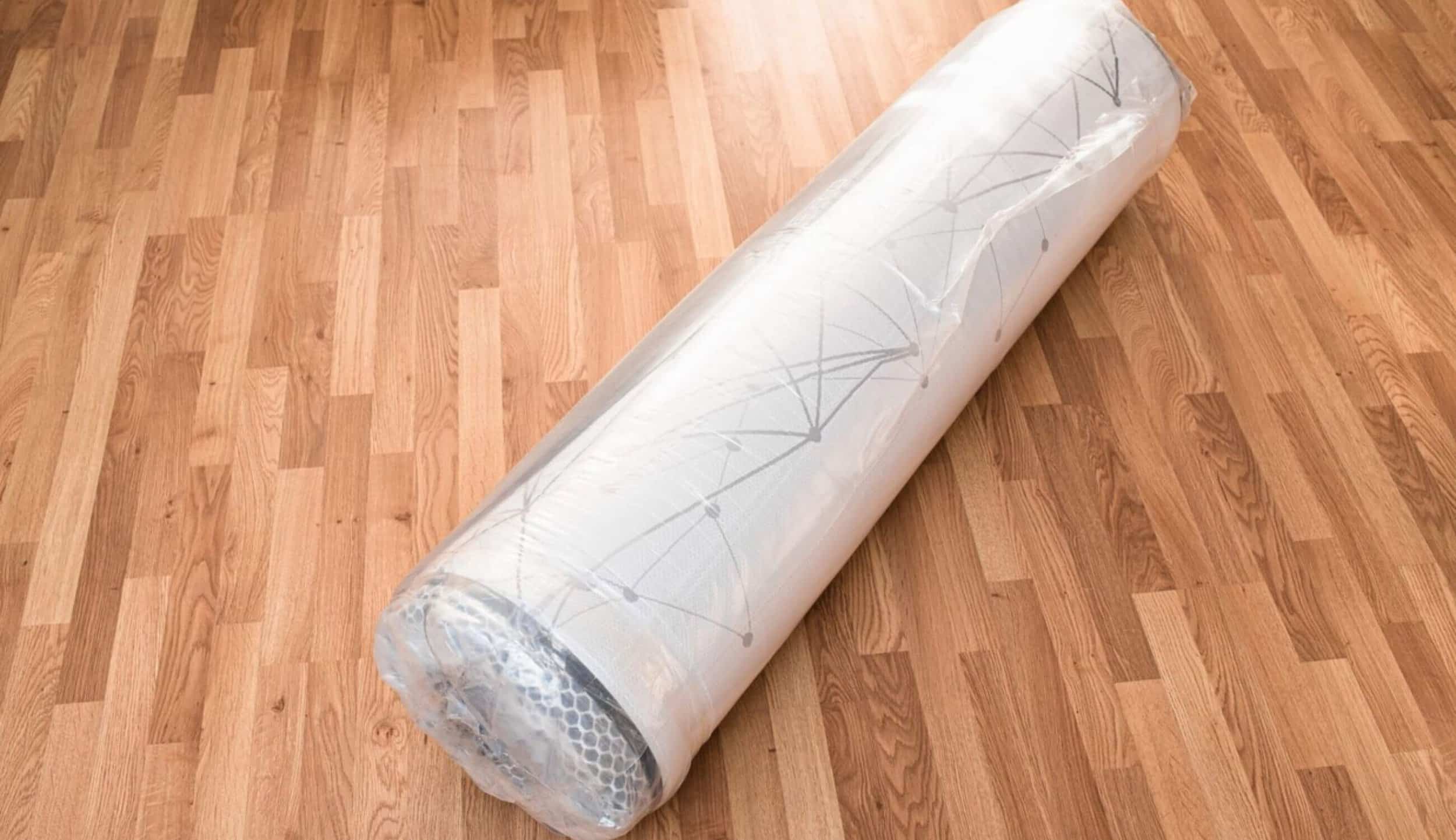
The rolled mattress has established itself as a major innovation in the bedding world, changing our purchasing, transportation, and installation habits. But how does this type of bedding actually measure up for your daily comfort? Matelas.com breaks down the advantages, limitations, and best practices for choosing a rolled mattress that suits your needs.
Definition and context: What is a rolled mattress?
A rolled mattress is generally made of foam or latex, vacuum compressed, and then rolled up to reduce its volume. It is then packaged in plastic and placed in a compact box, making transportation and installation easier.
A bit of history
The concept of the rolled mattress emerged in the early 2000s, popularized by brands like Ikea, and then by the rise of “bed-in-a-box.” The goal: to simplify logistics, reduce transportation costs, and make life easier for consumers, especially in urban areas.
Operation and key characteristics
How is a rolled mattress made?
- Compression: vacuum sealing to remove air and reduce thickness.
- Rolling: rolling up the compressed mattress.
- Packaging: packaging in a hermetic box.
This process mainly concerns polyurethane foam mattresses, memory foam, latex, or hybrid mattresses. Spring mattresses are rarely rolled, as they do not handle compression well.
What are the differences from a traditional mattress?
| Criterion | Rolled Mattress | Traditional Mattress |
|---|---|---|
| Transport | Easy, compact, lightweight | Bulky, requires 2 people |
| Installation | Quick, easy to handle | Sometimes complex |
| Delivery time | Short, flexible | Longer |
| Technology | Mainly foam/latex | All types |
| Price | Often more affordable | Variable |
Advantages of rolled mattresses
1. Ease of transport and installation
Ideal for apartments on upper floors, frequent moves, or difficult access.
2. Optimized delivery
Reduced carbon footprint thanks to compactness and streamlined logistics.
3. Comfort and support
Memory foam provides good support, relieves pressure points, and adapts to body shape.
4. Versatility and space-saving
Suitable for guest rooms, student housing, second homes.
5. Attractive price
Lower logistical costs, often more competitive selling prices.
Limitations and disadvantages of rolled mattresses
1. Sometimes reduced durability
Repeated compression or poor-quality materials = faster wear.
2. Lack of support for certain profiles
Unsuitable for people with back pain, heavy build, or specific needs.
3. Standardized comfort
Less customization; few pocket springs.
4. VOC emissions
Check certifications (Oeko-Tex, CertiPur) to avoid harmful substances.
5. Installation precautions
Wait 24 to 48 hours for shape recovery. Never re-roll.
Comparison with other alternatives
| Technology | Transport | Personalized Support | Durability | Price | Easy Installation | Suitable for All Profiles |
|---|---|---|---|---|---|---|
| Rolled Foam Mattress | ++ | + | + | ++ | ++ | + |
| Rolled Latex Mattress | ++ | ++ | ++ | + | ++ | ++ |
| Spring Mattress | - | ++ | ++ | - | - | ++ |
| Traditional Mattress | – | ++ | ++ | + | – | ++ |
Which brands for a quality rolled mattress?
The success of the rolled mattress owes much to the so-called “bed-in-a-box” brands, which have built their entire model on online sales and compressed delivery. Two players stand out particularly in the French market.
Emma, a German brand founded in 2015 and now one of the European leaders in online mattresses, offers rolled foam and hybrid models, with a 100-night trial and a 10-year warranty. Its best-seller, the Emma Original, exemplifies the comfort/price balance sought in this segment. Discover its story and range on our Emma brand hub .
Tediber, a French brand also born in 2015, focuses on a simple offering and a high-end rolled mattress made in France and Belgium, also accompanied by a 100-night trial and a 10-year warranty. More information on our Tediber brand hub .
Discover the Emma Original rolled mattress on AmazonConcrete use cases
- Young professional in an apartment: ease of transport and solo installation.
- Guest room or temporary housing: ideal for occasional use.
- Second home: simplified storage and installation.
- Families moving: space and energy savings.
Practical advice from our bedding expert
Choosing your rolled mattress wisely
- Minimum density: 35 kg/m³ (50 kg/m³ recommended for adults).
- Certifications: Oeko-Tex, CertiPur.
- Suitable technology: memory foam, latex, hybrid according to needs.
- Trial: prefer a trial of at least 30 nights; major online brands (Emma, Tediber) now offer 100 nights, allowing real time to assess comfort.
Best practices for installation
- Unpack in the room of use.
- Allow it to regain its shape flat for 24–48 hours.
- Ventilate the room.
- Never fold or re-roll after installation.
Mistakes to avoid
- Buying a low-end model for daily use.
- Ignoring compatibility with the bed base.
- Using it immediately after unboxing.
For more information, check out our complete guide to choosing your mattress and our guide for back pain mattresses .
View on Amazon