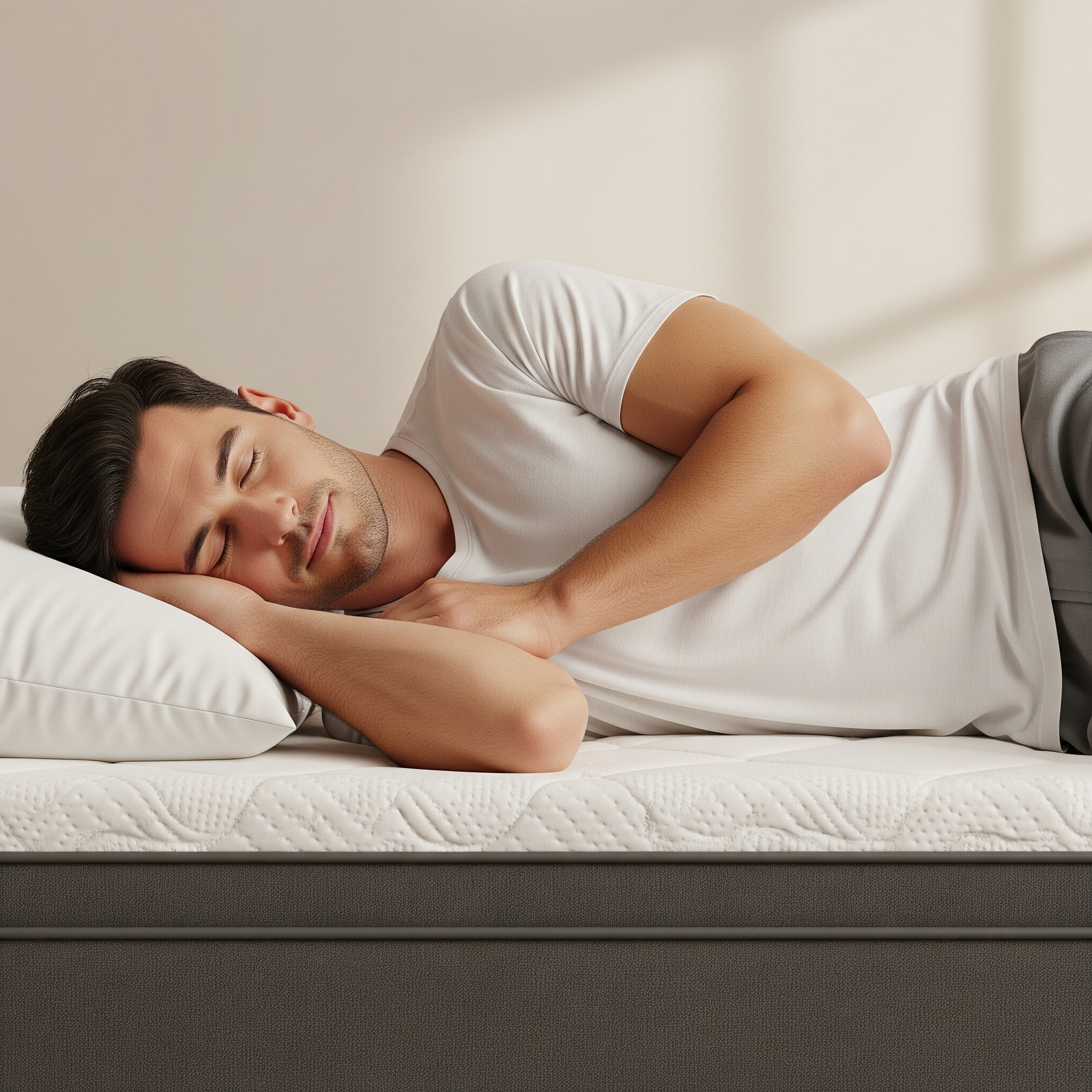
Sleeping on your side is the most common position among adults. It promotes breathing, limits snoring, and can relieve certain digestive issues. However, an unsuitable mattress can cause shoulder pain, tension in the hips, and poor circulation. To avoid these discomforts, it is better to choose a mattress designed for side sleepers.
Why is a specific mattress essential for side sleepers?#
When sleeping on your side, two key areas bear the pressure: the shoulder and the hip. A good mattress must:
- Combine firm support and soft comfort
- Reduce pressure points
- Maintain a natural spinal alignment
Criteria to consider#
1. Firmness level#
- Ideal: medium to soft, around 5 to 6/10
- Too firm: creates tension
- Too soft: destabilizes the spine
2. Mattress technology#
- Memory foam: relieves pressure, conforms to curves
- Natural latex: good compromise, ventilation + elasticity
- Pocket springs: sleeping independence + dynamic support
3. Thickness#
- Minimum recommended: 24 cm
- Heavier individuals: consider more (up to 28–30 cm)
4. Sleeper profile#
| Weight | Recommended mattress type |
|---|
| < 60 kg | Soft, enveloping comfort |
| 60–90 kg | Medium to firm |
| > 90 kg | Firm, reinforced support |
5. Budget#
- Good side sleeper mattress: €400 to €1,200
Our mattress recommendations for side sleeping#
1. Emma Original II#
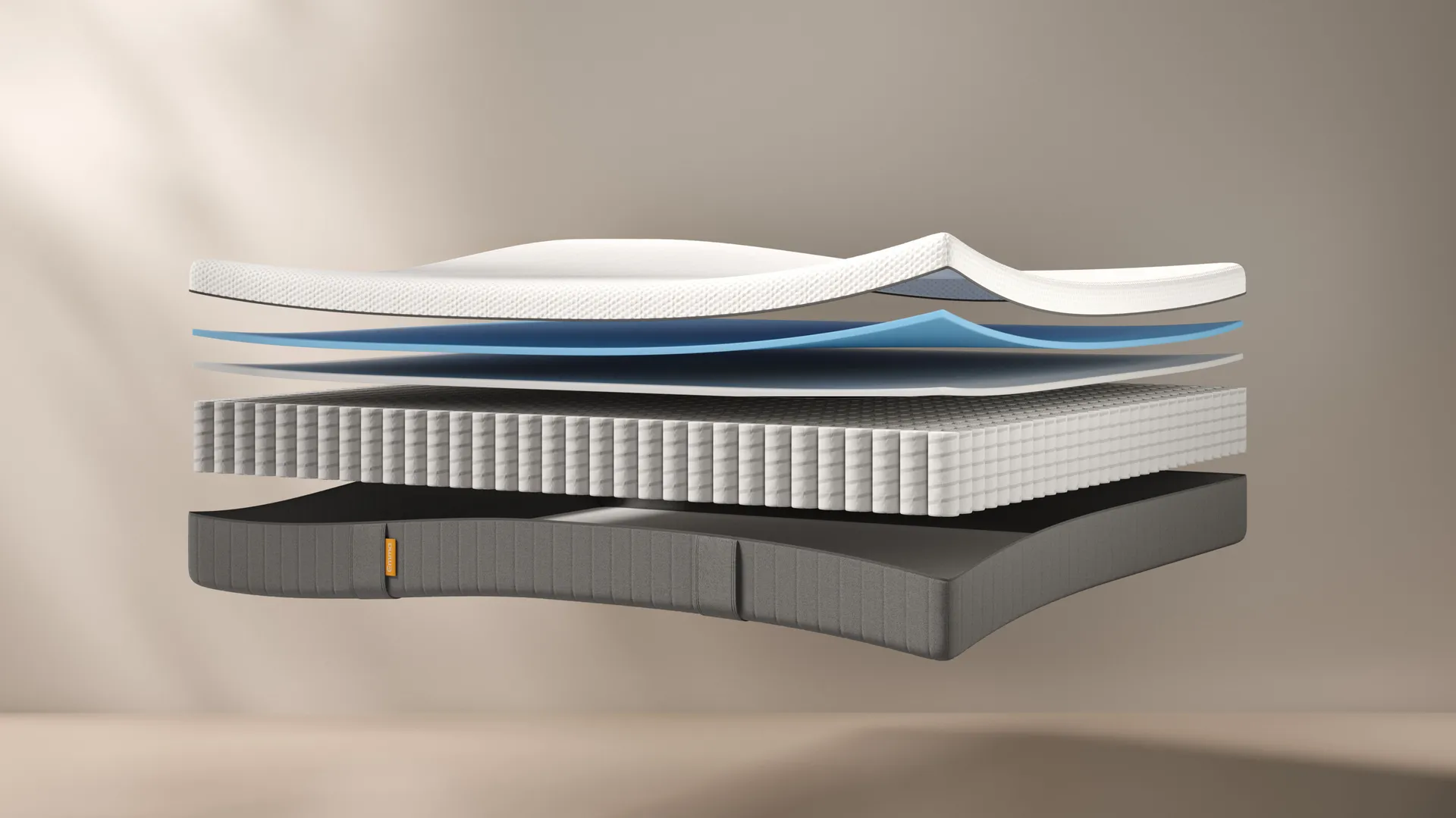
- Technology: memory foam
- Advantages: enveloping comfort, pressure point relief
Discover the Emma Original II Plus mattress on Amazon2. The Incredible Tediber Mattress#
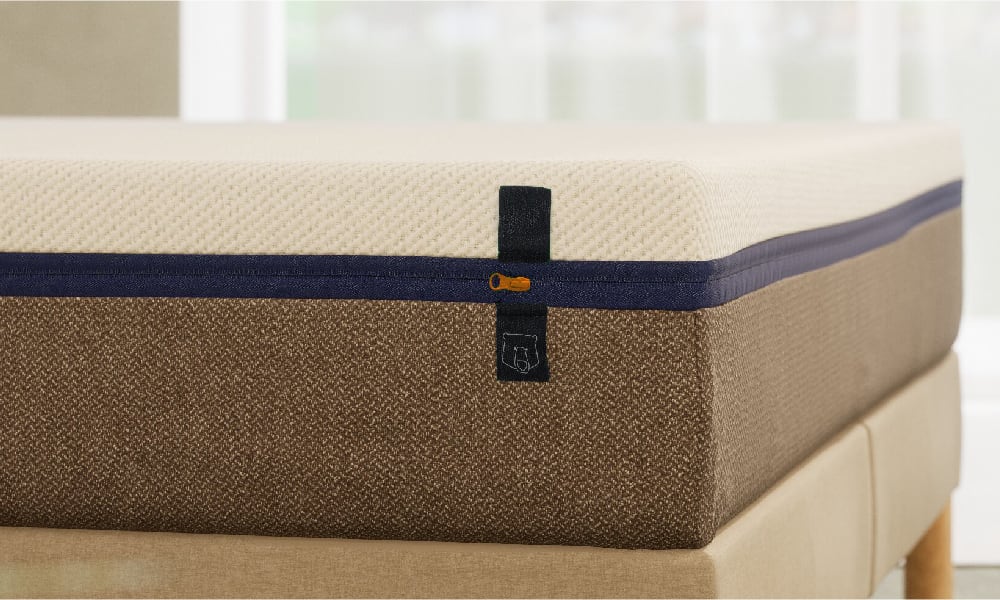
- Technology: polyurethane foam + memory + micro-perforated latex
- Advantages: firm support, balanced comfort, good ventilation
Discover the Incredible Tediber Mattress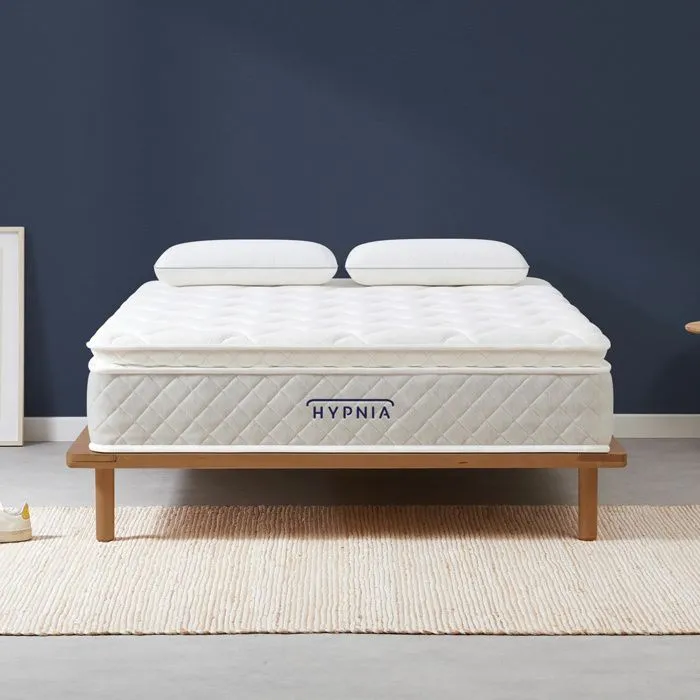
- Technology: pocket springs, foam, natural latex
- Advantages: very good support, ideal for larger builds
Discover the Slome (formerly Hypnia) Supreme Well-Being mattress4. Kipli Natural Latex#
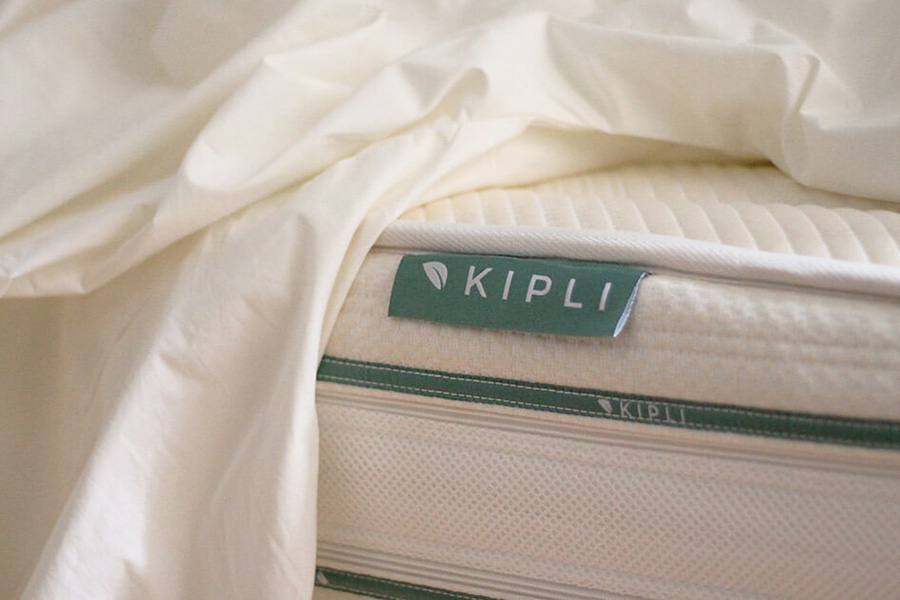
- Technology: 100% natural latex
- Advantages: two firmness sides, durable and breathable
Discover the Kipli natural latex mattressExpert tips#
- Avoid overly firm mattresses: especially if you have a medium build
- Rotate your mattress every 6 months (if reversible)
- Use an ergonomic pillow to maintain the head-neck-shoulder axis
- Take advantage of the trial period (often 100 nights)
To learn more, check out our complete guide on choosing a mattress based on your morphology
and our back pain mattress guide
.
View on AmazonFAQ – Sleeping on the side#
What type of mattress is best for sleeping on the side?
The best mattress for a side sleeper combines soft comfort and medium to firm support (around 5 to 6 out of 10). Memory foam and hybrid mattresses (foam + pocket springs) are the most suitable: they conform to the body's curves and allow the shoulder and hip to sink just enough to maintain spinal alignment. Natural latex is also a good option, being more dynamic and breathable. Adjust the firmness to your weight: a lighter build needs a softer welcome, while a heavier build requires reinforced support to avoid sinking too much.Can a mattress that is too soft cause problems?
Yes. On a mattress that is too soft, the pelvis — the heaviest part of the body — sinks excessively, which arches the spine in the side position and causes lower back tension and pain upon waking. The alignment of the head-spine-pelvis is no longer respected, and the muscles compensate all night. Conversely, a mattress that is too firm creates painful pressure points under the shoulder and hip. The goal is therefore balance: a surface soft enough to absorb bony protrusions, but firm support underneath to stabilize the pelvis. This is exactly what differentiated comfort zone models offer.Should I avoid spring mattresses?
No, quite the opposite. Pocket springs combined with a comfort foam layer are among the best solutions for side sleepers. Each spring works independently and sinks locally under the shoulder and hip, ensuring both targeted support and pressure point relief. They also offer excellent ventilation and very good sleeping independence, ideal for couples. Just avoid older biconical spring mattresses (non-pocketed), which are too firm and noisy, do not relieve pressure areas properly, and are poorly suited for side sleeping.How much does a good mattress for side sleeping cost?
About €400 to €1,200, depending on technology and brands.What height of pillow is best for sleeping on the side?
A medium to high pillow (12–15 cm) is ideal for filling the space between the shoulder and head, maintaining cervical alignment and avoiding tension. An ergonomic memory foam or latex pillow is particularly recommended — our [complete guide to choosing your pillow](/fr/guides-achat/choisir-ses-accessoires/comment-choisir-son-oreiller-guide-complet-selon-vos-besoins/) helps you find the right height based on your morphology.