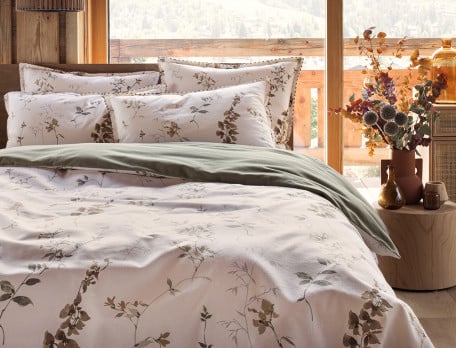
When temperatures drop and nights lengthen, the bed becomes a true refuge. However, many underestimate the importance of bedding in winter comfort. Choosing the right bedding for winter ensures warmer, softer, and more restorative nights.
Why adapt your bedding for winter?
It’s not enough to just add a blanket to stay warm. The winter cold requires a comprehensive adaptation of your bedding, starting with sheets, covers, and pillowcases. Poorly chosen items can lead to sweating, chills, or thermal discomfort. Conversely, suitable bedding helps maintain a gentle and stable warmth throughout the night without overheating. Sleep specialists remind us that the ideal temperature in a bedroom is between 18 and 19 °C: at this level, the body falls asleep more easily, and the insulating role of bedding becomes crucial for maintaining the right thermal balance under the duvet.
What you will learn here
- The purpose of specific winter bedding
- Which materials are best suited for cold nights
- How to properly combine sheets, duvet covers, and winter duvets
- How to choose your pillow to complete winter bedding
- Simple guidelines to remember for stress-free choices
What is winter bedding?
Winter bedding includes all the textile elements that dress your bed during the cold season: fitted sheets and flat sheets, duvet covers, pillowcases, thick duvets (often called “winter duvets”), as well as throws or additional blankets. Their common goal is to provide a feeling of enveloping warmth without creating humidity or overheating — two phenomena that degrade sleep quality as much as the cold itself.
To go further in choosing your bedding accessories, our complete guide on bedding accessories presents the essential criteria to know before purchasing.
Major categories of winter bedding
Cotton Flannel
Flannel is undoubtedly the emblematic material of winter bedding. Obtained by brushing cotton on both sides, it develops a soft and slightly fluffy surface that effectively retains body heat. It is particularly suitable for chilly sleepers and poorly heated rooms. Its maintenance requires a bit of attention — washing at 30–40 °C on a delicate cycle — but its longevity is excellent when well cared for.
Percale and Cotton Satin (in thick version)
Percale and cotton satin remain relevant in winter for people who sleep in a well-heated room or who naturally tend to feel warm at night. Their tight weave offers good breathability and moderate temperature maintenance, without the risk of overheating. Satin is appealing for its smooth and luminous touch, while percale is favored for its slightly more pronounced freshness and great durability in washing.
Cotton Jersey
Jersey, a stretchy knitted fabric similar to t-shirt material, is a very popular option for its flexibility and enveloping nature. It provides moderate warmth and accommodates nighttime movements well, making it the preferred choice for people who move a lot during their sleep. Its breathable properties also limit moisture accumulation, a significant advantage for avoiding feelings of cold or discomfort in the middle of the night.
Cotton Gauze (double or triple)
Cotton gauze, with its lightweight and airy layers, provides breathable and enveloping warmth rather than massive insulation. It is perfect for temperate rooms and for fans of natural materials who prefer a very soft touch to significant thickness. Triple-layer gauze, in particular, is a good compromise between lightness and thermal comfort.
The winter duvet
What is a winter duvet?
It is a duvet with a weight greater than 300 g/m², designed to better insulate against the cold. It can be filled with natural materials — goose or duck down, wool, silk — or synthetic (hollow fibers, microfibers). High-quality natural down duvets typically have a filling proportion between 70 and 90% pure down, which gives them lightness and excellent thermal performance; they are often certified by ethical labels (DOWNPASS, RDS) that guarantee the responsible sourcing of materials.
How to choose it well?
The weight is the first criterion to examine: count from 300 g/m² for a standard room in winter, and 350 to 500 g/m² for cold or poorly insulated rooms. The filling then influences the sleep experience: natural down offers light, durable, and breathable warmth, while synthetic fillings are more accessible in terms of price and are easier to maintain in the machine. Finally, pay attention to the cover: prefer a cotton cover, soft to the touch and breathable, which ideally complements the insulation of the filling.
Four-season duvets, consisting of two removable layers (light + intermediate) that can be assembled with buttons or clips, offer the best versatility throughout the year and often represent a long-term savings.
Find a winter down duvet on Amazon — wide selection of weights and fillingsThe pillow: the often-overlooked complement
An unsuitable pillow can compromise all your efforts on the rest of the bedding. In winter, down or wool fillings help maintain gentle warmth around the head and neck, areas particularly sensitive to cold. Memory foam pillows, on the other hand, retain body heat without releasing it excessively, making them suitable even for sleepers who tend to feel warm. Remember to replace your pillow every two to three years: a flattened pillow no longer properly supports the neck and becomes less insulating.
View on AmazonKey takeaways
Winter bedding is not limited to the duvet: sheets, pillowcases, and covers genuinely influence the warmth felt and the overall quality of sleep. The material is crucial — flannel, jersey, or cotton gauze retain heat without suffocating. A well-chosen winter duvet primarily depends on the ambient temperature of your room and your personal sensitivity to cold. And don’t overlook the pillow, which completes the whole and contributes to the thermal regulation of the head and neck throughout the night.
Some simple guidelines
- Room temperature < 18 °C: flannel + duvet ≥ 350 g/m²
- You often feel warm: percale or cotton satin + mid-season duvet
- Well-heated room (≥ 20 °C): light duvet, supplemented with a throw if needed
- You move a lot at night: cotton jersey for the sheet, memory foam pillow
FAQ
What is the warmest sheet material for winter?
Cotton flannel is the warmest material for winter sheets. Its brushing on both sides creates a soft and insulating surface that effectively retains body heat without generating excessive sweating, provided it is paired with a duvet whose weight is suitable for your room temperature. Cotton jersey is an excellent alternative for sleepers who move a lot at night: its elasticity accommodates body movements without shifting, and its breathable properties limit moisture accumulation under the covers. If you sleep in a well-heated room (20 °C or more) and tend to sweat, cotton percale offers better breathability while remaining pleasant to the touch.
Should I change all my sheets in winter or just the duvet?
Ideally, both. The duvet is the main factor in thermal insulation, but flannel or cotton jersey sheets actively contribute to the comfort felt. A complete set — sheets, pillowcases, and duvet cover in winter material — creates a thermal coherence that the duvet alone cannot provide. For optimal comfort, adapt the entire bedding set to the season.
How to maintain flannel bedding?
Cotton flannel requires some precautions to preserve its softness and insulating properties over time. Wash it at a maximum of 30–40 °C on a delicate cycle to avoid shrinking and deforming the brushed fibers. Avoid the tumble dryer at high temperatures: excessive heat flattens the fabric’s down and reduces its insulating effect. Prefer air drying, flat or hung, away from direct sunlight which can yellow light colors. Washing every 10 to 15 days is recommended for regular use. As for ironing, flannel generally does not need it — and ironing at too high a temperature would unnecessarily weaken the fibers. Well-maintained, a quality flannel bedding set can last several seasons without losing its characteristic softness.
What duvet thickness should I choose according to my room temperature?
The weight of the duvet should correspond to the actual temperature of your room at night, not the outside temperature. For a room below 16 °C, opt for a duvet with a weight of 400 g/m² or more, ideally filled with natural down which offers the best warmth-to-lightness ratio. Between 16 and 18 °C, a weight of 300 to 350 g/m² is suitable for most profiles. Above 20 °C, a mid-season duvet of 200 to 250 g/m² will suffice, supplemented with a throw if necessary during the coldest nights. Four-season duvets, with two removable layers to assemble, represent the most versatile solution if your budget allows: they adapt to all configurations without needing to change duvets with each season change.
Is it possible to keep summer bedding in winter if I feel very warm at night?
Yes, absolutely, if you sleep in a well-heated room (20 °C and above) and tend to feel warm at night. In this case, prefer bedding in percale or cotton gauze, which is more breathable, paired with a light or mid-season duvet. The important thing is to maintain a stable body temperature without sweating, as moisture accumulated under the duvet then cools the body abruptly and harms sleep quality.
Do I need a different pillow in winter?
Changing your pillow according to the season is not always necessary, but it is an option to consider if you feel cold sensations in your head and neck, or if your current pillow no longer provides the necessary support. In winter, natural down or wool fillings provide gentle and stable warmth, particularly appreciated in cold rooms. Memory foam pillows, which precisely conform to the neck’s morphology, retain body heat well without releasing it excessively. In any case, remember to replace your pillow every two to three years: an old pillow loses its support and insulation properties, which can amplify feelings of discomfort during cold nights.