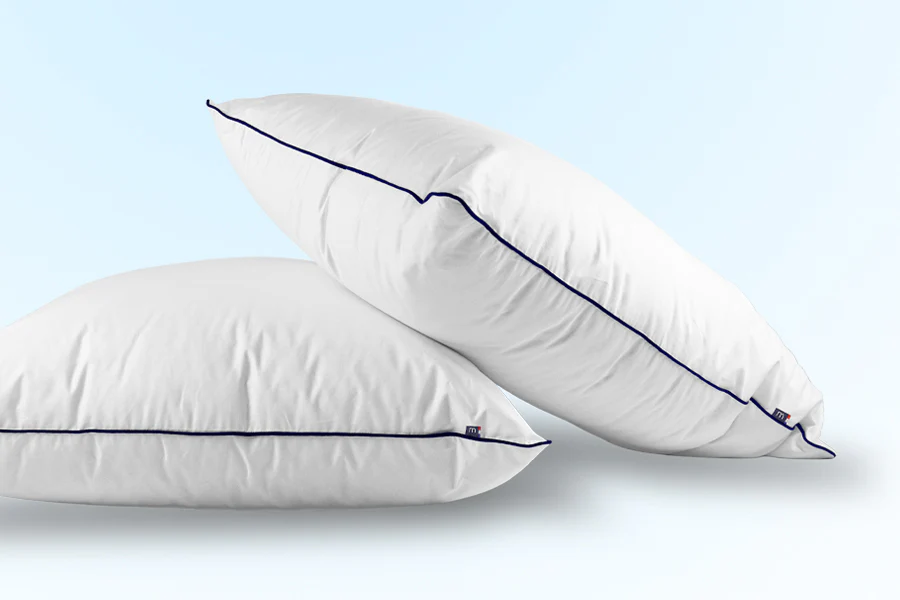
You sweat at night in summer, feel cold as early as October, and your fitted sheet slips off the mattress at three in the morning? In nine out of ten cases, the problem comes from the material, not the model. Percale, jersey, linen, brushed cotton, cotton satin: these terms refer to weaves and fibers with very different thermal behaviors, and choosing the right one can transform your sleep quality without spending a fortune.
Here’s what you really need to know to avoid making a mistake.
The depth of the pocket: before talking about material, the basics
You cannot choose a fitted sheet without checking its pocket depth. This elasticated edge should extend 3 to 5 cm beyond the total thickness of your mattress, including any mattress topper. A 25 cm pocket fits most standard mattresses; if you sleep on a thick model (30 cm or more), go for 30 or 35 cm. This applies regardless of the material: a beautiful linen sheet that comes off every night is of no interest.
Cotton percale: the summer choice (and not just)
Percale is a cotton woven in a plain weave, with one thread on the warp and one on the weft. The result: a tightly woven fabric, slightly crisp to the touch, that allows air to circulate remarkably well. It is the coolest material of all those presented here.
Percale provides particularly appreciated freshness in summer while remaining comfortable in winter thanks to the natural regulation of cotton, without ever feeling heavy.
Thread density plays a significant role in the feel. Percale can be found at around 80, 120, or 200 threads per cm² — an 80-thread percale will be lighter and crisper, while a 120-thread percale will be softer and more durable over time. Beyond that, the gain is mostly marketing.
For whom? Hot sleepers, those who sweat at night, and anyone looking for a year-round sheet that can last for years. Percale wrinkles more than jersey or satin, but that’s the price of its breathability.
See cotton percale fitted sheets on AmazonJersey: immediate comfort, ideal in winter
Jersey is the fabric of your favorite t-shirt adapted for bedding. Its knit structure gives it elasticity in all directions, helping it to fit the shape of the mattress without slipping off, even on very thick models. To the touch, it is immediately soft, almost cuddly.
Thermally, jersey retains more heat than percale. This is a drawback in July, a quality in November. Jersey is often recommended for thick mattresses because its stretchiness perfectly conforms to the shape. If you have a memory foam mattress or a mattress topper, it is also the material that best withstands profile variations.
Its weak point: it ages less well than woven cotton. After many washes, it may slightly deform and lose some of its elasticity.
For whom? Cold sleepers, those who move a lot at night (jersey doesn’t slip), families with children who want a sheet that is easy to put on and take off.
Linen: the reliable choice all year round, and by far the most durable
Linen is the most divisive material: rough to the touch at first, it gradually becomes softer with each wash, reaching a characteristic softness after about ten cycles. If you abandon it after the first wash, you miss out on the essential.
What makes linen remarkable is its natural thermoregulation. The fiber absorbs moisture (sweat in particular) without retaining heat, making it cool in summer; and its hollow fibers create natural insulation that makes it comfortable in winter. It is the only material that truly performs well in both extremes without major compromise.
Some French linen fitted sheets are certified OEKO-TEX® Standard 100, Masters of Linen®, and France Terre Textile®, guaranteeing the origin and traceability of the fibers. These labels are worth checking, as they certify the absence of harmful substances and the European origin of the fibers.
The downside: linen costs more than cotton. A quality washed linen fitted sheet is around €100 and up, depending on size and brand. It’s an investment, but a well-maintained linen sheet can last fifteen years or more.
For whom? Sleepers looking for a year-round solution without changing sheets, people with sensitive skin (linen is naturally hypoallergenic), and anyone willing to accept the inherent wrinkling of the material.
See washed linen fitted sheets on AmazonBrushed cotton and flannel: winter comfort at a low price
Flannel (also called brushed cotton) is mechanically brushed cotton to create a soft, slightly fuzzy surface. It traps air close to the body and creates an immediate feeling of warmth, ideal as temperatures drop.
It is the warmest material of all — a strictly winter quality. In May, a flannel sheet quickly becomes stifling. It is generally reserved for the months from November to March in our regions.
Its advantage: the price. You can find flannel fitted sheets at very accessible prices, often much lower than high-end percale or linen. Its lifespan is decent if maintained at low temperatures (30 °C maximum to avoid shrinking).
For whom? Very cold sleepers, poorly heated rooms, second homes open only in winter. It is not a material for year-round daily use.
Cotton satin: softness and shine, but watch out for heat
Cotton satin (not to be confused with synthetic satin) is woven so that there are four threads on the surface for every one underneath. This creates a smooth, slightly shiny fabric that is very soft to the touch. It is often associated with “hotel bedding.”
For cotton satin, it is preferable to choose a density starting from around 110 threads to ensure good durability and true softness. Below that, the fabric may seem too thin and not very durable.
Thermally, satin is warmer than percale but cooler than flannel. It is well-suited for mid-seasons, autumn-spring. However, it is less breathable than percale: hot sleepers will quickly find it stifling in summer.
For whom? Those who love a silky touch, neutral temperature sleepers, and for year-round use in moderately heated rooms.
How to combine protection and fitted sheet
A fitted sheet, even in premium material, does not effectively protect your mattress from stains, sweat, and dust mites. To preserve your investment, a breathable mattress protector placed under the fitted sheet is essential. Choose it in a material compatible with that of the sheet: a waterproof mattress protector under a percale sheet can cause it to “crackle” and reduce overall breathability.
View on AmazonSummary table: which material for which profile?
| Material | Ideal season | Touch | Durability | Budget |
|---|---|---|---|---|
| Cotton percale | Spring / summer (year-round) | Cool, slightly crisp | Excellent | Medium |
| Cotton jersey | Autumn / winter | Soft, stretchy | Fair | Accessible |
| Washed linen | Year-round | Rustic at first, softens | Very long | High |
| Flannel / brushed cotton | Winter | Soft, warm | Fair | Accessible |
| Cotton satin | Mid-seasons | Silky, smooth | Good | Medium to high |
What we concretely recommend
For the vast majority of sleepers who want a single fitted sheet for all seasons, our preference goes to cotton percale (minimum 120 threads) or washed linen if the budget allows. Percale manages summer heat better, while linen holds up in both extremes without compromise.
If you are cold and sleep in winter in a poorly heated room (less than 18 °C), invest in a jersey or flannel sheet for the cold season, and keep a percale sheet for the rest of the year. The price of a second pair of sheets quickly pays off in comfort.
Avoid pure polyester or predominantly polyester blends: they breathe poorly, accumulate static electricity, and age poorly in washing. Natural fibers always have a real advantage in this regard.
Finally, to avoid choosing the wrong size, measure your mattress before buying: length, width, and thickness. A pocket that is too short is the primary cause of fitted sheets slipping off at night, and this is a mistake that no fabric quality can rectify.
To further equip your bedding, check out our other accessory buying guides .
Frequently Asked Questions
What is the coolest fitted sheet material for summer?
Cotton percale is the most suitable material for hot nights. Its plain weave structure, with thread on thread, creates a tight structure that allows air to circulate and dissipates body heat without retaining it. Unlike jersey or satin, percale does not cling to the skin when sweating. For an even cooler effect, opt for a density of 80 to 120 threads: the fabric remains light and breathable. If you are looking for an even more thermoregulating natural alternative, washed linen also deserves its place in summer as it absorbs moisture without accumulating heat, even though its price is higher.
Is linen fitted sheet really more durable than a cotton sheet?
Yes, and significantly so. Linen fiber is naturally longer and more resistant than cotton fiber. A well-maintained linen sheet, washed at a maximum of 40 °C, preferably air-dried, can last fifteen to twenty years without losing its essential qualities. It does wrinkle a lot, but its durability through repeated washes is superior to that of most standard cottons. In contrast, jersey or flannel starts to deform after several dozen washes. The higher entry-level cost of linen (around €100 for a quality 140×190 cm fitted sheet) should therefore be viewed in light of this lifespan: over ten years, the quality-price ratio is often better than that of cheap cotton replaced every two or three years.
Can you use the same fitted sheet all year round?
It all depends on the material and your profile. Washed linen is the only material that honestly manages both extremes: cool in July, insulating in January. Cotton percale (120 threads) is also suitable for year-round use for neutral temperature sleepers. However, flannel and jersey are really too warm for summer, and lightweight percale may feel cold in an unheated room in winter. The most comfortable solution remains to have two pairs of sheets, one light for April to September, one warmer for October to March, and to adjust your duvet accordingly.
How can you prevent the fitted sheet from slipping off at night?
The primary cause is a pocket that is too short for the thickness of the mattress. Measure the total height of your mattress (and the mattress topper if you have one) and add 3 to 5 cm to find the minimum pocket height. The material also matters: jersey, due to its stretchiness, is the least likely to slip off. A percale sheet with a just-right pocket may slide if the mattress is thick. Some models also offer pockets of all heights with elastic all around (not just at the corners), which significantly improves hold.
Should you prioritize OEKO-TEX certifications for a fitted sheet?
The OEKO-TEX® Standard 100 certification guarantees that the textile does not contain harmful substances in quantities exceeding regulatory thresholds — dyes, formaldehyde, heavy metals. This is a useful guarantee, especially for people with sensitive skin or for children. For linen, complementary labels like Masters of Linen® or France Terre Textile® attest to the European origin of the fibers. These certifications do not say anything about the comfort or durability of the fabric, but they allow you to verify that the product does not pose a health risk. In practice, most serious brands clearly display them on their product sheets.