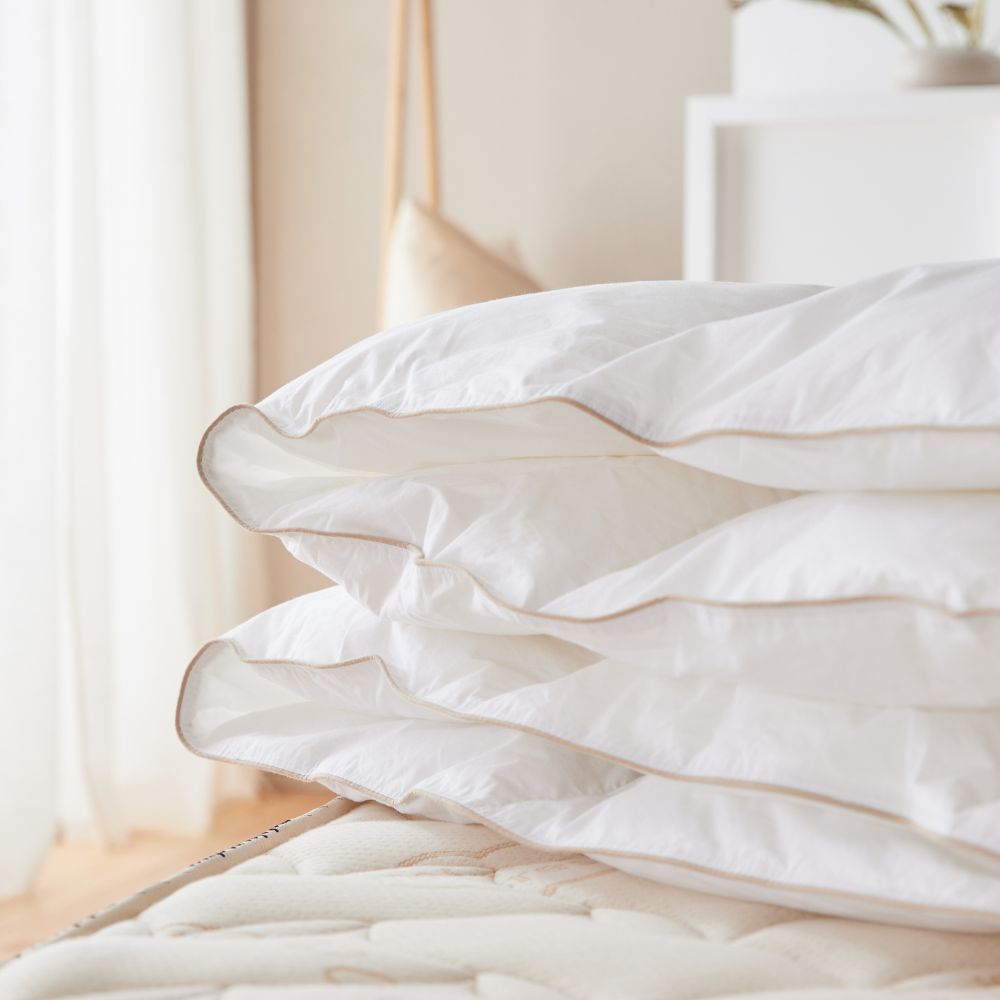
Choosing the right size for your duvet is essential to ensure quality sleep and true nighttime comfort. Between the 220x240 duvet and the 240x260, it’s not always easy to find your way. This guide will help you make an informed choice, tailored to your bed, your needs, and your sleeping habits.
Why is the size of the duvet essential?
The duvet directly influences the quality of sleep. An ill-fitting duvet can lead to nighttime awakenings or feelings of cold, especially when the drop is insufficient on the sides of the bed. Conversely, a well-sized duvet promotes falling asleep, limits heat loss, and avoids nighttime conflicts between two sleepers fighting over the blanket.
Two common mistakes are found:
- A duvet that is too small exposes you to discomfort, cold, and lateral drafts.
- A duvet that is too large can hinder movement if it drags on the floor and gets dirty more quickly.
Essential Selection Criteria
Dimensions: The Foundation of a Good Choice
| Bed Size | Recommended Duvet Size | Drop on Each Side |
|---|---|---|
| 140×190/200 cm | 220×240 cm | 40 to 50 cm |
| 160×200 cm (Queen) | 220×240 or 240×260 cm | 30 to 50 cm |
| 180×200 cm (King) | 240×260 cm | 30 to 40 cm |
- Bed 140×190/200 cm: the 220×240 cm duvet is recommended for generous drop on both sides.
- Bed 160×200 cm: the 220×240 cm is suitable for a discreet drop, but the 240×260 cm is preferable for two sleepers who move a lot.
- Bed 180×200 cm: the 240×260 cm is essential to cover the entire width without leaving one of the two sleepers in the cold.
Filling: Natural or Synthetic?
The choice of filling affects both thermal comfort and maintenance requirements. Duvets with natural filling (goose down, duck down, wool, bamboo fibers) are known for their excellent breathability, lightness, and longevity—provided that washing recommendations are followed, often at low temperatures and in large capacity machines. Synthetic duvets (polyester fibers, microfibers) offer unbeatable value for money: they are hypoallergenic, washable at home from 40 °C, and perfectly suitable for people prone to dust mite allergies.
Weight and Warmth Index
The weight (expressed in g/m²) determines the insulating power of the duvet. Generally, four main categories are distinguished:
- Light (about 180 g/m²): ideal for summer or heavily heated rooms in winter.
- Medium (200 to 250 g/m²): perfect for mid-season, it suits most French rooms with regulated temperature.
- Warm (270 g/m² and above): recommended for those who feel cold, in poorly heated rooms and during harsh winter nights.
- 4 Seasons: a system composed of two duvets that can be joined by snap buttons, offering maximum versatility throughout the year.
Body Type and Sleep Habits
Restless sleepers or those of larger build should choose a duvet that is wider than the strict minimum recommended: this limits tugging and ensures that everyone has a comfortable drop throughout the night. For couples, the golden rule is to always choose the size larger than that of the bed, even opting for two individual duvets if thermal needs differ significantly.
Budget
The price of a 240×260 duvet varies significantly depending on the filling and brand. For entry-level synthetic options, expect prices starting from €40-80; the average price observed in France is around €100, while high-end models in selected goose down can exceed €300. It is worth noting that a quality duvet lasts 5 to 10 years: the investment quickly pays off in relation to the number of nights of sleep.
Find a 240×260 duvet on Amazon — compare models and pricesSummary Table: Duvet Size Guide
| Bed Size | Mattress (cm) | Recommended Duvet (cm) | For Whom? |
|---|---|---|---|
| Standard Double Bed | 140×190/200 | 220×240 | 1 to 2 people, generous drop |
| Queen Size | 160×200 | 220×240 or 240×260 | 2 people, depending on preferences |
| King Size | 180×200 | 240×260 | 2 people, great freedom of movement |
| Very Large Bed | 200×200 | 260×240 or 280×240 | 2 people, maximum drop |
Recommended Duvets Selection
Tediber — Lightweight and Breathable Duvet
The Tediber duvet is made in France and stands out for its cotton cover and hypoallergenic microfiber filling. Lightweight and breathable, it is suitable for both temperate rooms and hot sleepers. It is fully machine washable, making long-term maintenance easy.
Search for the Tediber duvet on AmazonDodo — Warm Goose Down Duvet 240×260
The Dodo range offers several models in goose down with a percale cotton cover, particularly appreciated for cold nights. The manufacturing complies with European animal welfare standards, and the duvets benefit from the Sanitized® anti-mite treatment.
- Natural filling in goose down
- Percale cotton cover
- Very warm, fluffy, anti-mite
- Made in France
Bleu Câlin — 4 Seasons Duvet 240×260
The Bleu Câlin 4 Seasons system consists of two duvets that can be assembled with snap buttons. With a synthetic filling washable at 40 °C, it is a versatile and economical option, ideal for budget-conscious individuals or those whose thermal needs vary significantly from season to season.
- Two duvets that can be assembled (light + medium)
- Synthetic filling, washable at 40 °C
- Versatile and economical
Pyrenex — Duck Down Duvet 220×240
Pyrenex is a Gascon company specializing in feathers and down since 1859. Its duck down duvets combine lightweight and high insulating power, with a cotton cover and fully French manufacturing.
- Duck down, cotton cover
- Warm, lightweight, and breathable
- Made in France
Someo — Prestige Hotel Duck Down Duvet
The Someo duvet is aimed at those seeking hotel-quality for their bedroom. Composed of 70% down and 30% duck feathers, with an anti-down percale cover, it holds the Entreprise du Patrimoine Vivant (EPV) label and is used in 5-star hotels.
View on Amazon- 70% down, 30% duck feathers
- Anti-down percale cover, soft and durable
- EPV label, machine washable and dryable
Expert Tips: Mistakes to Avoid and Maintenance
Common Mistakes
The first mistake, by far the most common, is choosing a duvet that is the exact size of the bed, without considering the necessary overhang. A 200×200 cm duvet on a 200×200 cm bed offers no lateral overhang and will consistently leave one of the two sleepers exposed. The second mistake is neglecting the warmth index in relation to the actual room temperature: a winter duvet used in a room at 20 °C can cause night sweats and disrupt sleep. Finally, many underestimate the importance of filling in terms of allergies: a sleeper sensitive to dust mites should always check for the label “hypoallergenic” or “dust mite treatment” before purchasing.
Maintenance Tips
- Wash the duvet 1 to 2 times a year, in a large drum washing machine or at a laundromat for larger sizes.
- Air the duvet regularly, ideally outside, to limit humidity and the accumulation of dust mites.
- Always use a duvet cover that fits the size: it protects the filling and reduces the frequency of washes.
- After washing a down duvet, run several low-temperature drying cycles with dryer balls to avoid clumping.
To complete your bedding, also consider mattress protectors and mattress pads that contribute to the overall hygiene of the sleeping environment.
View on AmazonSpecific Profiles
- Allergy sufferers: opt for synthetic duvets with certified Oeko-Tex® or Sanitized® dust mite treatment.
- Restless sleepers: prefer larger sizes (240×260 cm), or even two individual duvets if you sleep as a couple.
- Cold sleepers: prioritize natural goose or duck down, or a weight greater than 300 g/m² for the coldest nights.
To discover more guides on the world of bedding accessories, check out our dedicated section on choosing your accessories .
FAQ: Your Most Frequently Asked Questions
What size duvet for a bed 140×190 cm?
The ideal size is 220×240 cm, which guarantees a drop of 40 to 50 cm on each side of the mattress. This overhang is important as it retains heat along the body and prevents lateral drafts, which can be particularly bothersome in winter. If you sleep alone and tend to wrap yourself in your duvet, you might even consider the 240×260 cm for maximum comfort without ever being left exposed. In any case, avoid duvets smaller than 220×240 cm for this type of bed: the drop would be insufficient.
What size duvet for a bed 160×200 cm?
For a 160×200 cm bed (commonly referred to as Queen size), you have two options. The 220×240 cm duvet offers a drop of about 30 cm on each side — sufficient for a single person or a couple of calm sleepers. The 240×260 cm is strongly recommended for two sleepers who move a lot at night, as it guarantees a drop of 40 to 50 cm and significantly limits nighttime conflicts. If your budget allows, it is better to consistently choose the larger size for a double bed: the extra comfort is immediately noticeable.
Which duvet to choose for a bed 180×200 cm?
On a 180×200 cm bed (commonly referred to as King size), the 240×260 cm duvet is the only truly suitable option for two sleepers. It offers a drop of 30 to 40 cm on each side, allowing each person to have a comfortable covering without encroaching on the other’s space. The 220×240 cm duvet would be too narrow and would inevitably leave one of the two sleepers without sufficient overhang. For very large beds (200×200 cm), you should even consider sizes 260×240 or 280×240 cm, or even two individual duvets.
Can you take a duvet larger than recommended?
Yes, absolutely, and it is often a good idea. Choosing a slightly oversized duvet compared to standard recommendations is particularly wise if you sleep two and one of you tends to monopolize the duvet, if you are sensitive to the cold and want to wrap your shoulders and feet without the risk of being exposed, or if your mattress is elevated (with a storage box spring or thick mattress topper). The only limit to keep in mind is that the duvet should not drag on the floor, as this would promote dirt and humidity.
How to choose between natural down and synthetic filling?
Natural down (goose or duck) offers an unbeatable warmth-to-weight ratio: it effectively insulates while remaining very light and breathable, making it the preferred choice of luxury hotels and demanding cold sleepers. Its lifespan can exceed 15 years with proper care. However, its price is higher (starting from ~€100 for a duck down in 240×260 cm, and much more for goose down) and its washing requires a large drum machine. Synthetic filling, on the other hand, is recommended for people allergic to dust mites or feathers: it is hypoallergenic by design, easily washable at 40 °C in a domestic machine, and its price is accessible from ~€40-50. However, its lifespan is shorter (5 to 7 years on average).
What is the difference between a medium duvet and a 4-season duvet?
A medium duvet is a single product designed for a specific temperature range — it is typically suitable for spring, autumn, and heated rooms in winter. A 4-season duvet is actually a system made up of two independent duvets (one light and one medium) connected by snap buttons: used separately in summer or mid-season, they combine to form a warm duvet in winter. This is the most versatile solution, but it represents a higher initial investment and its assembly must be redone with each change of season.