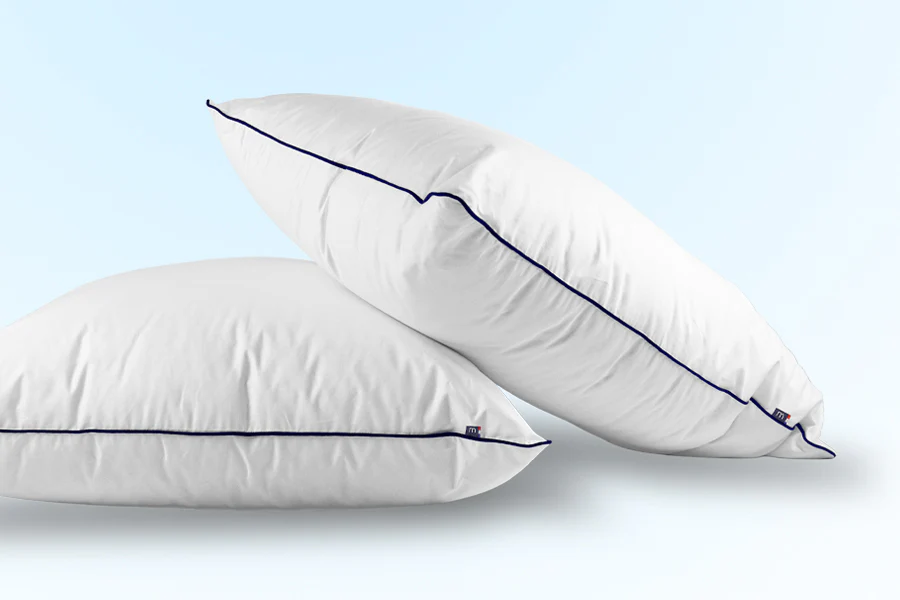
Two people complain about poor sleep. One wakes up every morning with a painful neck and tension radiating to the shoulders. The other — or their partner — suffers from snoring that disrupts the nights and exhausts the entire household. In both cases, they are often advised to get “a special pillow.” But what kind of pillow are we talking about exactly? An ergonomic cervical pillow and an anti-snoring pillow do not address the same problem, do not work on the same principle, and do not always cater to the same sleeper. Confusing them risks spending money without solving anything.
This guide helps you identify your main problem, understand the logic of each type of pillow, and then choose — or combine — the right product in 2026.
Two distinct problems, two different approaches
Before comparing products, it is important to clarify what each one addresses.
Cervical pain occurs when the cervical spine is not maintained in its natural alignment during sleep. The head tilts too far forward, too far back, or twists laterally, causing muscle tension, contractions, and sometimes tingling upon waking. The problem is primarily mechanical and postural.
Snoring, on the other hand, results from a partial obstruction of the upper airways. When the throat muscles relax during sleep, the soft tissues vibrate due to the airflow — this is the characteristic noise. An anti-snoring pillow does not make snoring disappear magically, but it can help adopt a better sleeping position to keep the airways more open. The problem is therefore respiratory and positional, and can have multiple causes that go beyond just the pillow (for complete medical context on the causes of snoring, a dedicated article provides more information).
These two problems can coexist — and some products attempt to address them together — but they deserve to be treated separately before seeking a compromise.
The ergonomic cervical pillow: who is it for?
How it works
An ergonomic pillow does not solely serve to provide comfort to sleepers. Well-suited to the sleeping position and body shape of each individual, it contributes to the support and maintenance of the head and neck. In practice, it aims to fill the natural hollow formed between the shoulder and the head when lying down, so that the cervical vertebrae remain aligned with the rest of the spine.
The memory foam pillow is the undisputed star thanks to its viscoelastic technology: it reacts to the heat and pressure of your body to perfectly mold to your contours and offer customized support. The famous wave-shaped models, with their two height levels, are designed for very precise neck support: they allow you to choose the side that best suits your morphology.
Common materials
- Memory foam (viscoelastic): the most common choice. It conforms to the curves without exerting counter-pressure, relieving tension points. In the case of cervical pain, the ideal pillow should neither be too soft nor too firm, and it should not be too thin either. It is often made of viscoelastic memory foam that molds to the curves of the neck.
- Natural latex: natural latex has a longer lifespan than synthetic foams. It offers a livelier bounce than memory foam and is suitable for sleepers who frequently change positions.
- Alternative fillings (bamboo fibers, kapok, down): they provide softness but less structural support. They are more suited for sleepers without specific pain than for those seeking therapeutic support.
Who is the cervical pillow suitable for?
The ergonomic cervical pillow is for you if:
- you regularly wake up with neck, shoulder pain, or headaches;
- your current pillow is too flat, too high, or deforms quickly under the weight of your head;
- you primarily sleep on your back or side (stomach sleepers have very different needs);
- you want to prevent the worsening of chronic muscle tension.
The shape, thickness, size, firmness, and filling of the pillow have a direct impact on its quality and its ability to prevent or relieve cervical pain. There is therefore no universal model: the optimal height depends notably on the width of your shoulders and your usual sleeping position.
View on AmazonThe anti-snoring pillow: how does it work?
Positional logic
These pillows feature a concave configuration in the middle with thicker and fairly solid edges. This style is effective for achieving sleeping positions that keep your airways open and prevent snoring. By keeping the head slightly tilted and the chin away from the chest, they reduce the compression of soft tissues in the throat — and thus the vibrations responsible for the noise.
It is important to be aware of the limitations of this type of product: although the term “anti-snoring” is somewhat exaggerated, most memory foam pillows still provide better positional support. In other words, if your snoring is mild to moderate and related to poor neck positioning, an appropriate pillow can make a real difference. However, if you suffer from diagnosed sleep apnea or significant anatomical obstruction (deviated septum, enlarged tonsils, etc.), no pillow will replace medical advice and appropriate treatment.
Shapes and technologies
Anti-snoring pillows come in several approaches:
- Inclined profile: the head rests slightly higher than the shoulders, which clears the air passage without straining the neck.
- Central hollow shape: the skull is kept stable, with the neck supported on the elevated sides — here we find the concave design described earlier.
- Adjustable models: some allow you to adjust the height by removing or adding internal filling, which is particularly useful for sleepers who change positions (back/side) during the night.
- Adapted memory foam: viscoelastic foam is often used because it maintains position without creating a hard point under the occiput.
Who is the anti-snoring pillow suitable for?
This type of pillow is relevant if:
- you primarily snore in the supine position (on your back), which is the most common case;
- your snoring is mild to moderate, without observed breathing pauses by those around you;
- you have not yet been diagnosed with sleep apnea;
- you are looking for a simple, non-invasive, and accessible solution before considering medical devices.
Quick comparison table
| Criterion | Ergonomic cervical pillow | Anti-snoring pillow |
|---|---|---|
| Target problem | Cervical pain, muscle tension | Snoring related to position |
| Mechanism | Postural alignment of the spine | Opening of the airways |
| Typical materials | Memory foam, latex, wave | Memory foam, inclined or concave profile |
| Ideal position | Back or side (appropriate height) | Mainly back, some models suitable for side |
| Limitations | Does not address respiratory causes | Ineffective for severe apnea or anatomical causes |
| Indicative price | Starting from ~€30 (entry-level) to over €100 (premium models) | Entry-level to premium, similar range |
What if you have both problems at the same time?
This is a more common situation than one might think: snoring and cervical tension can coexist, and one can even exacerbate the other. A snorer who tries to change position several times a night often ends up with a tense neck. Conversely, poor cervical positioning can reduce space in the airways and amplify snoring.
In this case, two options are available to you:
- Look for a hybrid pillow: several ergonomic models, particularly those made of memory foam with a wave profile, offer a geometry that ensures both cervical support and a slight opening of the airways. This is not a magical “two-in-one” pillow, but for mild problems on both fronts, this compromise may be sufficient.
- Prioritize the most impactful problem: if your snoring is severe and disrupts your relationship or deep sleep, start with an anti-snoring pillow and evaluate. If your cervical pain dominates your daily life, invest first in an ergonomic pillow and see if the snoring improves in parallel.
In any case, allow for an adjustment period of at least two to three weeks before judging a pillow. The body takes time to get used to new postural support — the first nights may even be less comfortable than usual, which is normal.
View on AmazonCriteria to check before buying
Regardless of the type of pillow targeted, a few points deserve your attention before placing an order:
- Height (loft): this is often the most decisive criterion. If too low, the pillow does not provide support; if too high, it strains the neck. Side sleepers generally need a greater height than those who sleep on their back.
- Firmness: a pillow that is too soft collapses under the weight of the head and loses its structural interest. A pillow that is too firm can create new tensions. Memory foam offers a good balance as it compresses gradually.
- Breathability: check that the materials are breathable, an important detail if you tend to sweat at night. Open-cell foam, ventilated latex, or bamboo covers are good options for hot sleepers.
- Cover and maintenance: a removable and machine-washable cover is essential for hygiene. Check the recommended washing temperature and whether the pillow itself can be cleaned.
- Trial period: many brands offer trial periods of 30 to 100 nights. This is a real advantage for this type of purchase, where only real-world testing can validate the choice.
To refine your search among all the types of pillows available in 2026, you can consult our complete guide to bedding accessories .
FAQ
Can an anti-snoring pillow replace medical treatment for sleep apnea?
No, and it is important to emphasize this clearly. The anti-snoring pillow only acts on the position of the neck and head during sleep, which can reduce mild to moderate snoring related to poor alignment. However, sleep apnea is a serious respiratory disorder, characterized by repeated breathing pauses and oxygen desaturation, which requires medical diagnosis (often through polysomnography) and appropriate treatment — the most common being continuous positive airway pressure (CPAP). If those around you report breathing pauses, sudden awakenings, or persistent daytime fatigue despite sufficient sleep duration, consult a doctor or sleep specialist before investing in a pillow. No bedding accessory, however well-designed, can substitute for medical care.
What is the difference between a cervical pillow and an orthopedic pillow?
In common language, the two terms are often used interchangeably, but there is a nuance. A cervical pillow refers to any pillow designed specifically to support the cervical region (the first seven vertebrae of the neck). An orthopedic pillow is a broader concept that can apply to devices recommended in a rehabilitation or medical follow-up context, sometimes on prescription. In practice, most pillows sold under these two names share the same characteristics: memory foam, wave profile, or anatomical contour, height calculated to maintain spinal alignment. If you have significant chronic pain, your doctor or physiotherapist may guide you towards a specific model rather than leaving you to choose alone from the commercial offering.
Should you choose a different height depending on whether you sleep on your back or side?
Yes, and this is one of the most important criteria to consider. In the supine position (on your back), the distance between the head and the mattress is relatively small: a pillow of moderate height is sufficient to support the natural curvature of the neck without tilting the chin towards the chest. In the lateral position (on your side), this distance roughly corresponds to the width of the shoulder, which is much greater. A pillow that is too low will cause the head to sag laterally, creating tension on the side of the neck. A pillow that is too high, on the other hand, will exert upward pressure. If you frequently change positions during the night — which many sleepers do without realizing it — prefer an adjustable model or a wave-shaped pillow that offers two different heights on each side.
How long should you keep an ergonomic pillow before replacing it?
The lifespan of an ergonomic pillow varies depending on the material. A quality memory foam pillow can last between five and eight years, provided it is properly maintained (cover washed regularly, pillow protected from moisture). Natural latex is even more durable. In contrast, pillows made of synthetic fibers or down lose their support much faster — often after two to three years. To assess whether your pillow is worn out, two simple tests: lay it flat and press down with your palm; if it does not return to its original shape within a few seconds, the foam is fatigued. Second test: fold it in half; if it stays folded, it’s time to replace it. A sagging pillow no longer supports the cervical area and can even worsen pain.
Do anti-snoring pillows work for side sleepers?
Most snorers suffer more in the supine position, as this is when the tongue and soft tissues of the throat tend to fall backward and narrow the airway. Side sleepers generally snore less, which is why the classic advice is to change position. Some anti-snoring pillows are specifically designed for the back, with an elevated or inclined profile that encourages this position. Others are adapted for the side, with reinforced lateral support. If you naturally sleep on your side and still snore, this may indicate other factors (overweight, nasal congestion, alcohol consumption in the evening) and justifies a medical consultation to identify the precise cause before investing in a specialized pillow.
Can you use an ergonomic pillow and an anti-snoring pillow at the same time?
Stacking two pillows is rarely a good idea: it excessively elevates the head and creates forced flexion of the neck, which aggravates cervical tension rather than relieving it. However, some models on the market seek to combine both functions into one pillow: they offer an ergonomic profile that supports the cervical area while keeping the head in a position conducive to opening the airways. If you have both problems, look for this type of hybrid product and read the technical description carefully (height, angle of inclination, filling) rather than relying solely on the marketing term. A generous trial period — at least 30 nights — will allow you to verify in real conditions whether the model meets both of your needs.