A natural latex mattress, recognized for its durability, comfort, and hypoallergenic properties, is not enough to guarantee quality sleep if it is not paired with an appropriate bed base. The latter ensures optimal support, promotes ventilation, and extends the lifespan of the mattress. If poorly chosen, it can compromise all the benefits of your bedding. This guide will help you make an informed, sustainable, and responsible choice.
Why is the choice of bed base crucial for a natural latex mattress?
Natural latex mattresses are heavier than foam or spring models. Their soft structure requires a stable and breathable support. An unsuitable bed base can:
- Compromise the ventilation of the latex, which is sensitive to humidity
- Accelerate the wear of the mattress
- Deform the sleeping surface
- Harm sleep quality and cause back pain
Important selection criteria
1. Recommended type of bed base
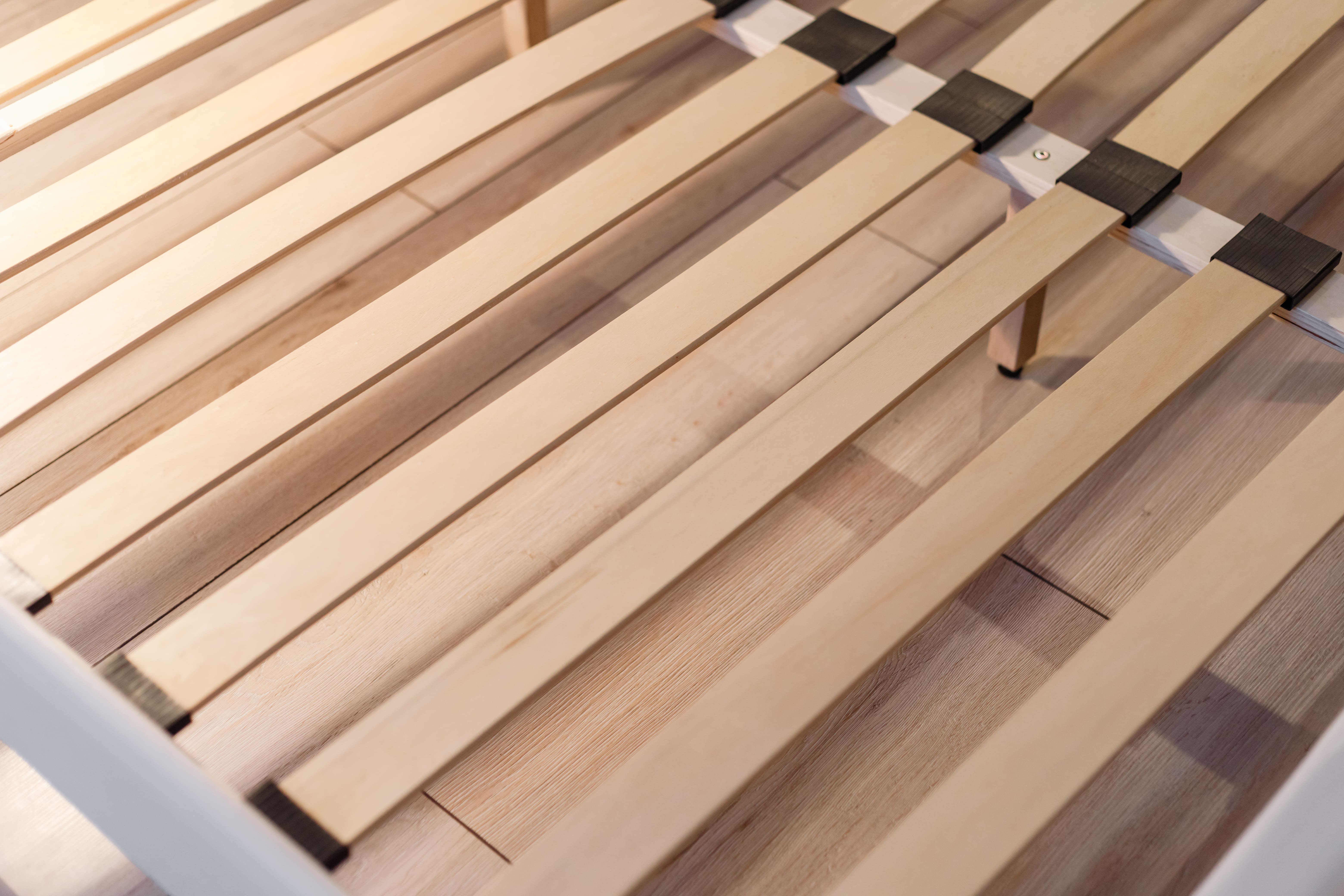
- Fixed or active slatted bed base: ideal for ensuring good ventilation and supporting the flexibility of latex
- Upholstered bed base with visible slats: possible as long as the slats are well visible and spaced
- Adjustable or electric bed base: recommended for personalized comfort and soft latex mattresses
2. Slat spacing
Should not exceed 5 cm to prevent the mattress from sinking or wearing out prematurely.
3. Suitable dimensions
Bed base and mattress must have the same dimensions for proper support (e.g., 140x190, 160x200, etc.).
4. Comfort zones
Some bed bases offer differentiated zones (shoulders, hips) that complement the ergonomic qualities of natural latex.
5. Responsible materials
Prefer FSC or PEFC certified woods, solvent-free glues, and local manufacturing.
6. Budget to consider
From €200 to €800 depending on materials, finishes, and technology.
Our recommendations for bed bases for natural latex mattresses
Natural Wood Bed Base – Cosme Literie
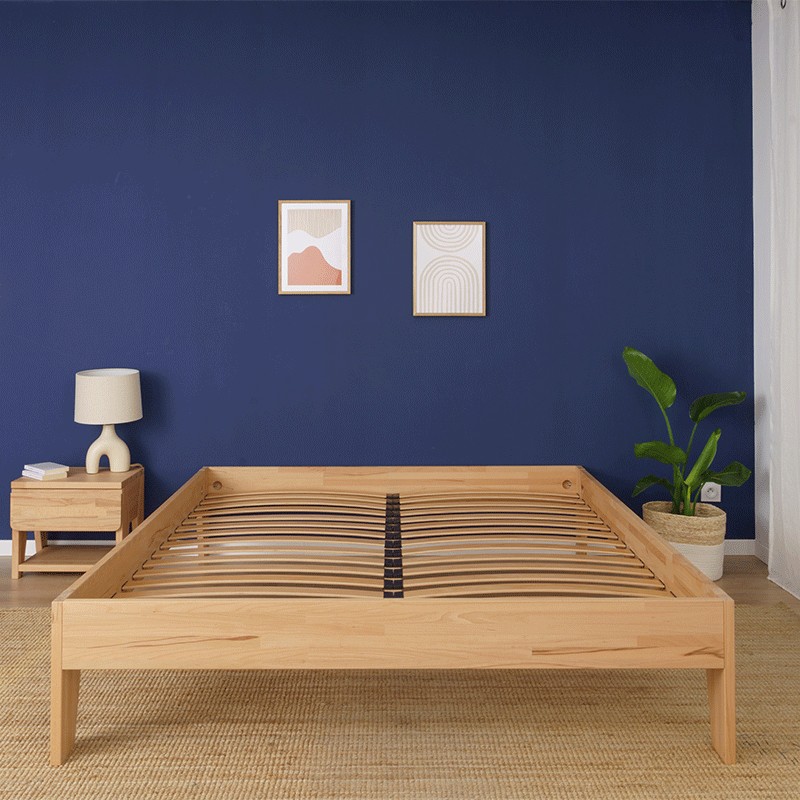
Description: Slatted bed base made of poplar wood from sustainably managed French forests, untreated, without toxic glue
Key advantages: Optimal ventilation, solid wood, high-end finish
Upholstered Bed Base Kipli – Version 2
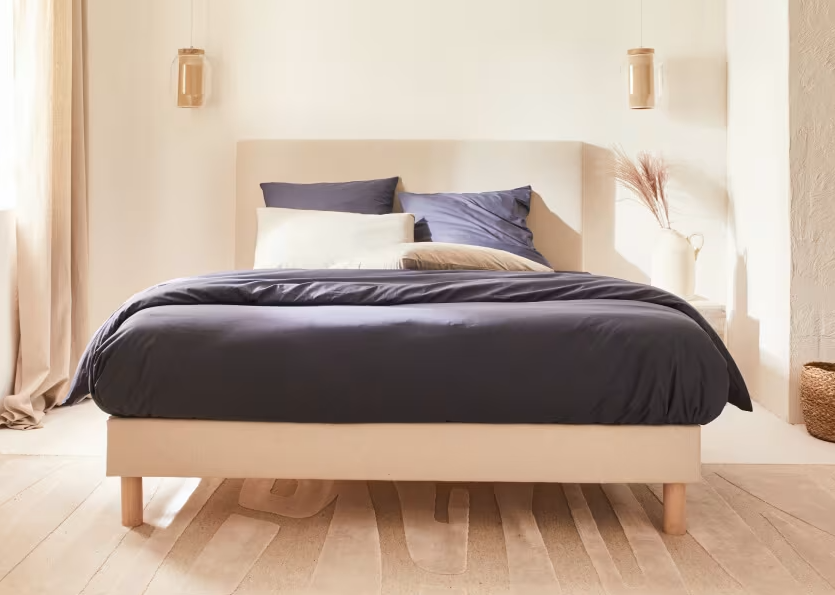
Description: Solid beech wood bed base certified PEFC, upholstered with natural materials, without foam or chemical glue
Key advantages: Firm comfort, eco-friendly design, understated aesthetics
Hossegor Bed in Landes Pine – Biosense
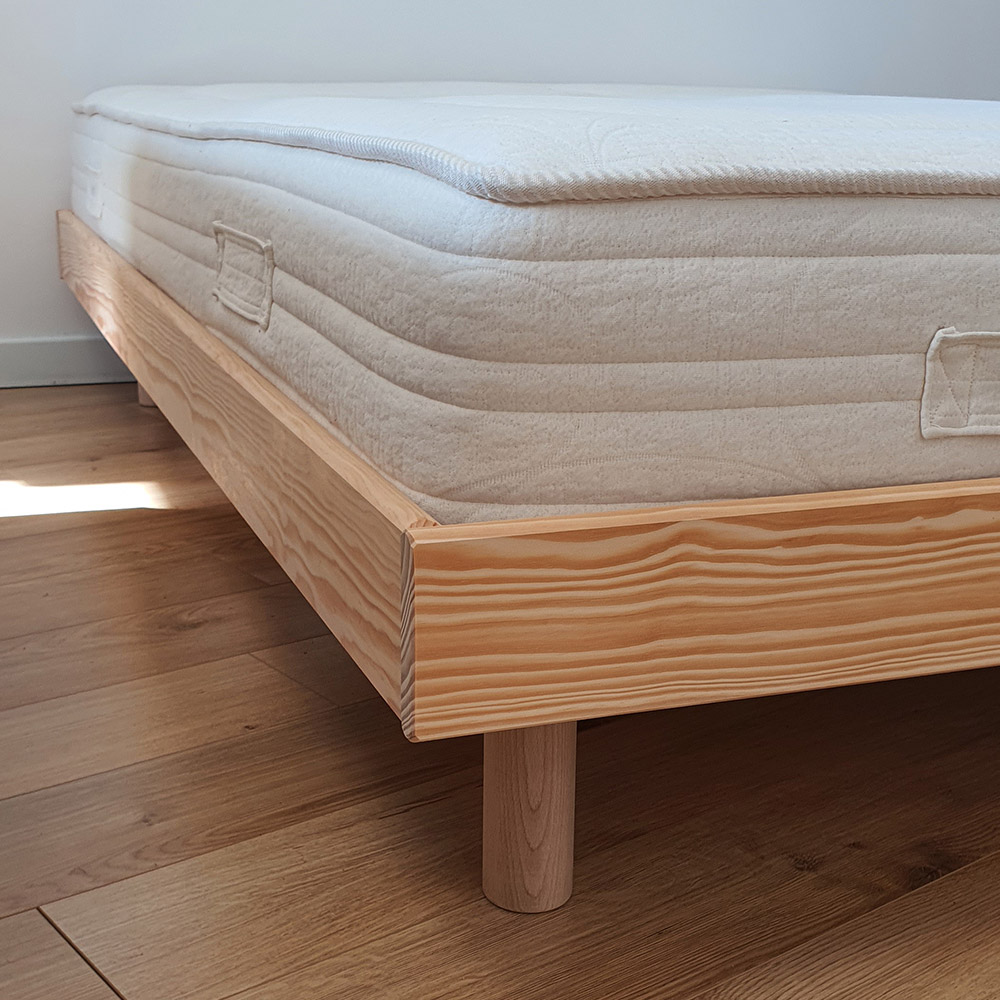
Description: Complete bed with integrated bed base, made of untreated local solid pine, compatible with natural latex mattresses
Key advantages: Local manufacturing, raw materials, natural design
Deco Slatted Bed Base – Matelas No Stress
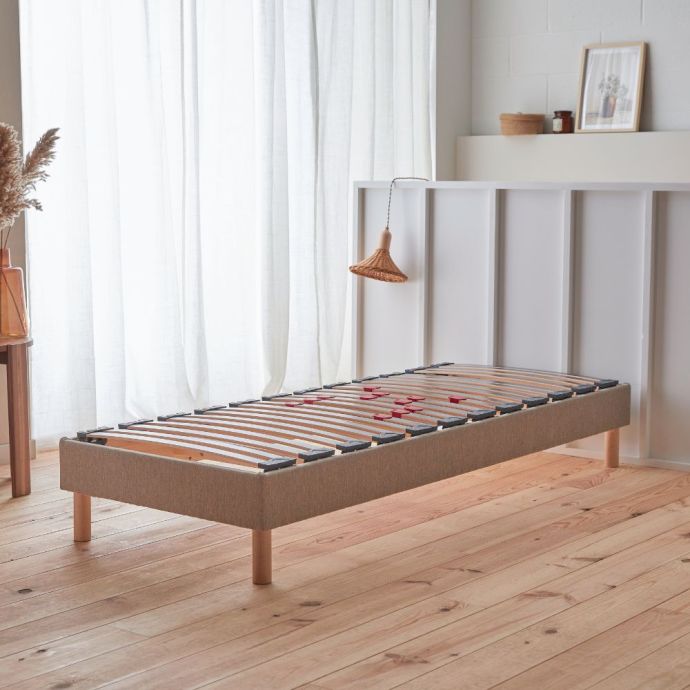
Description: Fixed slatted bed base, decorative fabric covering, compatible with natural latex mattresses
Key advantages: Excellent value for money, neat aesthetics, assured ventilation
Expert tips
- Avoid spring bed bases: incompatible with the structure of natural latex
- Check latex/bed base compatibility: the space between slats should be minimized
- Maintain hygiene: regularly clean your bed base, and avoid placing it against the wall
- Test the combination: if possible, try your mattress on different bed bases to feel the differences
To go further, consult our guide to extending the lifespan of your mattress and our guide on mattress protectors .
View the slatted bed bases Someo – made in France, compatible with natural latex Discover the natural latex mattress Kipli and its recommended bed baseFAQ
Can I reuse my old bed base with a natural latex mattress?
Yes, provided you check three essential points. First, the spacing between the slats: it should not exceed 5 cm, otherwise the latex will sink into the gaps and wear out prematurely. Next, the condition of the slats: cracked, sagging, or missing slats should be replaced before placing a new latex mattress on it. Finally, the type of bed base: an upholstered bed base with a solid surface (without visible slats) or a spring bed base is not recommended for natural latex, as they block the ventilation that latex needs to release moisture. If your old bed base meets these criteria, you can reuse it without any problem.
Is a solid wood bed base always better?
For a natural latex mattress, yes: solid wood is generally the best choice. It is sturdy (latex is heavier than foam, often 25 to 35 kg for a 160x200), durable, and offers natural ventilation thanks to the wood fibers. Choose FSC or PEFC certified species (beech, oak, pine) and without chemical treatment — glue, varnish, or fire retardants can emit VOCs incompatible with healthy bedding. Composite wood (MDF, particle board) is less recommended: less durable over time and often treated with formaldehyde glues.
Should I prefer a soft or firm bed base?
For a natural latex mattress, a slightly firm bed base is generally recommended. Latex is already an elastic and adaptive material — if the bed base is also very soft, the overall support will lack the necessary support to properly maintain the spine. In practice: choose a fixed or semi-rigid slatted bed base if your latex mattress is soft to medium, and active slats (flexible and articulated) if your latex mattress is firm. For individuals over 80 kg, a reinforced bed base with slats 8 cm wide spaced 3 to 4 cm apart is recommended.
Is an electric bed base compatible with a natural latex mattress?
Yes, and it is even a very successful combination. Natural latex is one of the most compatible materials with articulated electric bed bases, as it is extremely flexible and does not deform when changing the angle of the backrest or legs. Unlike spring mattresses that resist bending, latex perfectly follows the joints without constraint. Just ensure that the electric bed base has flexible slats (not a solid board) to maintain good ventilation, and that the dimensions match exactly with your mattress to prevent any slipping.
Does a bi-face latex mattress require a specific bed base?
No, the criteria remain the same: close slats (≤ 5 cm), good ventilation, exact dimensions. The only practical difference is that you will regularly flip your mattress (every 3 to 6 months) to wear both sides evenly — so make sure your bed base is accessible from both sides to facilitate this handling. If your bed is embedded against a wall, a bed base on wheels or a lightweight frame makes maneuvering easier. Also consider using a reversible mattress protector to maintain the same hygiene guarantees on both sides.