A memory foam mattress is a true revolution in the world of sleep. Its viscoelastic technology allows for a customized welcome and relief of pressure points. But to reap all the benefits, it must be paired with a compatible bed base. An unsuitable bed base can impair its performance and even reduce its lifespan.
This guide helps you understand why the bed base plays a key role, what criteria to prioritize, and offers a selection of recommended products to make an informed choice. To further assist in your purchasing decision, also consult our complete guide to choosing a memory foam mattress .
Why is the choice of bed base essential?
A good bed base is much more than just a support: it directly influences the firmness, lifespan of the mattress, and the quality of sleep. Here’s why:
- Optimization of mattress performance: memory foam reacts to body heat. A bed base that is too rigid or too soft alters its behavior.
- Ventilation of the mattress: viscoelastic foam can retain heat. An appropriate bed base ensures good airflow to prevent moisture buildup.
- Even support: a quality bed base maintains spinal alignment and complements the mattress’s action.
If you are still unsure between the different types of bed bases available on the market, our guide to choosing a bed base will help clarify things.
Important selection criteria
1. Bed base core: slats or points?
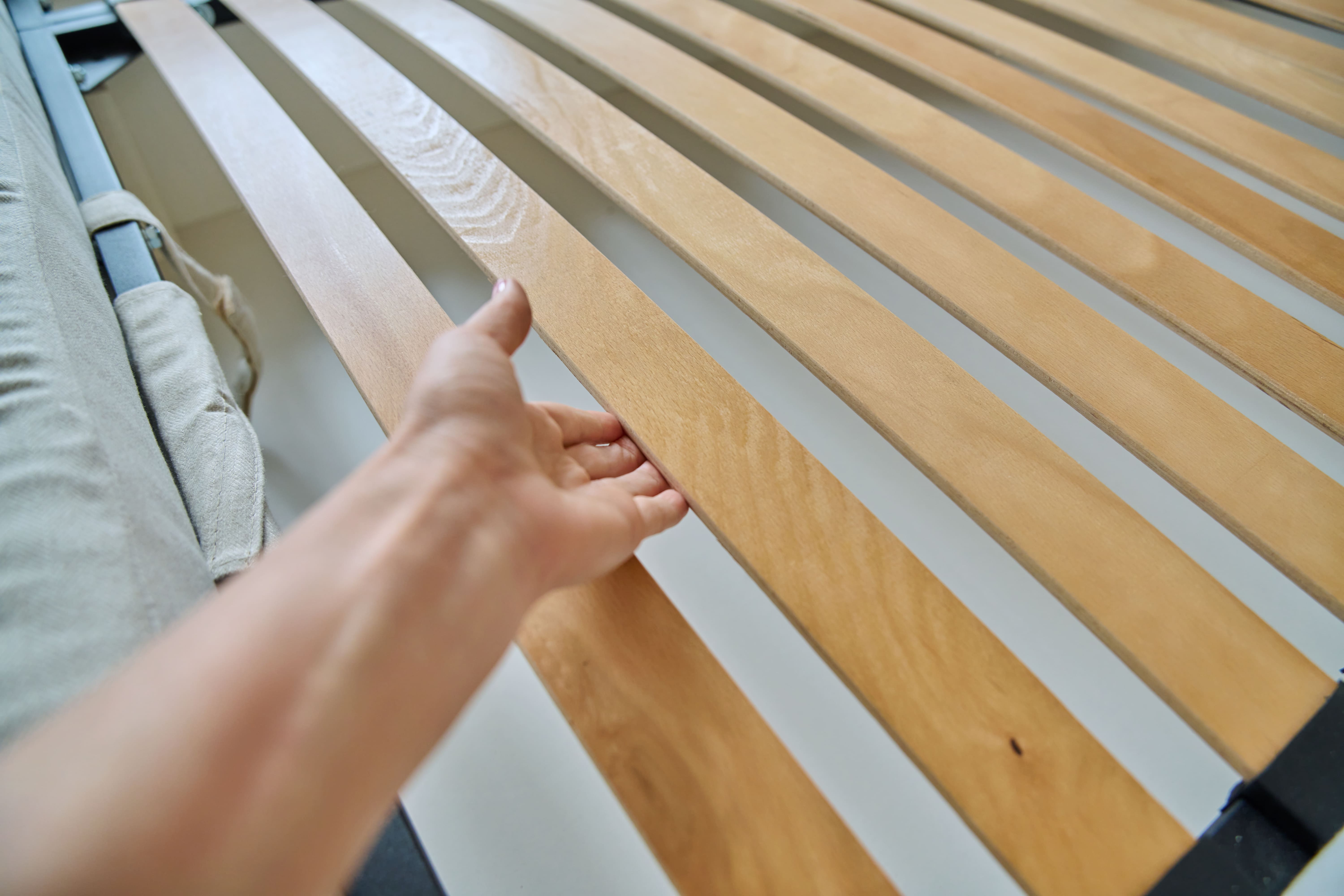
- Multi-layer slatted bed base (fixed or active): recommended for its precise support and natural ventilation.
- Pointed bed base: rarer and more expensive technology, but offers adaptive comfort point by point.
- To avoid: spring bed bases, which are not very compatible with memory foam.
2. Firmness of the bed base
A bed base that is too soft weakens the support of the mattress. Opt for a medium to firm firmness.
3. Active or passive suspension
- Active suspension: articulated slats that follow movements for dynamic comfort.
- Passive suspension: fixed slats, simpler but stable.
4. Morphological compatibility
For heavier body types (>90 kg), a reinforced active slatted bed base is recommended.
5. Dimensions and height
The bed base must perfectly match the dimensions of the mattress. Height also influences access to the bed and aesthetics.
6. Budget
- Fixed slatted bed base: from €150
- Active slatted or pointed bed base: from €300 to €800 depending on options.
Our Product Recommendations
Kipli Active Slatted Bed Base in Solid Wood
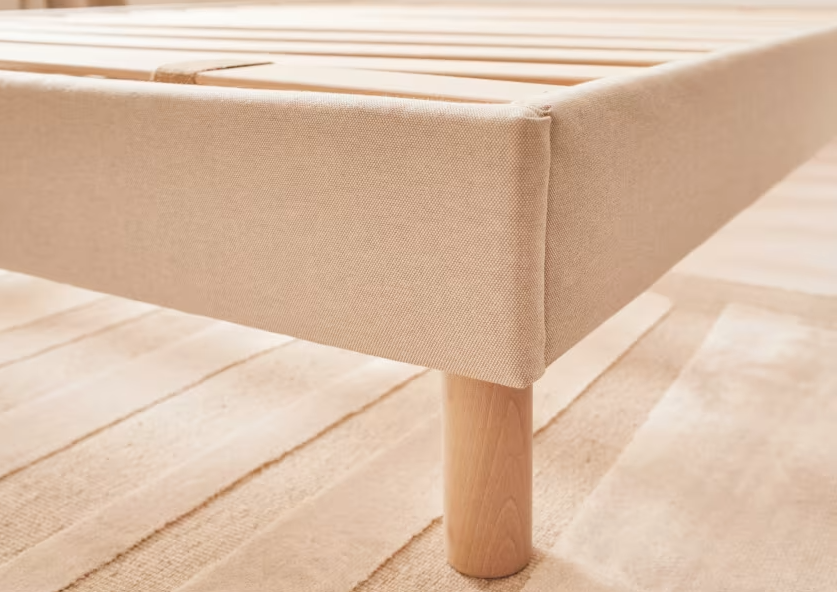
- Eco-friendly manufacturing, flexible beech plywood slats
Bultex Comfort Upholstered Bed Base with Active Slats
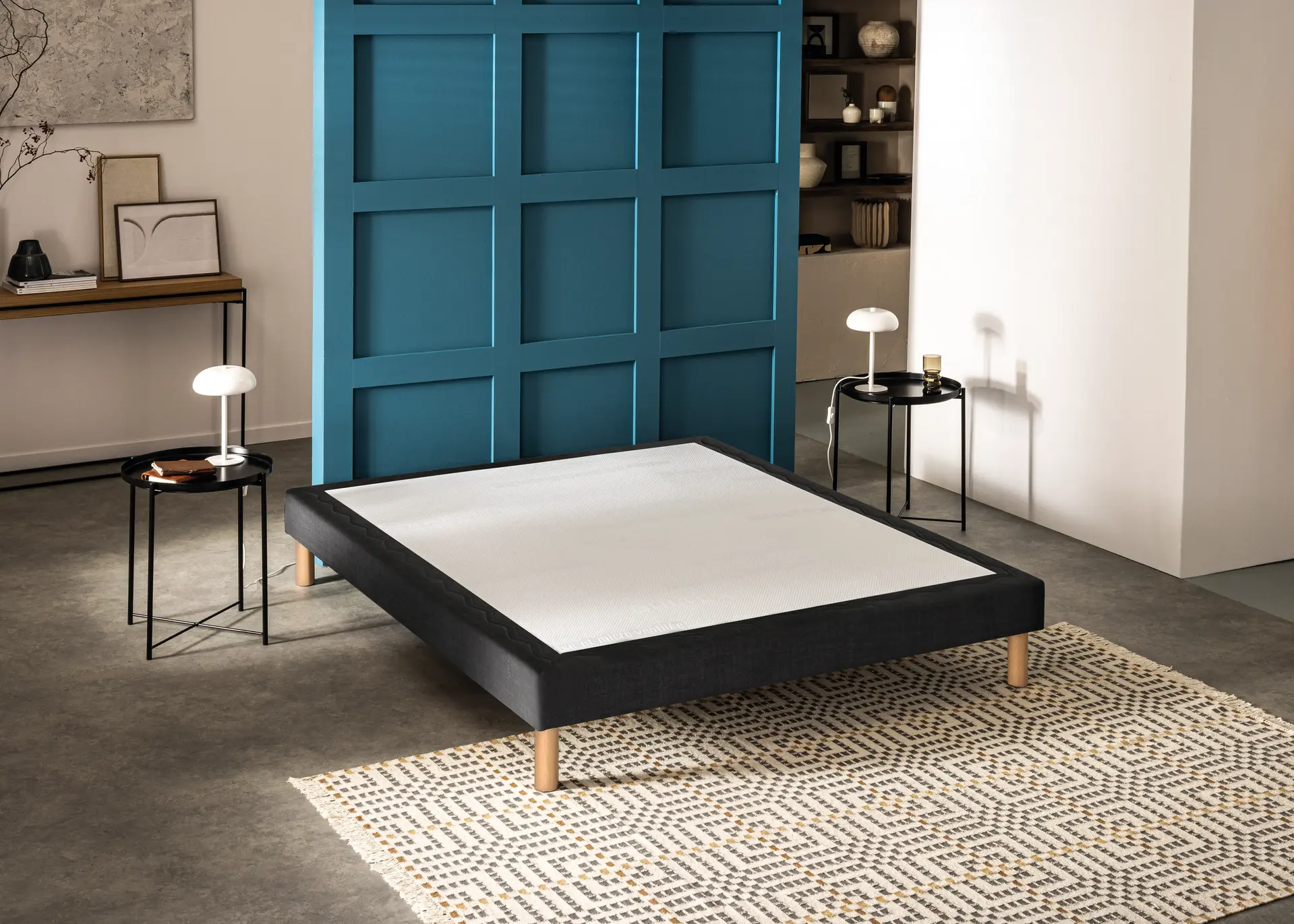
- Solid pine structure, upholstered finish, active slats
Dunlopillo Tradisom Bed Base with Fixed Slats
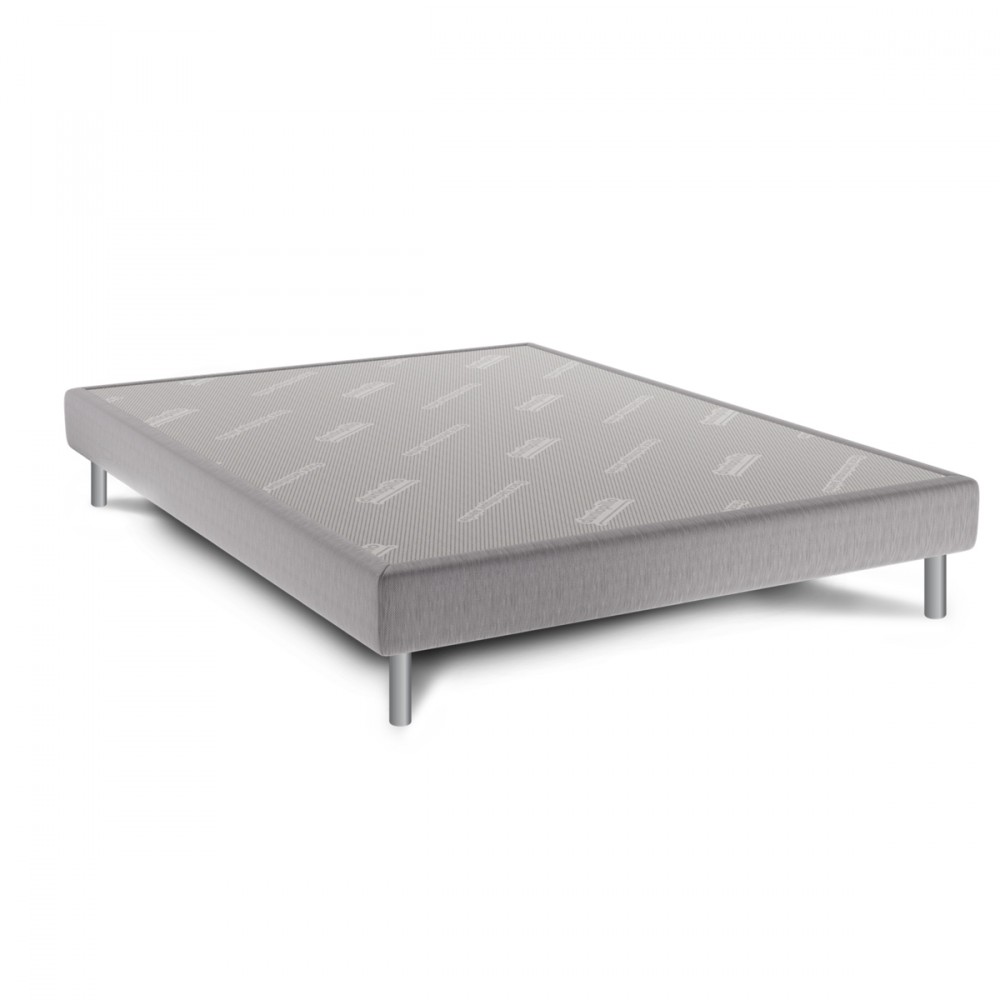
- Excellent value for money, good ventilation
Someo Aube Upholstered Decorative Bed Base
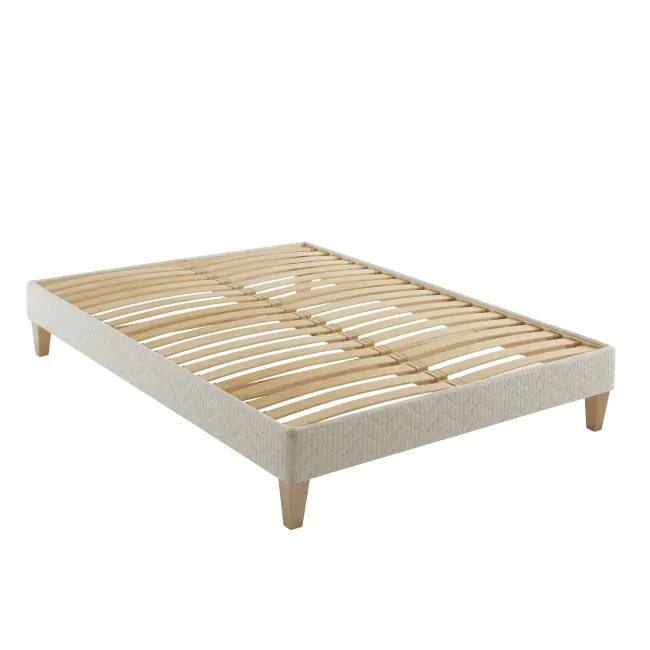
- Solid wood slats, natural fabric, very good compatibility with foams
Expert tips
- Avoid bed bases that are too old or deformed.
- Prefer well-ventilated models with visible slats.
- Ideally, change the mattress and bed base together to ensure optimal performance.
- Clean and air out regularly.