The base represents up to 30% of the comfort of your bedding. However, choosing between a slatted base or a box spring remains unclear for many. This guide explains everything you need to know to make the right choice based on your body type, mattress, and comfort needs.
Why is this comparison useful?#
The right base:
- Enhances the mattress
- Reduces pressure points
- Improves posture
- Extends the lifespan of bedding
Slatted base: the most common#
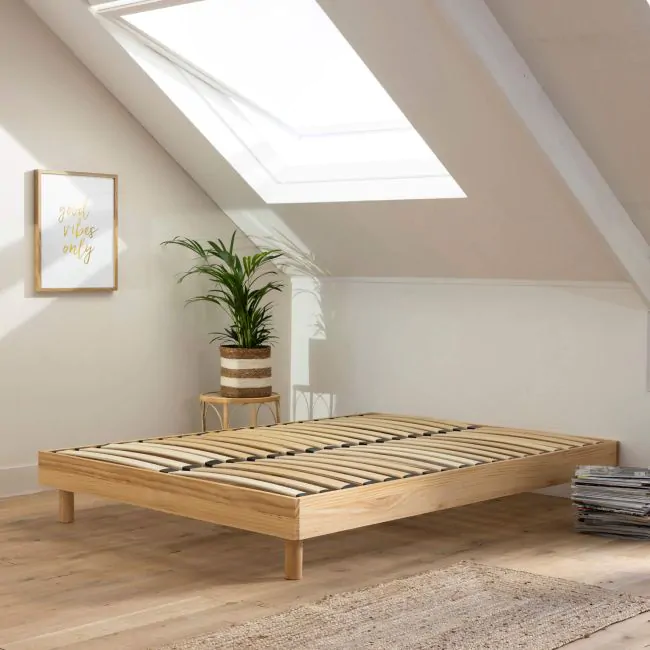
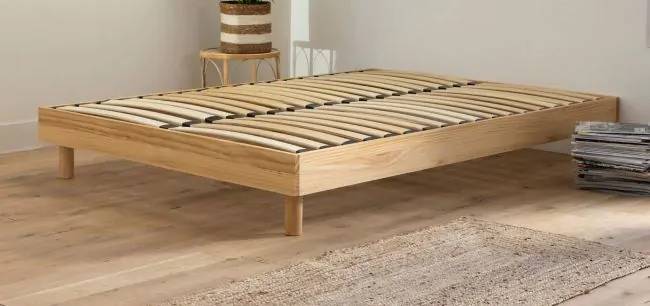
- Structure: plywood (beech, birch), wooden or metal frame
- Support: firm to balanced
- Comfort: simple but effective
- Ventilation: excellent
- Budget: affordable
- Services: standard delivery, often in kit form
Ideal for small budgets, young couples, spring or foam mattresses
See Someo slatted bases – made in France, free deliveryBox spring: more technical#
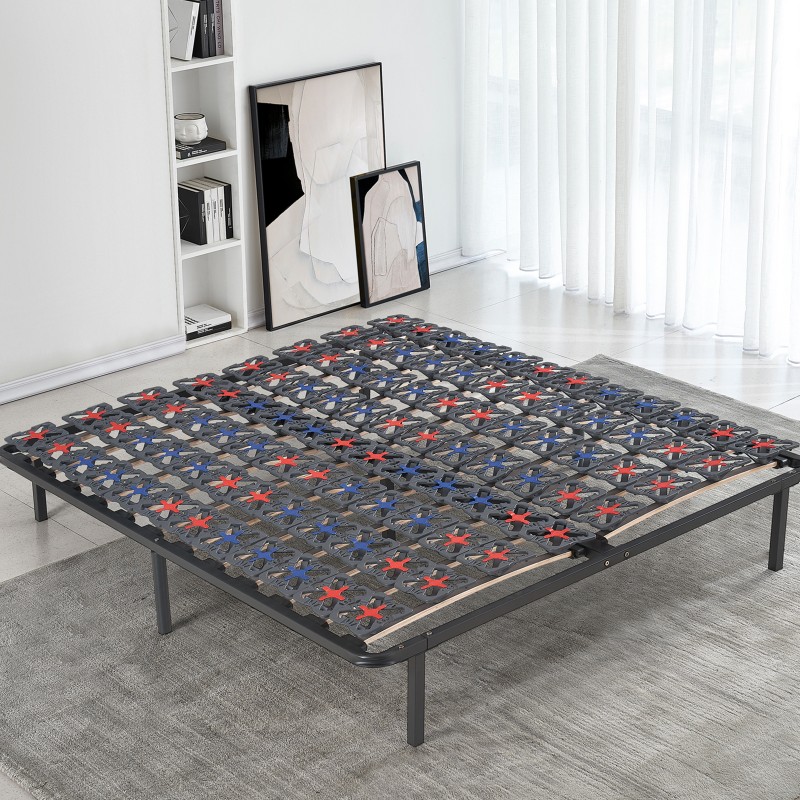
- Structure: rubber or soft plastic supports
- Support: zone by zone, very precise
- Comfort: highly adaptive
- Ventilation: good, but inferior to slats
- Budget: high, but qualitative
- Services: often premium (assembly included, extended warranty)
Recommended for people with back pain, memory foam mattresses, or electric beds
Discover box springs on lematelas.fr – zone-by-zone morphological supportSynthetic comparison table#
| Criterion | Slatted Base | Box Spring |
|---|
| Comfort | Firm to balanced | Very adaptive |
| Support | Uniform | Point by point |
| Breathability | Excellent | Good |
| Price | €€ | €€€€ |
| Durability | Good | Excellent (depending on range) |
| Services | Standard (in kit) | Premium (assembly, warranty) |
Expert Advice#
Who is each base for?#
- Slats: classic sleepers, teenagers, young couples, secondary bedding
- Supports: seniors, demanding sleepers, profiles sensitive in the back or shoulders
Mistakes to avoid#
- Pairing a memory foam mattress with a base that is too rigid
- Not checking the compatibility of dimensions (160x200, 180x200, etc.)
- Choosing a box spring without an appropriate shoulder zone
Comfort preferences#
- Soft: supports
- Firm: slats
- Balanced: slats with joints or soft suspensions
To choose the mattress suitable for your base, consult our complete guide to choosing your mattress
. If you suffer from back pain, our mattress guide for back pain
will help you identify the optimal mattress-base combination.
Compare all types of bases on lematelas.fr – slats, supports, upholstered, storageFAQ#
What is the difference between a slatted base and a box spring?
A slatted base rests on flexible wooden slats (usually made of beech or birch plywood) arranged transversely on the frame. Their flexibility depends on the spacing and thickness of the slats: the closer and thicker they are, the firmer the support. A box spring uses independent rubber or soft plastic elements that adapt individually to the pressure exerted by each area of the body. As a result, each part of the body (shoulders, hips, lumbar) is supported differently, promoting more precise spinal alignment. The difference is particularly noticeable for couples — the supports better absorb one person's movements without disturbing the other.What base for a memory foam mattress?
The box spring is the ideal choice for a memory foam mattress. Memory foam works by slowly deforming under heat and weight: it needs an adaptive support that accompanies this deformation without constraining it. A slatted base with soft slats (spacing ≤ 6 cm) may be suitable, but fixed slats are not recommended — they oppose the progressive adaptation of the mattress and can create uncomfortable compression zones. If you use fixed slats for budget reasons, at least opt for crossed slats or an interposed protective film.Which base is the most durable?
High-end box springs generally exhibit the greatest longevity: 15 to 20 years for quality natural rubber models, compared to 10 to 15 years for a good slatted base. However, durability greatly depends on usage: a well-maintained slatted base (slats checked and replaced if necessary) can outlast a low-end plastic box spring that cracks over the years. In practice, reputable brands (Someo, Tempur, Simba) offer warranties of 5 to 10 years, which is a good indicator of product reliability.Is a box spring noisy?
No. It is often **quieter** than an aging slatted base. Wooden slats tend to creak over time, especially if the fixings loosen or the wood dries out. Rubber or polymer supports absorb vibrations without producing noise. If your slatted base creaks, check the slat fixings, lubricate the contact points with the frame (wax or dry soap), and replace cracked slats. A box spring does not present this type of problem, making it a favored option for light sleepers or couples.Can a box spring be used with a spring mattress?
No, this is generally not recommended. Spring mattresses require a firm and uniform support — ideally a pocket spring base or a slatted base with closely spaced fixed slats (≤ 5 cm). The supports offer too much individual flexibility and can destabilize the internal structure of the mattress: each spring reacts differently depending on the support beneath it, creating uneven support zones and accelerating mattress wear. If you insist on a box spring, opt for a foam or latex mattress, which adapts well to this type of support.